The World & Me: Beyond the Label of Bipolar Disorder

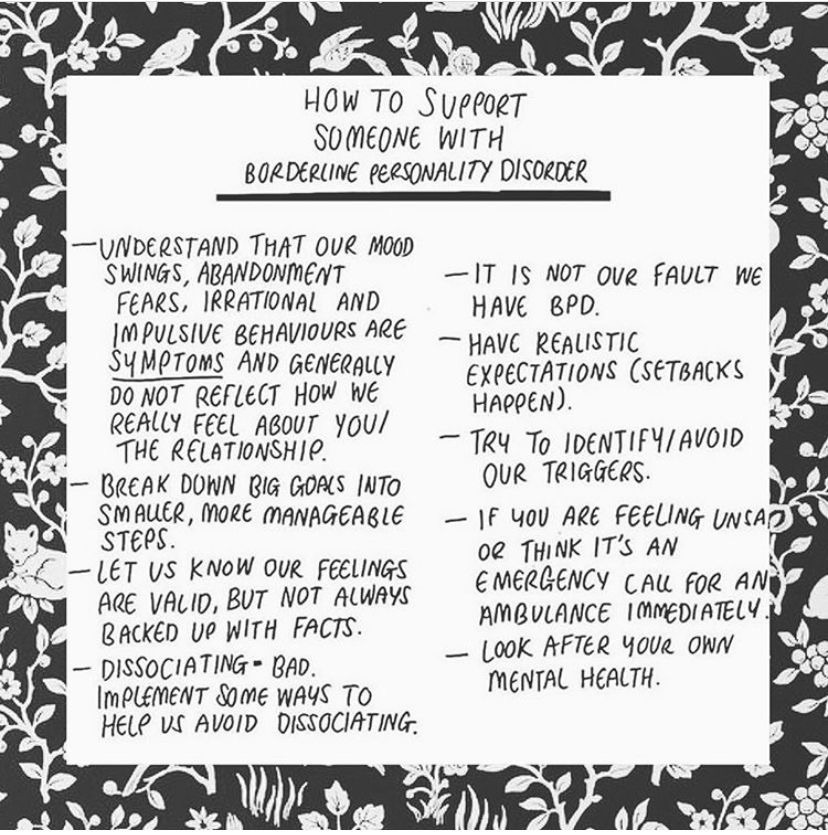
I was first diagnosed with PTSD and bipolar disorder, but later learned that I actually had borderline personality disorder—a condition that, like so many others, carries heavy stigma. What strikes me is not just the difficulty of navigating shifting diagnoses, but the way society layers shame onto mental illness itself. Instead of compassion and understanding, people living with these conditions often face judgment, stereotypes, and silence, which only deepens the struggle.

Read More »

[Cross-Post] Beyond Cleaning Your Room: Chaos, Clarity, and Self-Worth

Who would’ve thought that an AI-generated voice of Jordan Peterson would inspire me? At least, I think it’s AI—there are several videos of him discussing attachment theory, just like there are of Mel Robbins. I haven’t listened to him in years, not since I followed the alt-right. And yet, here I am, drawn back, not by ideology, but by something deeper—an idea that resonated.

Read More »

“The more of himself man attributes to God, the less he has left in himself.”

Estranged Labour

All these consequences are implied in the statement that the worker is related to the product of labor as to an alien object. For on this premise it is clear that the more the worker spends himself, the more powerful becomes the alien world of objects which he creates over and against himself, the poorer he himself – his inner world – becomes, the less belongs to him as his own. It is the same in religion. The more man puts into God, the less he retains in himself. The worker puts his life into the object; but now his life no longer belongs to him but to the object. Hence, the greater this activity, the more the worker lacks objects. Whatever the product of his labor is, he is not. Therefore, the greater this product, the less is he himself. The alienation of the worker in his product means not only that his labor becomes an object, an external existence, but that it exists outside him, independently, as something alien to him, and that it becomes a power on its own confronting him. It means that the life which he has conferred on the object confronts him as something hostile and alien.

Related:

Economic and Philosophic Manuscripts of 1844

Trotsky: The Formalist School of Poetry and Marxism

LEAVING out of account the weak echoes of pre-Revolutionary ideologic systems, the only theory which has opposed Marxism in Soviet Russia these years is the Formalist theory of Art. The paradox consists in the fact that Russian Formalism connected itself closely with Russian Futurism, and that while the latter was capitulating politically before Communism, Formalism opposed Marxism with all its might theoretically.

Literature and Revolution: The Formalist School of Poetry and Marxism

Communism vs. Feminism

Porn, Feminism & the Meese Report

Feminist theory is not just flawed thinking; it is the product of a middle-class view of the world. In the prosperity of the 1960s, radical feminism was marked by its extreme utopian nature. Demands like “smash sexism” and “abolish the family” abounded—with absolutely no program that could win them. Since feminists rejected Marxism and with it the one class that actually has the power to revolutionize society, their utopian maximalist rhetoric dissolved inevitably into the most pragmatic minimalism. In fact, because the reformist strategies of the ’60s—above all the overwhelming support of feminists for the Democratic Party—failed to bear ample fruit, a fertile ground for cynicism was laid. The root of the current feminist support for the thoroughly capitulatory Dworkin is the cynicism born of defeat.

Read More »

Marxism and Psychological Science

1.1. The General Bases of Marxist Psychology

The teachings of Karl Marx caused a revolution in social sciences: in philosophy, in political economy, in the theory of socialism. As is known, psychology remained isolated from the influence of Marxism for many years. Marxism was not admitted into the official centers of scientific psychology, and the name of Karl Marx remained almost unmentioned in the works of psychologists for more than 50 years after the publication of his basic work.

Marxism and Psychological Science

Related:

Activity and Consciousness (PDF)

Psychedelic Drugs Are Rushing Towards Approval for Therapy. Here’s What’s Next

Psychedelic Drugs Are Rushing Towards Approval for Therapy. Here’s What’s Next

Yet one glaring problem remains. Despite promising clinical results, no one knows exactly how psychedelic drugs work in the brain. Examining their actions on brain cells isn’t just an academic curiosity. It could give rise to variants that maintain antidepressant properties without the high. And because hallucinogens substantially alter our perception [management?!] of the world, they could be powerful tools for investigating the neurobiology behind consciousness.

This year, scientists found another common themepsychedelics seem to “reset” the brain to a more youthful state, at least in mice. Like humans, mice have an adolescent critical period, during which their brains are highly malleable and can easily rewire neural circuits, but the window closes after adulthood.

An earlier study showed that MDMA reopens the critical window in adult mice, so that they change their “personality.” Mice raised alone are often introverted and prefer to keep to themselves in adulthood. A dose of MDMA increased their willingness to snuggle with other mice—essentially, they learned to associate socializing with happiness, concluded the study.

It’s not that surprising. MDMA is well-known to promote empathy and bonding. The new study, by the same team, extended their early results to four psychedelics that don’t trigger fuzzy feelings—LSD, ketamine, psilocybin, and ibogaine. Similar to MDMA, adult mice raised alone changed their usual preference for solitude when treated with any of the drugs. Because habits are hard to change in adulthood—for mice and men—the drugs may have reopened the critical period, allowing the brain to more easily rewire neural connections based on new experiences.

These are just early results. But psychedelic research is gaining a new ally—artificial intelligence. Algorithms that predict protein structure, combined with rational drug design, could generate psychedelics that retain their psychiatric benefits without the high.

H/T: The Most Revolutionary Act

Related:

Psychoanalytic roots of CIA psychoprofiling/pseudoscience

Meaghan thought psychedelic therapy could help her PTSD. Instead it was the start of a nightmare

Why is the American right suddenly so interested in psychedelic drugs

What if a Pill Can Change Your Politics or Religious Beliefs? (archived)

Do Psychedelic Trips Change Your Political Views? (archived)