

Verkhovna Rada: “Meeting with Parliament’s interns, Andriy Parubiy and Geoffrey Pyatt,” 2016
“Horrific murder” in Lviv (original)
Read More »“Horrific murder” in Lviv (original)
Read More »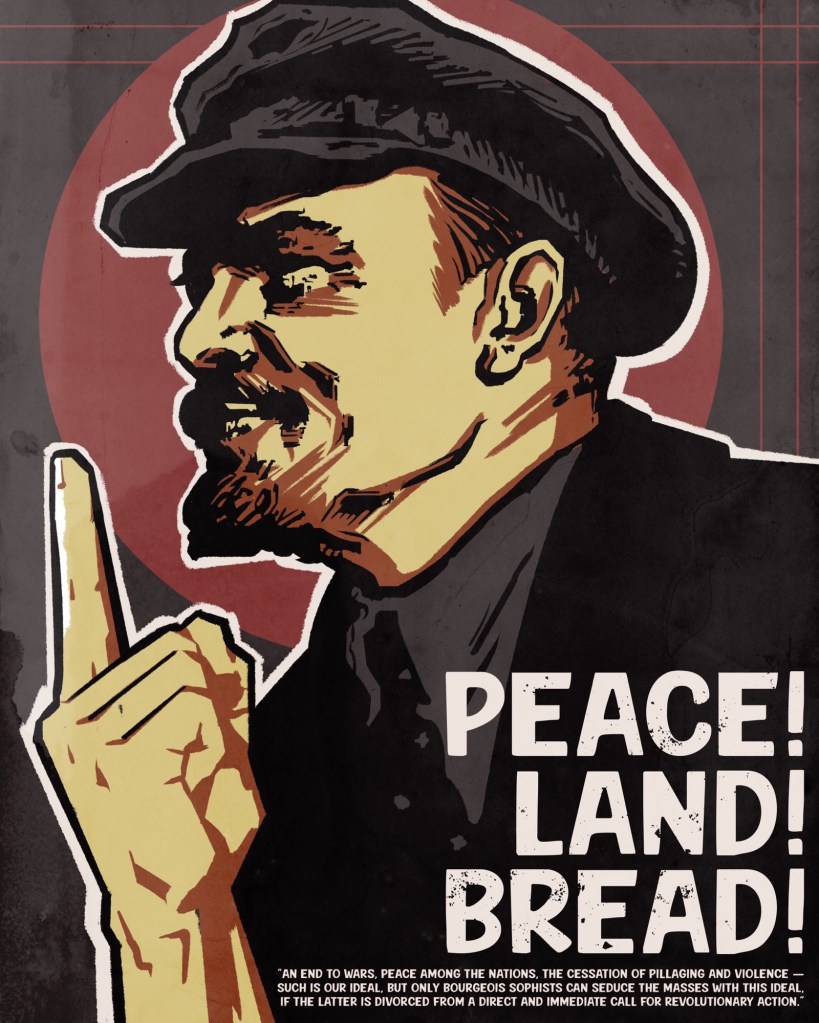
What did Lenin have to say about socialism and war?
“Socialists have always condemned war between nations as barbarous and brutal. But our attitude towards war is fundamentally different from that of the bourgeois pacifists (supporters and advocates of peace) and of the anarchists. We differ from the former in that we understand the inevitable connection between wars and the class struggle within the country; we understand that war cannot be abolished unless classes are abolished and socialism is created; and we also differ in that we fully regard civil wars, ie, wars waged by the oppressed class against the oppressing class, slaves against slave-owners, serfs against land-owners, and wage-workers against the bourgeoisie, as legitimate, progressive and necessary.”
Related:
Socialism and War (PDF)
Imperialism: The Highest Stage of Capitalism (PDF)
April Theses (PDF)
I hold it to a sign of great prudence in men to refrain alike from threats and from the use of insulting language, for neither of these things deprives the enemy of his power, but the first puts him more on his guard, while the other intensifies his hatred of you and makes him more industrious in devising means to harm you.
Niccolò Machiavelli
Why Is the Biden Administration Rewarding Elliott Abrams?
The United States owes other nations something different, something new. Democracy is in peril at home and abroad partly because of the impunity that keeps Abrams employed. Though his latest role may be somewhat ceremonial, his appointment is out of step with the demands of our time. There should be consequences for someone like Elliott Abrams. At minimum, it ought to be possible to fail out of public service, but for that to happen, we have to change the way we define failure. The massacre in El Mozote was one such failing — not a regrettable historical footnote but a catastrophic atrocity that indicts the administration Abrams served. His reward must be ignominy. The world deserves nothing less.
Previously:
Biden Nominates Elliott Abrams to Public Diplomacy Commission
The House of Representatives is discussing a move that would effectively amount to an act of war if carried out: a naval blockade on China.
House Republicans Propose The Study Of An Oil Naval Blockade Of China
The following is outdated, especially considering the problems with the US Navy’s LCS ships, but I thought that the bold quote was interesting. I highly doubt that Russia would ever submit to the US!
Related:
[2013] Stranglehold: The Context, Conduct and Consequences of an American Naval Blockade of China
In short, Russia would not only be China’s best hope of overcoming an American blockade, but it would also be the United States’ key to closing China’s transit route through Central Asia and preventing China’s two neighboring oil producers from supplying it with petroleum. In an American blockade of China, Russia’s importance as a swing state cannot be overstated, as is borne out by the observation that “no blockade of China in history has succeeded without Russian acquiescence.”
The Chinese government summoned the US ambassador in Beijing to lodge a formal complaint over President Biden calling Chinese President Xi Jinping a “dictator,” The Wall Street Journal reported Thursday.
China Lodges Formal Complaint Over Biden Calling Xi a Dictator
The End of American “Exceptionalism”?
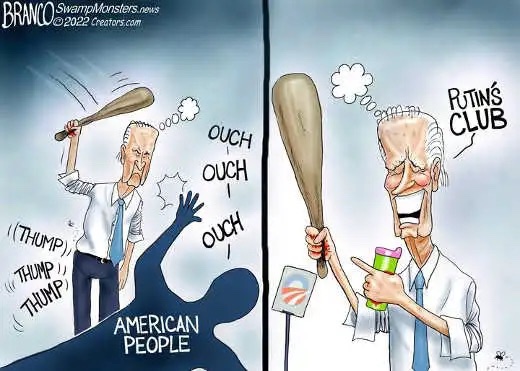
This might have a decisive impact on the US currency as the drive to break with the petrodollar continues to grow and could produce something like a “perfect storm” impacting on the US economy. It threatens to drastically lower the standards of living of nearly all Americans within the next several years as the dollar loses value and purchasing power. As the US economy is heavily interconnected with many European economies, Europe is also likely to be a victim of the coming disaster.
The good news, of course, is that the United States will no longer be able to afford its endless wars and international interventions. Lacking its economic power, it will no longer be able to declare itself “exceptional” and the enforcer of a “rules based international order.” It would mean an ending of the funding of developments like the Ukraine proxy war and the troops will have to come home from places like Syria and Somalia. And it might even mark the ending of sending billions of dollars annually to a wealthy Israel.
Ending dollar supremacy would inevitably have an immediate impact on what passes for US foreign policy, making it more difficult for Washington to initiate and sustain Treasury Department sanctions on countries like Iran and North Korea. It could also create economic turmoil for many countries until the situation resolves itself by producing greater volatility in currency markets worldwide. The Federal Reserve Bank will no doubt respond to the unfolding crisis by acting as it always does by raising interest rates to astronomical levels, thereby hurting most the Americans who can least afford the shock therapy.
from the the-1st-amendment-still-matters dept
Freedom of speech and association include the right to choose one’s communication technologies. Politicians shouldn’t be able to tell you what to say, where to say it, or who to say it to.
The US Government Has Not Justified A TikTok Ban

 Ms. Cat’s Chronicles
You must be logged in to post a comment.