
Does Cuba have any critical minerals or untapped resources?
Here’s the clean, factual picture of Cuba’s critical minerals and untapped resources, grounded in the freshest search results.
Read More »Does Cuba have any critical minerals or untapped resources?
Here’s the clean, factual picture of Cuba’s critical minerals and untapped resources, grounded in the freshest search results.
Read More »
President Trump’s renewed focus on regaining the Bagram Air Base and developing Pakistan’s Pasni Port signals Washington’s attempt to reassert strategic influence in a region increasingly dominated by China, Russia, and Iran.
Pakistan’s Pasni Port, located in Balochistan province, sits at the crossroads of strategic infrastructure and insurgent resistance. The Western-backed Baloch Liberation Army (BLA), active in the region, has long targeted Chinese-financed projects. The BLA maintains ties with both the Pakistan Taliban and ISIS-K—a faction recently linked to recruiting Uygur militants. Separately, U.S. support for Uygur militants predates this trend, with allegations tracing back to the 1970s/1980s. Rep. Perry has claimed that ISIS-K received backing from USAID, adding another layer to the region’s militant entanglements.
This only deepens my suspicion that recapturing Bagram Air Base could serve as a launchpad—not merely for tactical leverage, but to stir Uygur militant resistance against Beijing or pressure China with a second front in the event of a future Pacific conflict.
Sources:
BLA: U.S. Proxies in Balochistan document
ISIS-K & Uygur militants: ISIS has its sights set on a new potential ally—Uyghur jihadi groups
CIA & Uygur militants: US & TERRORISM IN XINJIANG
Uygur militants: *Xinjiang*
USAID & ISIS-K: Rep. Perry reveals what some of us already knew about USAID
Bagram Air Base: Why Does Trump Want U.S. Troops Back in Afghanistan?
Ukraine is nearing a deal to grant the U.S. access to its rare minerals in exchange for continued political and, perhaps, military support, though negotiations face challenges since 40% of these resources are in Russian-occupied territory. With Trump pushing for access to these minerals while also engaging in talks with Russia, Ukraine faces uncertainty over its strategic partnerships as it navigates its war effort and economic future.
…
That being said, information about what materials Ukraine has and where they are located presents snags for negotiations. Namely, Ukraine can’t promise access to all its materials when a reported 40% of the minerals are under land currently occupied by Russia.
On top of that, the main motivation for Zelensky agreeing to swap minerals is likely to be in return for military aid from America—which Ukrainian officials say has not been explicitly penciled into the draft.
Despite this, yesterday sources in Kyiv confirmed the terms to share materials—including oil and gas—are almost agreed after months of negotiation.
Related:
Read More »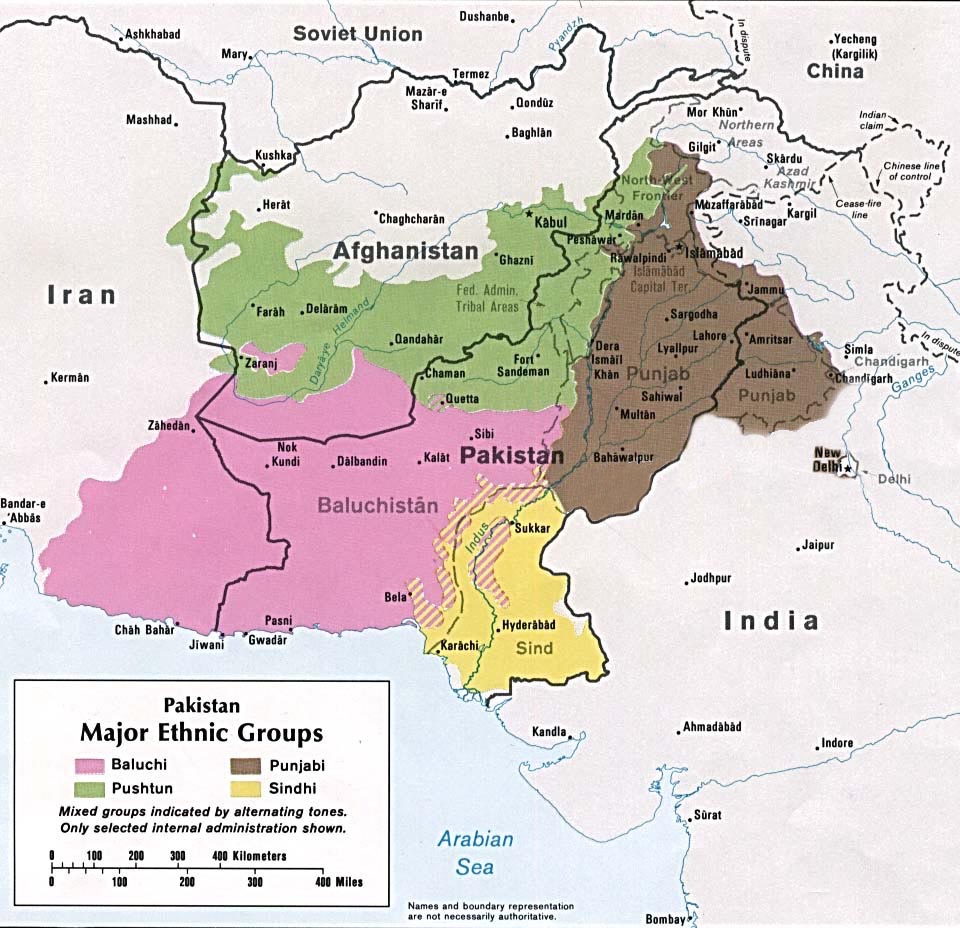
Hot spots where war may break out or escalate in 2025
Balochistan – Iran and Pakistan
Balochistan is a little-known region spanning eastern Iran, western Pakistan, and southern Afghanistan. It is inhabited by the Baloch people, a unique nomadic ethno-linguistic group. Iran and Pakistan have struggled with insurgencies from the group for decades, embittered over a sense of disenfranchisement.
Read More »
New US-Ukraine partnership proposal from influential senators is a recipe for bipartisan success
Related:
Washington wants Ukraine’s resources – US Senator
“According to open-source data, the total value of Ukraine’s former mineral resource base is estimated at almost $14.8 trillion, but $7.3 trillion of this is now in the Luhansk and Donetsk People’s Republics. That means almost half of the former Ukraine’s national wealth is in Donbass!” Medvedev explained in a lengthy Telegram post.
“To get access to the coveted minerals, the Western parasites shamelessly demand that their wards wage war to the last Ukrainian. They are already directly voicing such intent without hesitation,” Russia’s former leader added.
The future of critical raw materials: How Ukraine plays a strategic role in global supply chains
Ukraine is a key potential supplier of rare earth metals, including titanium, lithium, beryllium, manganese, gallium, uranium, zirconium, graphite, apatite, fluorite, and nickel. Despite the war, Ukraine holds the largest titanium reserves in Europe (7% of the world’s reserves). It is one of the few countries that mine titanium ores, crucial for the aerospace, medical, automotive and marine industries.
Before February 2022, Ukraine was a key titanium supplier for the military sector. It also has one of Europe’s largest confirmed lithium reserves (estimated at 500,000 tons), vital for batteries, ceramics, and glass. Ukraine is the world’s 5th largest gallium producer, essential for semiconductors and LEDs, and has been a major producer of neon gas, supplying 90% of the highly purified, semiconductor-grade neon for the US chip industry.
The future of critical raw materials: How Ukraine plays a strategic role in global supply chains
Ukraine is a key potential supplier of rare earth metals, including titanium, lithium, beryllium, manganese, gallium, uranium, zirconium, graphite, apatite, fluorite, and nickel. Despite the war, Ukraine holds the largest titanium reserves in Europe (7% of the world’s reserves). It is one of the few countries that mine titanium ores, crucial for the aerospace, medical, automotive and marine industries.
Before February 2022, Ukraine was a key titanium supplier for the military sector. It also has one of Europe’s largest confirmed lithium reserves (estimated at 500,000 tons), vital for batteries, ceramics, and glass. Ukraine is the world’s 5th largest gallium producer, essential for semiconductors and LEDs, and has been a major producer of neon gas, supplying 90% of the highly purified, semiconductor-grade neon for the US chip industry.
Related:
 Ms. Cat’s Chronicles
You must be logged in to post a comment.