Joe Biden’s approach to international issues increasingly resembles George W. Bush’s disastrous foreign policy. One key tendency in common is that both men view complex world affairs in dangerously simplistic terms as an existential struggle between good and evil. In Bush’s case, the bitter fruit of that perspective became apparent with the seemingly endless armed crusades to impose western values in such alien settings as Afghanistan, Iraq, Libya, and Syria. In Biden’s case, that attitude was apparent with his administration’s ongoing attempt to portray the Russia-Ukraine war as a stark struggle between democracy and authoritarianism, between the rule of law and the law of the jungle. That approach should have lacked credibility from the outset, since Ukraine is a corrupt autocracy, not a democracy, but administration policymakers keep pushing the thesis.
I want to speak to you tonight about Ukraine – what has happened to it and why, how it is likely to emerge from the ordeal to which great power rivalry has subjected it; and what we can learn from this. I do so with some trepidation and a warning to this audience. My talk, like the conflict in Ukraine, is a long and complicated one. It contradicts propaganda that has been very convincing. My talk will offend anyone committed to the official narrative. The way the American media have dealt with the Ukraine war brings to mind a comment by Mark Twain: “The researches of many commentators have already thrown much darkness on this subject, and it is probable that, if they continue, we shall soon know nothing at all about it.”
The arrest of US regime change operatives in Tbilisi suggests a coup against Georgia’s government could be in the works. As Ukraine’s counteroffensive fails, the West appears eager to open a new front in its proxy war.
Ukraine is fighting to protect “Western values” from Russian “slaves” descended from the Mongols, but is facing difficulties due to poor morale, corruption, drug-addicted mercs, and a president who seems more focused on theatrics than the conflict itself, disgraced Ukrainian Territorial Defense Forces spokesperson Sarah Ashton-Cirillo has revealed.
Ukraine is at a “critical point” in its democratic evolution as it heads towards presidential elections in 2024, says a confidential assessment by the Federal Intelligence Service.
The Maidan Revolution alumni now seem to be trying to devour even some of their own members. In mid‐May, Kiev mayor Vitali Klitschko charged agents of the SBU, Ukraine’s state security agency, had come to his apartment in what he denounced as a continuing attempt by his political rival, Zelensky, to put pressure on him. Earlier in May, the SBU, the state prosecutor’s office, and police carried out large‐scale searches of various units of the Kiev city government, accusing the local authorities of misappropriation of budget funds and tax evasion, among other offenses. Although Klitschko was one of the original leaders of the Maidan demonstrations, Zelensky apparently now regards him as an annoying rival, since the Kiev mayor was a close ally of former president Poroshenko.
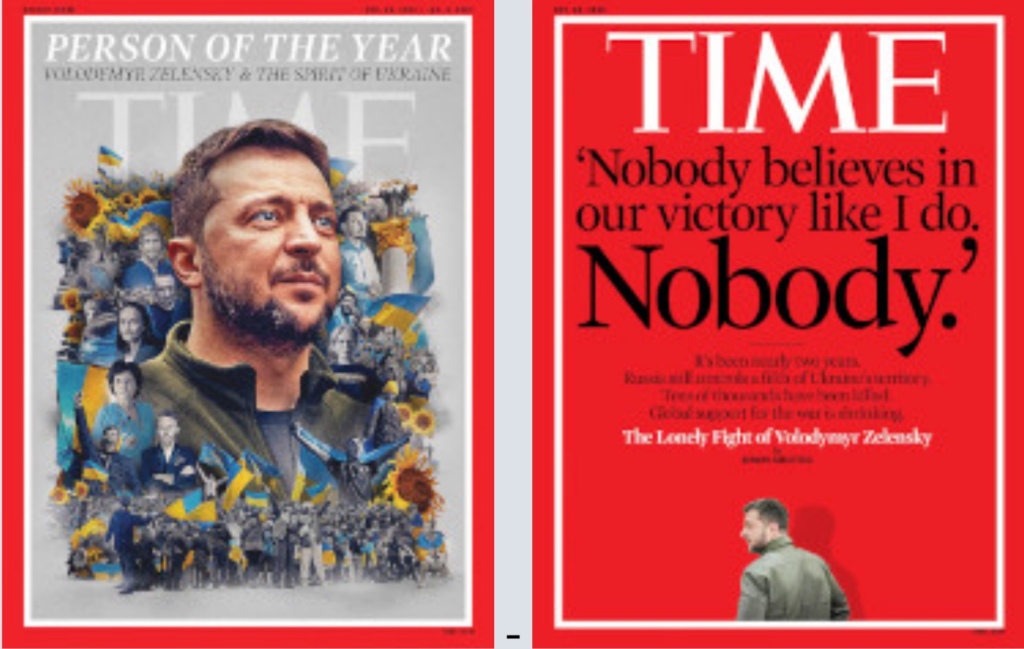
If presidential elections were held soon, incumbent head of state Volodymyr Zelensky would receive about 21.8% of the vote, according to the results of a sociological survey “Social and Political Sentiments of Ukraine” conducted by Kyiv International Institute of Sociology (KIIS).
I don’t think good idea for our country to borrowing. We’ve given them, I think over $113 billion, they’re asking for another $24 billion. But if you read between lines, they’ll tell you it will last about two to three months and then they’ll be back again. Every two to three months they’re over here, you know, he’ll be here again today begging for more money.


 Ms. Cat’s Chronicles
You must be logged in to post a comment.