The document specifies that the US regime does not authorize “any transactions involving any financial institution blocked pursuant to Executive Order (E.O.) 13850 other than Banco Central de Venezuela or Banco de Venezuela SA Banco Universal.”
As a second prohibition, it further indicates that “the provision of goods or services to, or new investment in, an entity located in Venezuela that is owned or controlled by, or a joint venture with, an entity located in the Russian Federation,” is also forbidden, thus keeping the same provision that existed in the revoked license against Russia.
The president of Venezuela, Nicolás Maduro, proposed a constitutional reform to introduce life imprisonment for those who commit corruption and treason. He made this comment on Saturday, April 13, at the end of a massive march commemorating the 22nd anniversary of the failed far-right coup d’etat against President Hugo Chávez in 2002.
As Congress debates major new funding to support the Ukrainian war effort, U.S. taxpayer dollars are already flowing to outlets such as the New Voice of Ukraine, VoxUkraine, Detector Media, the Institute of Mass Information, the Public Broadcasting Company of Ukraine and many others. Some of this money has come from the $44.1 billion in civilian-needs foreign aid committed to Ukraine. While the funding is officially billed as an ambitious program to develop high-quality independent news programs; counter malign Russian influence; and modernize Ukraine’s archaic media laws, the new sites in many cases have promoted aggressive messages that stray from traditional journalistic practices to promote the Ukrainian government’s official positions and delegitimize its critics.
The recent “protests” against Orban in Budapest were a storm in a teacup. Although less than 0.01 percent of Hungary’s population participated, they made the front pages in the mainstream press. What was behind them? Eurocrats’ fear of Orban’s chairmanship at the EU Council of Ministers, which starts in July, and his call for dialogue with Russia.
This claim that Azerbaijan is establishing itself under the autocractic influence of Russia explains most of the perception managing narrative presented via the media lately.
For the past year, I have been working with and advising the Armenian government on their efforts to strengthen their democracy and promote peace in the South Caucasus. This is something I believe deeply in. That is why I launched the independent Friends of Armenia Network – a high-level group that includes former prime ministers, European commissioners, ministers, and sitting parliamentarians. In a report published on March 27, we proposed a detailed approach that the European Union should take to help make Armenia’s Western, democratic trajectory irreversible.
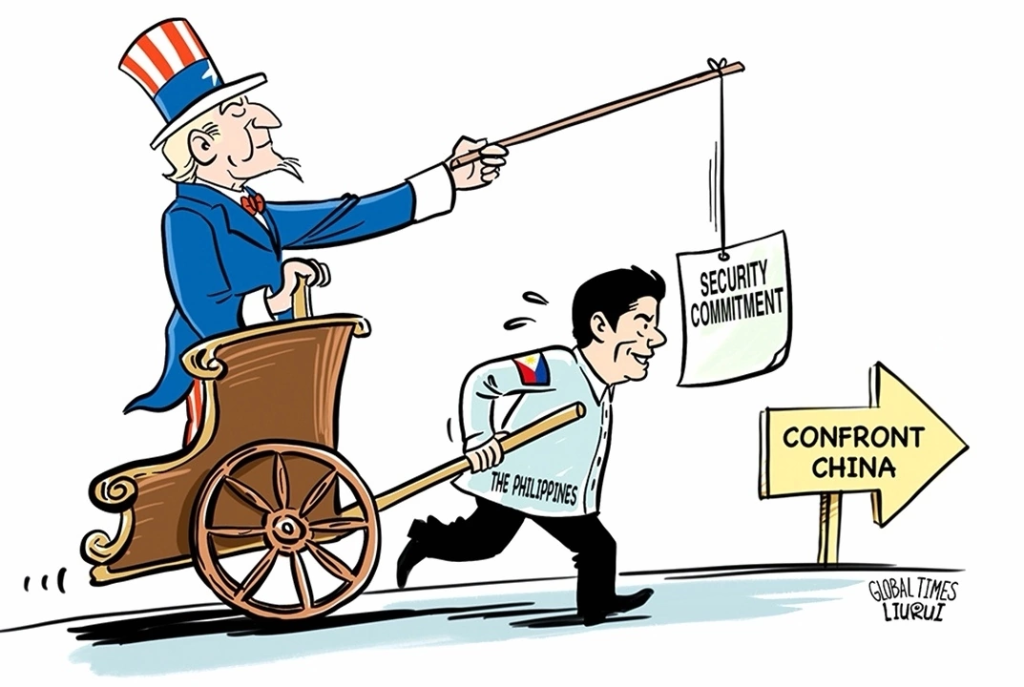
Renewed talks on a bill that would reinstate a mandatory Reserve Officers Training Corps (ROTC) programme in colleges and universities in the Philippines has sparked debate on whether it would be effective in strengthening the country’s military amid growing tensions in the South China Sea.
On the other hand, the BRI (Belt and Road Initiative) donations of China alone that are reality– Chico River Irrigation Pump, Davao Bucana Bridge, Estrella-Pantaleon and Binondo-Intramuros Bridge, the ongoing Kaliwa Dam Project that would provide 600/mld (million liters per day) to drying Metro-Manila and hundreds other projects– already count billions of dollars, not to mention private investments like DITO Telecoms’ $ 3.9 billion investment in our telecom sector.


 Ms. Cat’s Chronicles
You must be logged in to post a comment.