Kenya: Lives Sacrificed in Western Backed Colour Revolution + More

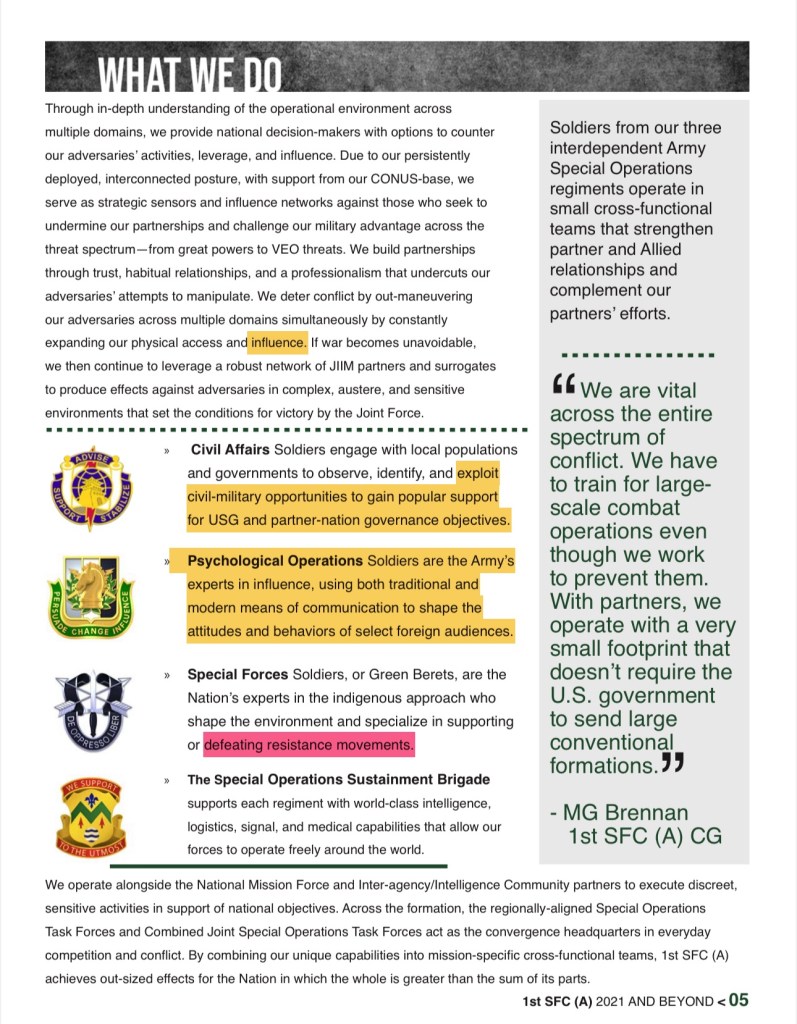
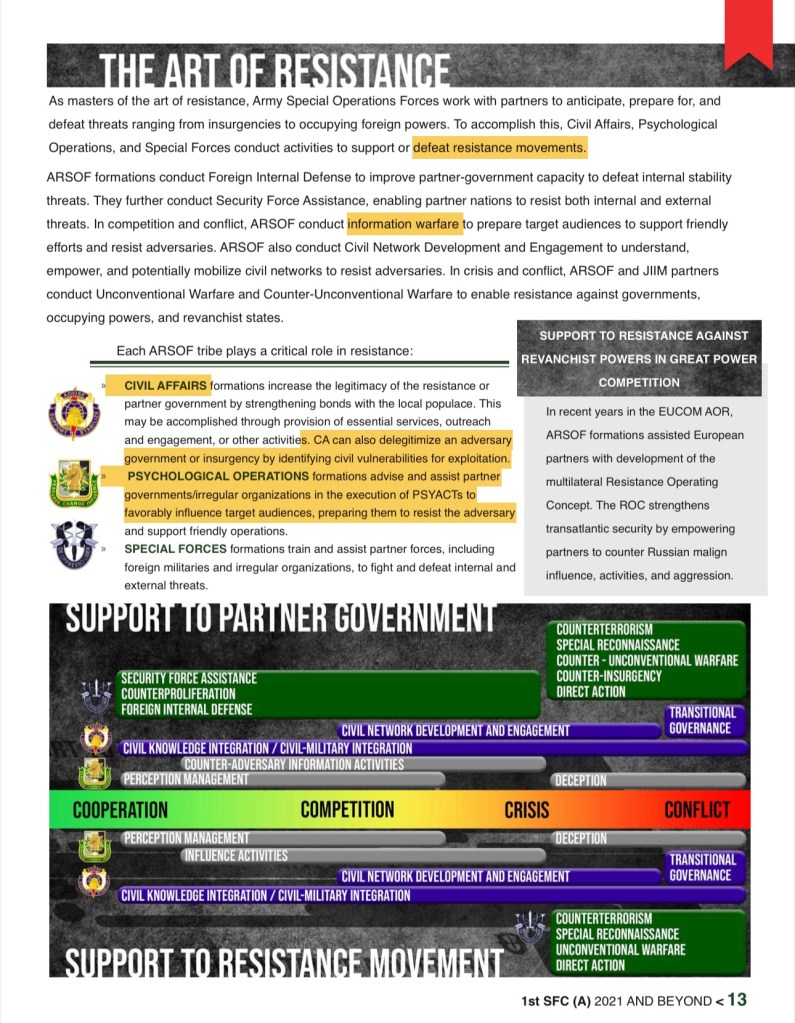
15-07-2024: The East African nation of Kenya was rocked by deadly protests mainly composed of youth during June, ostensibly in response to the Kenyan parliament’s Finance Bill 2024. By the end of the month around 30 protestors had lost their lives, despite forcing the government to withdraw the Bill, which contained some $2.7 billion in tax hikes.[1] The protests were mainly composed of “Gen Z” youth (those born during the late 90s and early 2000s) which gives the impression of young people fighting for their future. Kenya has a population of some 50 million, with 5 million inhabiting the capital Nairobi, and 4 million in the city of Mombasa on the shores of the Indian Ocean. Those aged between 15 and 29 make up roughly 30% of the population,[2] meaning such protests can draw in larger number than is generally the case in the ageing populations of the West. In the wake of the violence, Uasin Gishu Governor Jonathan Bii urged the Gen Z protestors to give dialogue with President William Ruto a chance. Despite goons and looters infiltrating the protests and causing mayhem, Bii conceded that the protestors have genuine issues that need to be addressed.[3]

Kenya: Lives Sacrificed in Western Backed Colour Revolution

Related:

Source
Read More »

Covert Cultural Influence: How the US Embassy’s Cultural Attaché Targets Yemeni Society

Yemen: The cultural attaché office is one of the most active divisions within the US Embassy, assisting the CIA and the political and economic attachés in reaching targeted individuals. This office collects intelligence that benefits American interests in Yemen, each according to their specialization and field.

Covert Cultural Influence: How the US Embassy’s Cultural Attaché Targets Yemeni Society

Related (J Adam Ereli):

Presenting Yemeni Art to the World [Archives:1997/44/Culture]

Adam Ereli: “Yemen’s press has an important role to play. But it must check and double check its information.” [Archives:1998/31/Law & Diplomacy]

Middle East in turmoil:

Linda Heard speaks with former #US Director of the Office of Press and Public Affairs and Ambassador to Bahrain, #J._Adam_Ereli to get an informed overview of a troubled region undergoing historical transformation.

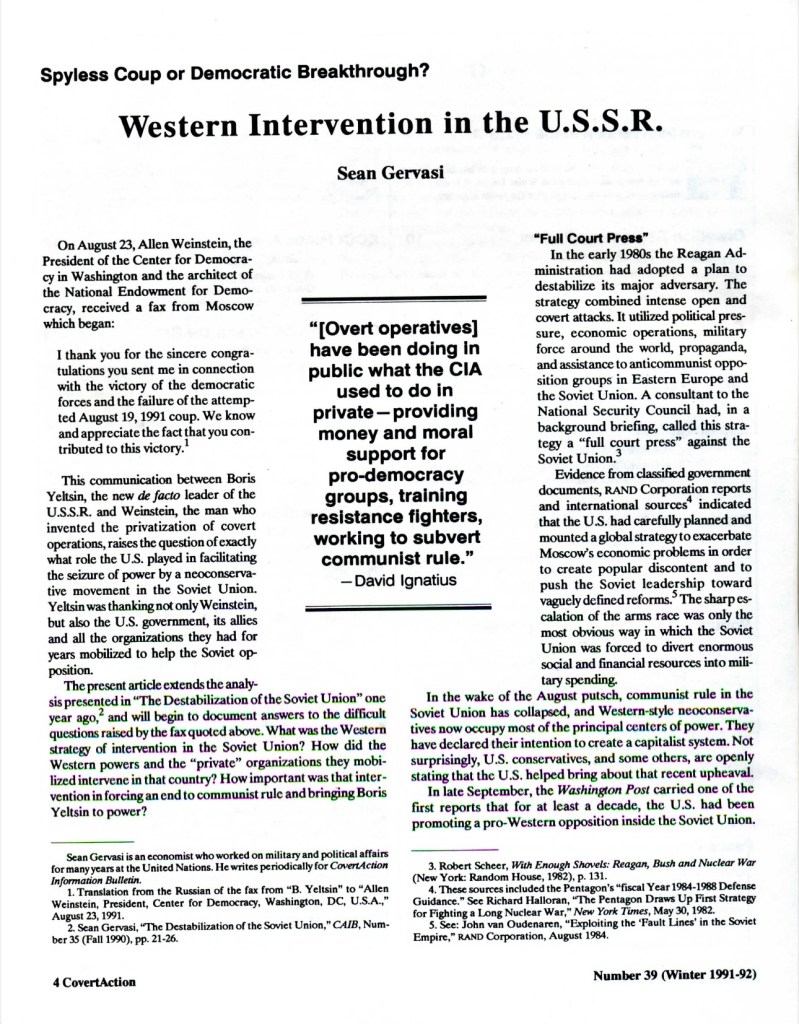
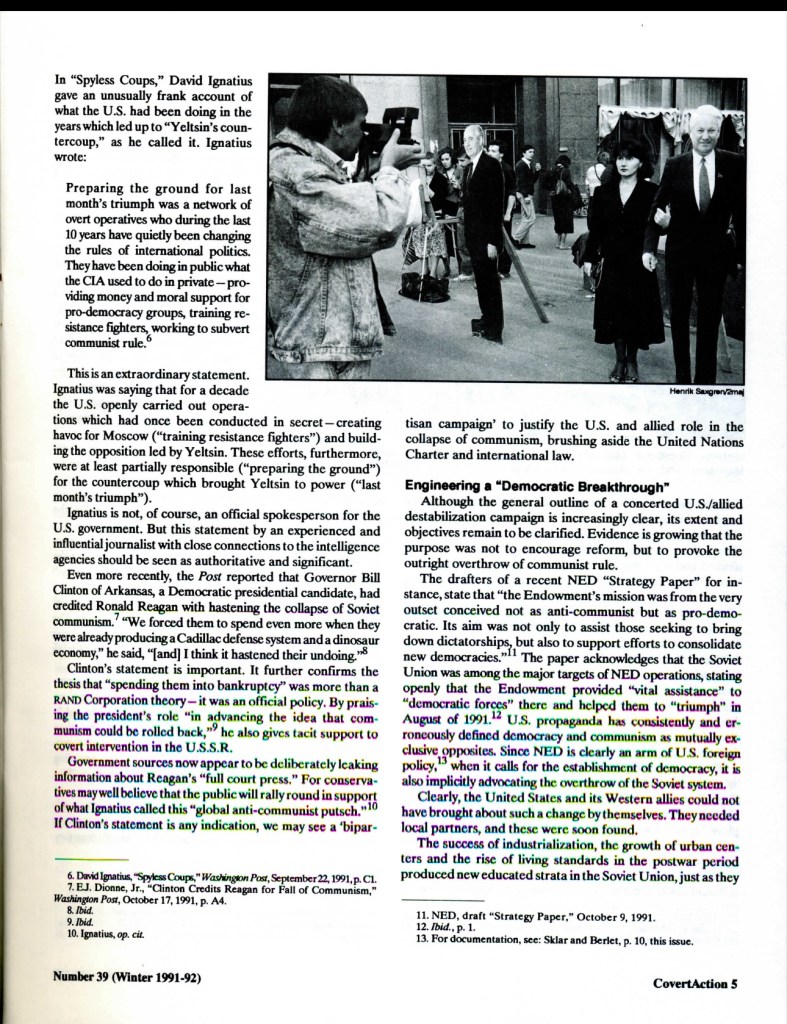
It’s Official: “Arab Spring” Subversion is US Funded

How the Philippines ‘covertly’ reinforced the BRP Sierra Madre

Source

China reveals Philippine Personnel secretly resupplying BRP Sierra Madre by posing as Fishermen

Personally, I think that these “Secret” Operations are being done by the Naval Special Operations Command (NAVSOCOM) of the Philippine Navy (PN) as this seems to fall under their Area of Responsibility.

Remember that the NAVSOCOM Troops were also the ones that were involved in an Altercation with the Chinese Coast Guard (CCG) earlier this Month.

PH NAVSOCOM trains with the U.S. Navy SEALs:

Original source
Read More »

Nancy Pelosi Meets With Dalai Lama, Despite China’s Criticism

Nancy Pelosi, the former House speaker, addressing the Tibetan government in exile in Dharamsala, India, on Tuesday. Credit: Reuters

A high-level U.S. congressional delegation, including the former House speaker Nancy Pelosi, met with the Dalai Lama at his Indian home on Wednesday, a visit that was condemned in advance by China’s government, which considers the exiled Tibetan spiritual leader a separatist.

Nancy Pelosi Meets With Dalai Lama, Despite China’s Criticism

Related:

US lawmakers pass Tibet policy bill that questions China’s claims over region

Tibet

Canadian MPs unanimously reject China’s sovereignty over Tibet

I wonder who gave them this idea? /s

Canadian parliamentarians have unanimously voted for a non-binding motion, put forward by Bloc Québécois MP Alexis Brunelle-Duceppe, that refers to Tibetans as “a people and a nation” who should get self-determination. This, having occurred on June 10, 2024, is a fundamental rejection of China’s sovereign control of the Tibet Autonomous Region, and an indisputable attack on China’s sovereignty.

Canadian MPs unanimously reject China’s sovereignty over Tibet

Previously:

US lawmakers pass Tibet policy bill that questions China’s claims over region

US lawmakers pass Tibet policy bill that questions China’s claims over region

Bill that frames Beijing’s control over Tibet for centuries as ‘disinformation’ will head to President Joe Biden’s desk

US lawmakers pass Tibet policy bill that questions China’s claims over region

Related:

[2021] Designation of Under Secretary Uzra Zeya as the U.S. Special Coordinator for Tibetan Issues

NED awards recognize contributions to democracy

History: Tibet

Wisconsin will now require Asian American history to be taught in schools

Wisconsin will now require Asian American history to be taught in schools

Related:

HMONG HISTORY

Why are the Hmong in Wisconsin?

Unlike past immigrant groups, the Hmong were political refugees who fled their country because of war and persecutions. The Hmong refugees were legally admitted to the United States by the U.S. government and were initially resettled by church organizations such as Catholic Charities and Lutheran Social Service.  Area churches sponsored Hmong families here in Wisconsin and other states in the U.S. The 2010 U.S. Census has shown that there are 49,240 Hmong Americans living in Wisconsin. Community with significant Hmong population include: Milwaukee, Wausau, Sheboygan, La Crosse, Madison, Eau Claire, Green Bay, Appleton, Oshkosh, Manitowoc, Stevens Point, Wisconsin Rapids, Menomonie, and Fond du Lac.

A Look Back at the CIA’s Dirty War in Laos

Laos was (and remains) a very poor country that at the time of the encounter with the CIA was predominantly composed of illiterate peasants working the land in the form of subsistence agriculture. It was colonized by France in 1893; however, unlike in neighboring Vietnam, and to a lesser extent in Cambodia, there was hardly any investment or development of infrastructure or education in Laos. There was no Laotian “collaborating elite,” as was the case with French-speaking and French-educated Vietnamese Catholics. Furthermore, though a small place with a small population, Laos contains an estimated 49 different ethnic groups. A lot of the tension was more along tribal than ideological lines. The CIA, under the leadership in Laos of its highly strategically capable director, Bill Lair, chose to ally particularly with one of the tribes, the Hmong, under their charismatic but brutal head, Vang Pao. After the U.S. lost the war in Laos (at the time of the defeat by Vietnam, 1975), the promises made to the Hmong that they would be offered refuge and welfare in the U.S. were not kept. Though some did make it to the U.S., most Hmong today live in squalid conditions in camps in Laos or in neighboring Thailand.

Under what was code-named Operation Momentum, the CIA engaged in a sustained and relentless bombing campaign, starting in 1961. There was more bombing of Laos than there was of Germany or Japan during World War II. Throughout the war there was on average, the author states, one bombing attack every eight minutes. Ultimately, some 10% of the Laotian population was killed and 25% made refugees. The author reveals that according to a secret U.S. government assessment of the bombing campaign, 80% of all casualties were civilians. With much of the fighting concentrated in the Plain of Jars, he estimates that the population in the course of the 1960s declined from 150,000 to 9,000 in that region. But the narrative of the end of the war does not bring to an end the tragic story of the bombing: One-third of the bombs remained unexploded, and they continue killing and maiming to this day.

Operation Momentum transformed the CIA from an organization that primarily gathered intelligence into one that engaged in killing and the covert overthrow of regimes considered unfriendly to the U.S. The CIA tried on a number of occasions to assassinate Fidel Castro. The overthrow of “unfriendly” democratically elected regimes included that of the prime minister of Iran, Mohammed Mossadegh. The CIA also provided political and military support to some of the world’s harshest dictators, such as Mohammad Reza Shah Pahlavi in Iran, Rafael Trujillo in Dominican Republic, Mobutu Sese Seko in Zaire (Congo) and Ferdinand Marcos in the Philippines.

Anti-Imperialism in the US Today: What It Is and Is Not

Fidel Castro, the world recognizes as a historic anti-imperialist figure, repeatedly warned that the main danger to humanity is US imperialism: “There is an enemy that can be called universal, an enemy whose attitude and whose actions…threaten the whole world, bully the whole world, that universal enemy is Yankee imperialism.” He fought to build a world united front against imperialism, of the world’s peoples and countries to oppose the barbarous actions of US imperialism. We see that anti-imperialist unity right now with United Nations votes and worldwide protests against the US-Israeli slaughters in Gaza, in what the New York Times in 2003 called “a second superpower.” 

Anti-Imperialism in the US Today: What It Is and Is Not