
Pentagon scrambles to retain the main pipeline for new service members as disillusioned families steer young people away
The Military Recruiting Crisis: Even Veterans Don’t Want Their Families to Join
Tag: Data
NYT hypes China threat: They’re reading the internet
NYT hypes China threat: They’re reading the internet
That Beijing is mining publicly available information is not new or surprising but fear mongering about it in Washington is good for business.
…
The Times was passing on findings from an analysis by threat intelligence company Recorded Future, which says a Chinese open-source intel company has been mining publicly available information from the Office of Net Assessment, a Pentagon think tank, and the U.S. Naval War College.
Related:
Exclusive: Google, CIA Invest in ‘Future’ of Web Monitoring
The investment arms of the CIA and Google are both backing a company that monitors the web in real time — and says it uses that information to predict the future. The company is called Recorded Future, and it scours tens of thousands of websites, blogs and Twitter accounts to find the relationships between people, […]
Read More »
Congrats, People Of Montana: Your Governor Is About To Blow A Ton Of Taxpayer Money On An Unconstitutional TikTok Ban
Except, of course, he’s done no such thing. He’s trampled on the 1st Amendment rights of Montanans and put their data at much greater risk. That’s because the law will require geographic tracking by TikTok, Apple, and Google to a much more significant degree than exists currently, just to figure out who is in Montana and who is not. So, by setting up this ban, he’s forcing these companies to collect more data than they otherwise would, putting that data at much greater risk.
On top of that, if China wants that data, they can just buy it from American data brokers, because we have basically nothing in place to stop them. Banning TikTok does literally nothing to help here, other than rile up some brainwashed boomers who think that China is spying on Americans through an app kids use to share dance moves.
Recommended video: TikTok Banned in Montana
US developed AI tool to battle Russian disinformation Blinken
The Ukraine Content Aggregator is used to catch fake news and share data on it with foreign partners, the secretary of state says
US developed AI tool to battle Russian disinformation Blinken
H/T: Emil Cosman
Related:
Secretary Antony J. Blinken at Freedom House 2023 Annual Awards Ceremony
The third thing I wanted to highlight. While we’re working to promote access to the internet for all, we’re also working to address threats to human rights that come with an open internet, including online harassment, abuse, disinformation.
Now, online abuse doesn’t, of course, target only human rights defenders. Instead, the internet and digital technologies are often used to amplify attacks on vulnerable groups – women, the LGBTQI community, marginalized ethnic or religious groups – and undermine our broader fight for human rights. So this year, we launched what is now at least a 12-country Global Partnership for Action on Gender-Based Online Harassment and Abuse. We’re encouraging private sector to become engaged with us as well.
We’re also working to address the massive challenge of online misinformation and disinformation – again, something familiar to everyone in this room. To cite one example, of course, Russia continues to push a steady, relentless stream of disinformation about its war of aggression against Ukraine, to lie about and cover up horrific abuses it’s committed, to try to justify committing others.
In response, the State Department has developed an AI-enabled online Ukraine Content Aggregator to collect verifiable Russian disinformation and then to share that with partners around the world. We’re promoting independent media and digital literacy. We’re working with partners in academia to reliably detect fake text generated by Russian chatbots.
The Kids Online Safety Act is Still A Huge Danger to Our Rights Online
Congress has resurrected the Kids Online Safety Act (KOSA), a bill that would increase surveillance and restrict access to information in the name of protecting children online. KOSA was introduced in 2022 but failed to gain traction, and today its authors, Sens. Richard Blumenthal (D-CT) and Marsha Blackburn (R-TN), have reintroduced it with slight modifications. Though some of these changes were made in response to over 100 civil society organizations and LGBTQ+ rights groups’ criticisms of the bill, its latest version is still troubling. Today’s version of KOSA would still require surveillance of anyone sixteen and under. It would put the tools of censorship in the hands of state attorneys general, and would greatly endanger the rights, and safety, of young people online. And KOSA’s burdens will affect adults, too, who will likely face hurdles to accessing legal content online as a result of the bill.
The Kids Online Safety Act is Still A Huge Danger to Our Rights Online
Army Info War Division Wants Social Media Surveillance to Protect “NATO Brand”
The U.S. Army Cyber Command told defense contractors it planned to surveil global social media use to defend the “NATO brand,” according to a 2022 webinar recording reviewed by The Intercept.
Army Info War Division Wants Social Media Surveillance to Protect “NATO Brand” (archived)
Senator Brian Schatz Joins The Moral Panic With Unconstitutional Age Verification Bill
Senator Brian Schatz is one of the more thoughtful Senators we have, and he and his staff have actually spent time talking to lots of experts in trying to craft bills regarding the internet. Unfortunately, it still seems like he still falls under the seductive sway of this or that moral panic, so when the bills actually come out, they’re perhaps more thoughtfully done than the moral panic bills of his colleagues, but they’re still destructive.
Senator Brian Schatz Joins The Moral Panic With Unconstitutional Age Verification Bill
Related:
Bipartisan Senate bill would ban social media algorithms for minors
Senators Brian Schatz (D-Hawaii), Chris Murphy (D-Conn), Katie Britt (R-Ala) and Tom Cotton (R-Ark) introduced the Protecting Kids on Social Media Act on Wednesday. The bill would set a minimum age of 13 to use social media sites, and would require parental consent and age verification for users under 18.
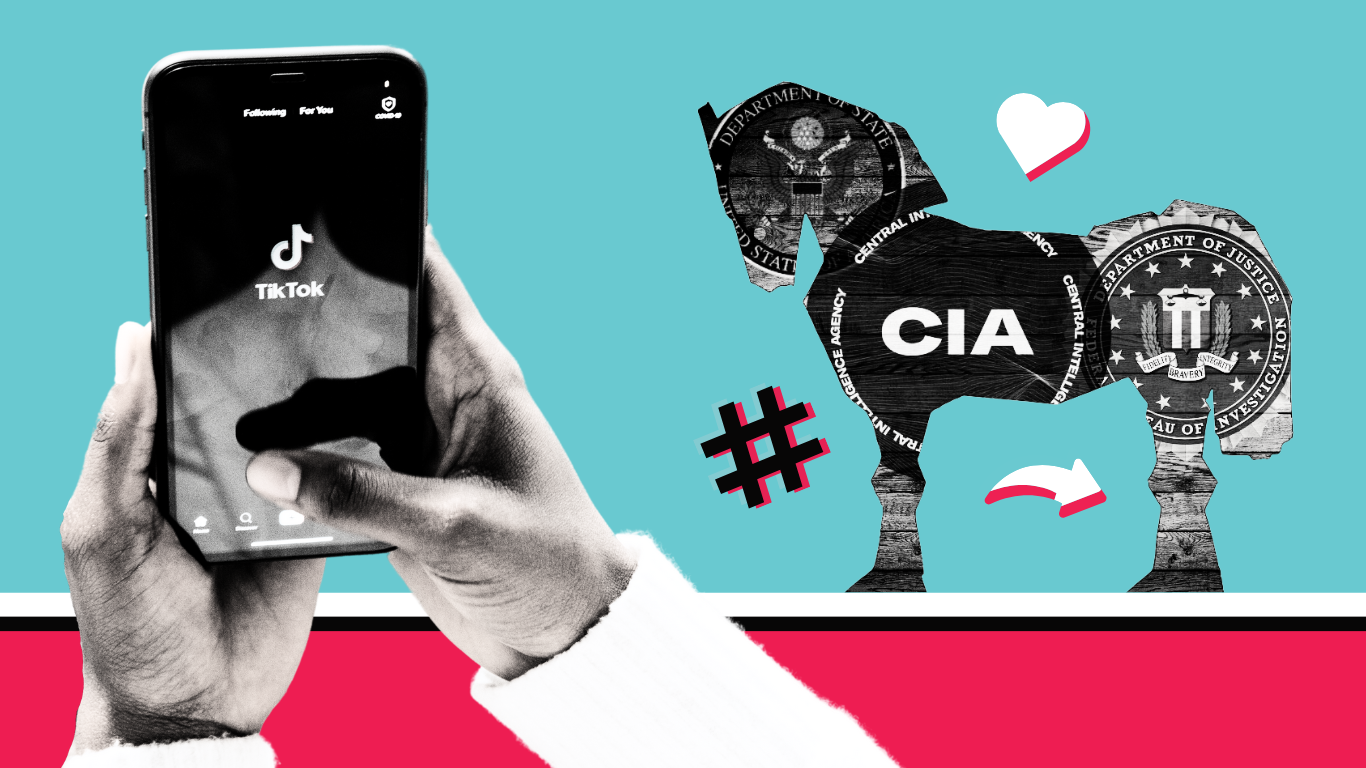
TIKTOK: Chinese “Trojan Horse” Is Run By State Department Officials
By Alan Macleod / MintPressNews
For quite some time, TikTok has been recruiting former State Department officials to run its operations.
TIKTOK: Chinese “Trojan Horse” Is Run By State Department Officials
 Ms. Cat’s Chronicles
You must be logged in to post a comment.