Overextending America: Israel’s Interceptor Shortfall + My Commentary

This isn’t just about missile inventories. It’s about a superpower stretching its supply chains thin while picking fights on multiple fronts. As analyst Brian Berletic warned: “The US is unprepared for the scale of war it is provoking around the globe” (RAND might call it “Overextending America”—assuming they ever write the sequel). The numbers may look technical, but the pattern is strategic exhaustion. Below is the report—and my commentary on why shortfalls in interceptors are just a symptom of something far broader.

Israel Is Running Low on Air Defense Interceptors

Read More »

Israel races to supply anti-missile shield

Israel races to supply anti-missile shield

“Israel’s munitions issue is serious,” said Dana Stroul, a former senior US defence official with responsibility for the Middle East.

“If Iran responds to an Israel attack [with a massive air strike campaign], and Hizbollah joins in too, Israel air defences will be stretched,” she said, adding that US stockpiles were not limitless. “The US can’t continue supplying Ukraine and Israel at the same pace. We are reaching a tipping point.”

Boaz Levy, chief executive of Israel Aerospace Industries, a state-owned company which makes the Arrow interceptors used to shoot down ballistic missiles, said he was running triple shifts to keep production lines running.

Some of our lines are working 24 hours, seven days a week. Our goal is to meet all our obligations,” Levy said, adding that the time required to produce interceptor missiles was “not a matter of days”. While Israel does not disclose the size of its stockpiles, he added: “It is no secret that we need to replenish stocks.

The Israeli military claimed in April that, with the help of the US and other allies, it achieved a 99 per cent interception rate against an Iranian salvo of 170 drones, 30 cruise missiles and 120 ballistic missiles.

But Israel had less success fending off a second Iranian barrage of over 180 ballistic missiles fired on October 1. Almost three dozen missiles hit Israel’s Nevatim air base, according to open source intelligence analysts, while one missile exploded 700 metres away from the headquarters of the Mossad, Israel’s foreign intelligence agency.

We are not seeing Hizbollah’s full capability yet. It has only been firing at around a tenth of its estimated prewar launching capacity, a few hundred rockets a day instead of as many as 2,000,” said Assaf Orion, a former Israeli brigadier general and head of strategy at the Israel Defense Forces.

“Some of that gap is a choice by Hizbollah not to go full out, and some of it is due to degradation by the IDF. . . But Hizbollah has enough left to mount a strong operation,” Orion added. “Haifa and northern Israel are still on the receiving end of rocket and drone attacks almost every day.”

“During the October 1 attack, there was a sense the IDF reserved some Arrow interceptors in case Iran fired its next salvo at Tel Aviv,” said Ehud Eilam, a former researcher at Israel’s Ministry of Defence. “It’s only a matter of time before Israel starts to run out of interceptors and has to prioritise how they are deployed.

Dana Stroul wrote the article that I previously posted back on September 28th.

Previously:

Israel and Hezbollah Are Escalating Toward Catastrophe (it’s not looking good for the IOF)

U.S. to Deploy Missile Defense System and About 100 Troops to Israel + More Updates

US-Israel Inch Toward Wider, More Dangerous War

by Brian Berletic

Beginning in October 2023 a renewed cycle of violence began destabilizing the Middle East. Hamas’ October 7, 2023 military operation into Israeli-held territory served as a pretext for Israel, not to dismantle Hamas itself, but to conduct an indiscriminate punitive military operation against all of Gaza.

US-Israel Inch Toward Wider, More Dangerous War (archived)

Related:

U.S. to Deploy Missile Defense System and About 100 Troops to Israel + More Updates

Israel—‘Hamas’ War

U.S. to Deploy Missile Defense System and About 100 Troops to Israel + More Updates

The Pentagon announced it would send the Terminal High Altitude Area Defense battery and its crew as Israel considered retaliatory attacks against Iran.

The United States sent a THAAD battery along with other air defense systems to the region weeks after the Hamas-led attacks on Oct. 7, 2023. It was not immediately clear how quickly the missile defense system and troops would arrive in Israel.

U.S. to Deploy Missile Defense System and About 100 Troops to Israel

Related:

How The US Navy, Coast Guard & USAF Work Together In A Theater Like Israel

The USAF provides ongoing ISR [Intelligence, surveillance and reconnaissance] ops to help track rocket launches supporting missile defense. The Air Force also monitors militant activity in Gaza to assist with precision targeting to minimize collateral risk. 

Another strategic role of the US Navy and Coast Guard is protecting Israel’s offshore energy platforms.

During conflicts, USAF aircraft often provide aerial refueling, logistical support, or electronic warfare capabilities in support of other US forces and any allied forces that may operating in the theater. Air Force bases are also frequently home to US pre-positioned military supplies or equipment, which other branches can quickly access if needed. USAF bases also provide airfield facilities used by all branches and allied forces. The hospitals on USAF bases are frequently the closest and best place for casualties or evacuees to be taken. This rapid deployment capability ensures that the US can provide timely support during a conflict.

Stock depletion, declining supply prompt ‘Israel’ to restrict arms use

The US is unprepared for the scale of war it is provoking around the globe

Pentagon To Spend $1.2B To Maintain Red Sea Operation

Oct 3, 2024 (Bloomberg) –The Pentagon will spend about $1.2 billion to maintain ships deployed as part of operations in the Red Sea and to replenish stocks of missiles fired to repel attacks by Iran and its proxies, according to new budget documents.

Pentagon To Spend $1.2B To Maintain Red Sea Operation

Previously:

US spends a record $17.9 billion on military aid to Israel since last Oct. 7

US spends a record $17.9 billion on military aid to Israel since last Oct. 7

WASHINGTON (AP) — The United States has spent a record of at least $17.9 billion on military aid to Israel since the war in Gaza began and led to escalating conflict around the Middle East, according to a report for Brown University’s Costs of War project, released Monday on the anniversary of Hamas’ attacks on Israel.

US spends a record $17.9 billion on military aid to Israel since last Oct. 7

Israel and Hezbollah Are Escalating Toward Catastrophe (it’s not looking good for the IOF)

Ignore the propaganda. I’ve quoted the most relevant parts of the articles:

09-23-2024 – Israel and Hezbollah Are Escalating Toward Catastrophe

For Israel, the incentives also argue against a large-scale war with Hezbollah. After nearly a year of fighting in Gaza, the IDF is tired, munitions stockpiles are depleted, public support for Israel’s leaders is weak, Israel’s economy is suffering, and its international and regional standing have significantly eroded. And IDF military planners are well aware that Hezbollah’s more advanced fighting capabilities and sophisticated weapons arsenal would make the Gaza campaign look like child’s play.

Read More »

Israel’s Iron Beam: Everything you need to know

Pictures and video of the Iron Dome in action have made appearances across the news and social media apps since Hamas terrorists launched an attack against Israel on Oct. 7. It’s a powerful system, but instead of smart rockets, what if there was a system that used lasers instead? That is exactly what Rafael Advanced Defense Systems’ latest aerial defense system, the Iron Beam, is capable of.

Israel’s Iron Beam: Everything you need to know

Related:

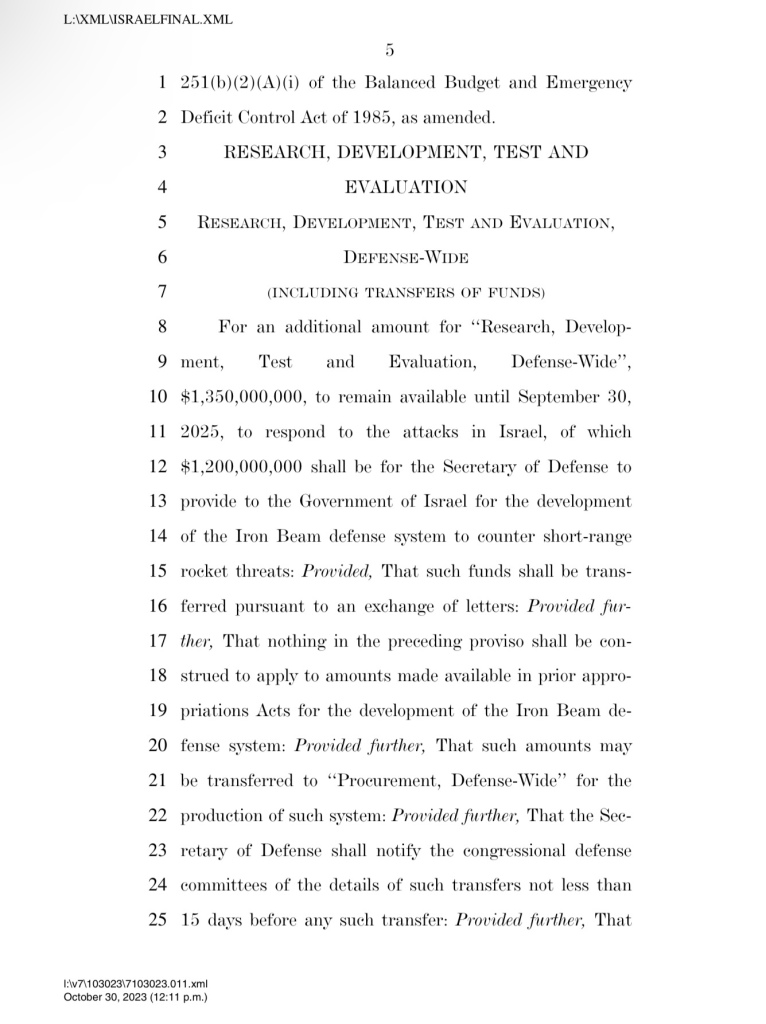
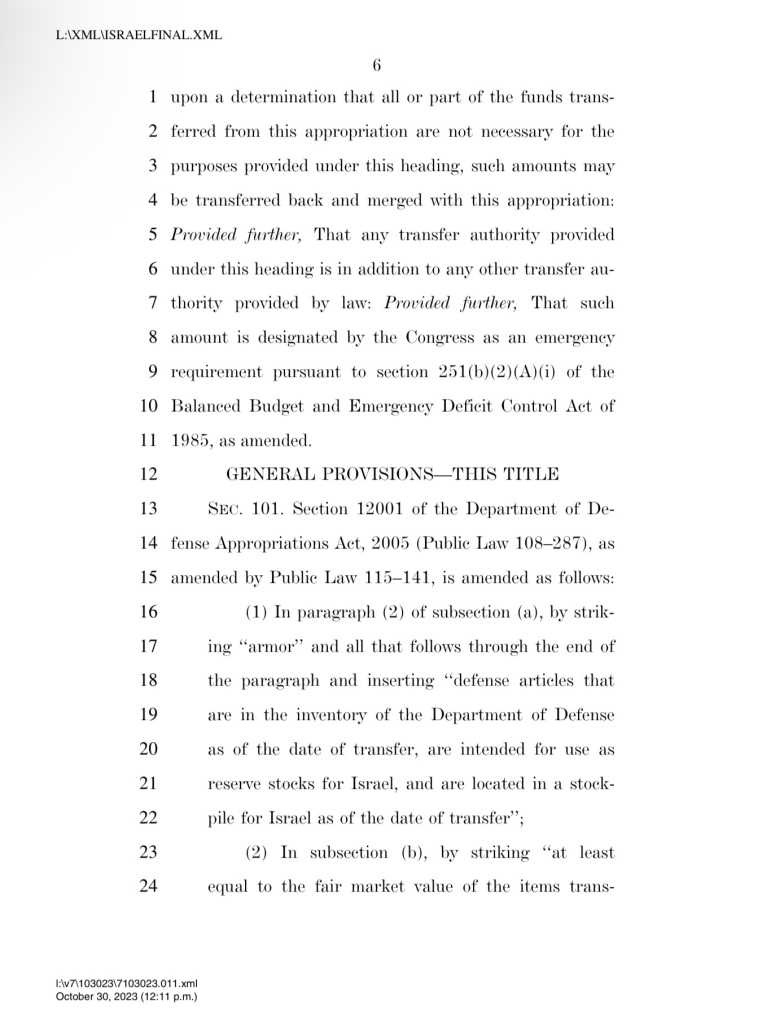
White House requesting funding for Israeli laser weapon, other military assistance