The Ministry of Foreign Affairs of Ukraine has welcomed the nomination of Keith Kellogg for the position of Special Envoy for Ukraine and Russia and expressed its readiness to cooperate.
A recent simulation conducted by the Center for Strategic and International Studies (CSIS) paints a stark picture of the U.S. defense industrial base, revealing critical vulnerabilities in its ability to support military operations in the event of a large-scale conflict. The findings underscore the urgent need for public-private partnerships, increased investment in manufacturing capacity, and reduced reliance on foreign components.
Xi Jinping has ordered the People’s Liberation Army to be ready to seize Taiwan by 2027. Whether he launches an invasion may depend on President Trump’s defense secretary. If confirmed by the Senate, Army National Guard veteran and Fox News host Pete Hegseth, Mr. Trump’s nominee, will have to confront the collapse of deterrence in Europe and the Middle East, resource constraints on Capitol Hill, recruitment challenges, and a deteriorating balance of power in the Indo-Pacific. The only way to promote peace is to go to war on day one—not with China, Russia or Iran but with the Pentagon bureaucracy.
Gallagher wants a wartime economy while leaving the financing to the private sector. It won’t work. 👇👇👇
In reality, Russia and China’s industrial bases are larger than America’s because of a number of factors, including factors no amount of American political will, can overcome. China in particular has a population four times greater than the US. China graduates millions more each year in the fields of science, technology, engineering, and mathematics than the US, and the physical size of its industrial base – military or otherwise – reflects this demographic disparity.
Even if the US had the political will to reform its military industrial base, stripping away profit-driven private industry and replacing it with purpose-driven state-owned enterprises, even if the US likewise transformed its education system to produce a skilled workforce rather than squeeze every penny from American students, and even if the US invested in its national infrastructure – a fundamental prerequisite for expanding its industrial base – it still faces a reality where China has already done all of this, and done so with a population larger than it and its G7 partners combined.
FYI, Gallagher is with Palantir, as well as the Hudson Institute.
A Defense Department report highlights disturbing examples of white supremacy inside the military, calling for changes in how the department screens recruits for possible ties to domestic extremism.
The report, which the Trump administration drafted last year before the Jan. 6 riot at the U.S. Capitol, was sent to Congress in October, but it has not been made public until now.v
The Replicator initiative presents several challenges for Congress related to information adequacy, funding, system effectiveness, risk management, ethical considerations, and implications for military personnel and structure.
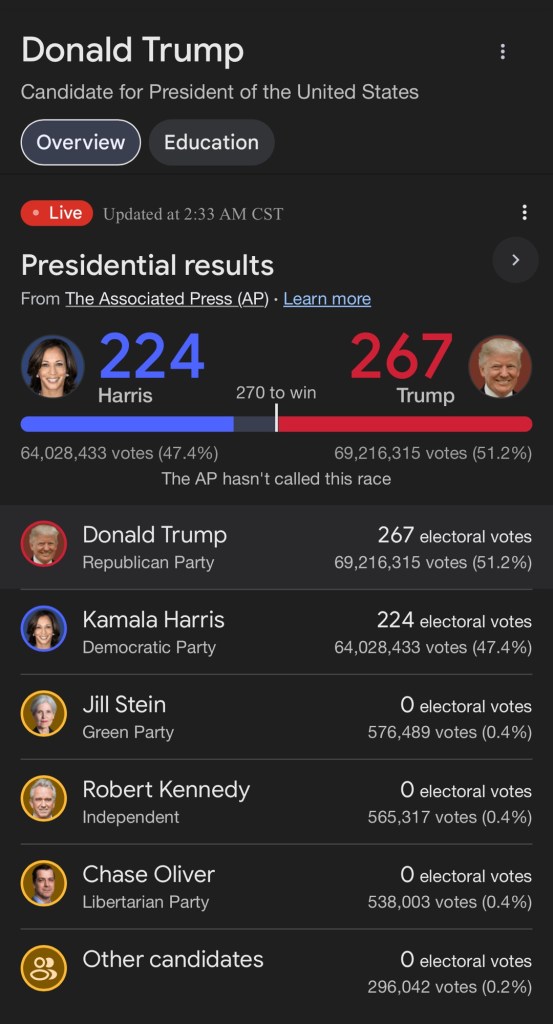
This election didn’t really matter that much to me. Neither the Democrats nor Republicans have done anything for me. Anyway, it didn’t matter who won, as nothing will change. Same circus, different clowns. The Palestinians have lost, while Silicon Valley and the Military Industrial Complex (or as it has been rebranded, the Defense Industrial Base) have won.
The first Columbia class submarine is due for delivery to the Navy in 2027. It plans to spend more than a hundred billion dollars for a dozen of them. Delays in this scale of program are inevitable. In fact, sub number one is already late. Yet the Navy, auditors say, lacks a statistical schedule risk analysis to go along with the program. And that means it may not have enough insight into the whole program. To share details, the Director of Contracting and National Security Acquisitions at the Government Accountability Office, Shelby Oakley, joined the Federal Drive with Tom Temin.
When the trade war just started, Trump equated de-Sinicization with de-risking. However, the China’s latest sanction against US military companies will prove that after de-Sinicization, the only thing left for the US Air Force will be risk.
…
Moving forward, we may observe further changes in the reliability of F-35s delivered after October 2020. However, as long as the Pentagon doesn’t replace the ejection seats with American-made ones, at least U.S. pilots should still be able to survive.

 Ms. Cat’s Chronicles
You must be logged in to post a comment.