
A group of bipartisan, bicameral lawmakers led by U.S. Congressman Mike Waltz (FL-06) and Senator Mark Kelly (D-AZ) have issued a letter to President Biden urging him to fortify the United States’ maritime power amid pressure from China.
Bipartisan Lawmakers Urge President Biden to Strengthen U.S. Maritime Power
Tag: Defense Production Act
Stop spending Defense Production Act money on foreign suppliers
For the second year in a row, and just as the fiscal 2024 National Defense Authorization Act process peaks in Congress, the Biden administration’s Defense Department seeks executive branch authority to spend U.S. taxpayer Defense Production Act money with foreign suppliers, in addition to American ones.
Stop spending Defense Production Act money on foreign suppliers
‘We can de-risk but not decouple’ from China, says Raytheon chief
Head of aerospace and defence group says western manufacturers will find it impossible to completely cut ties
‘We can de-risk but not decouple’ from China, says Raytheon chief
Related:
Aerojet gets $215 million to boost production of solid rocket motors used in weapons for Ukraine
Going to war? Good news! The United States is 13 years behind in ammunition production, NYT reports
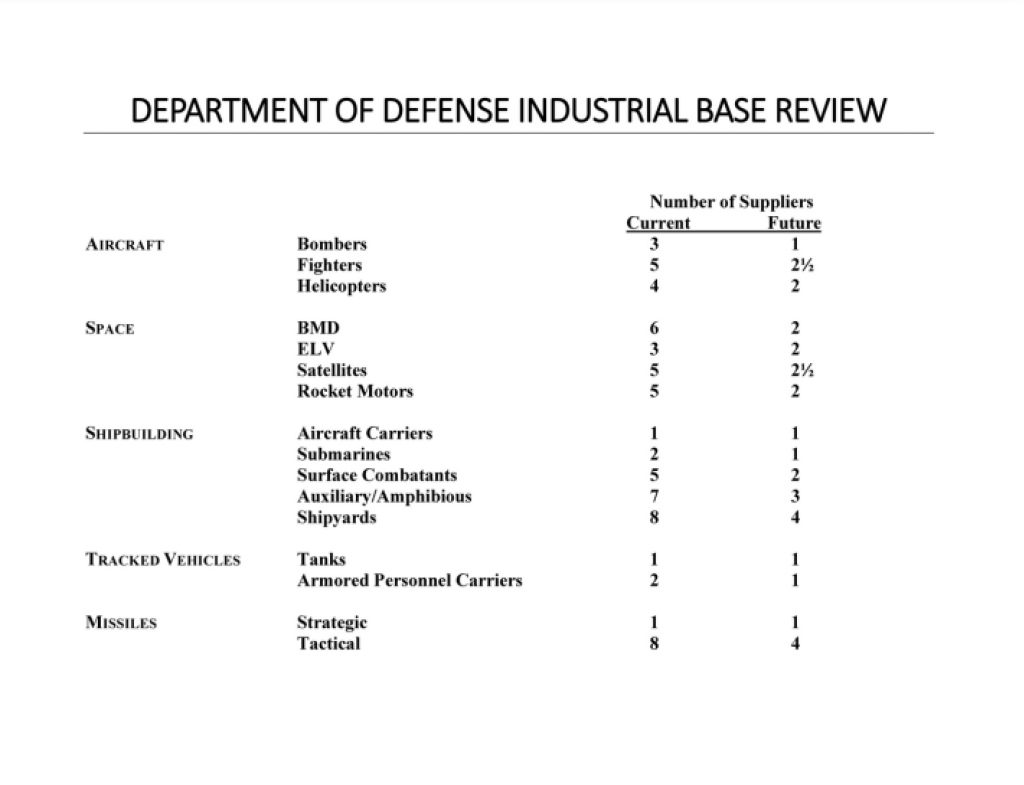
Rapidly Depleting Munitions Stockpiles Point to Necessary Changes in Policy

SUMMARY
U.S. munitions stockpiles are rapidly being depleted as the Ukraine war continues. Sufficient stockpiles of munitions are vital to the U.S. defense. Once the stockpiles are expended, the Department of Defense cannot simply buy more munitions—manufacturing takes years. Congress and the Department of Defense must ensure that the U.S. has sufficient stockpiles to meet the challenges of the modern era while working with manufacturers to make the industry as responsive as possible.
Rapidly Depleting Munitions Stockpiles Point to Necessary Changes in Policy
Pink Flamingo: The U.S. Military Will Pay for Its Munition Shortage
The military must set realistic requirements for munitions stockpiles based on the certainty of the high rates of expenditures that will be experienced in any future conflict with Russia or China.
Pink Flamingo: The U.S. Military Will Pay for Its Munition Shortage
Imagine that!? With all of the handouts to the military industrial complex, they didn’t have enough 💰 to make munitions for the National Defense Stockpile?! I call 💩!
Moment of truth in the Ukraine war
BY M. K. BHADRAKUMAR | INDIAN PUNCHLINE | SEPTEMBER 4, 2022
The fog of war envelops the Ukrainian “counteroffensive” in southern Kherson region where Kiev hopes to regain lost territories. But by the sixth day of operations, the echo chamber in the West has fallen silent. There are no tall claims.
Moment of truth in the Ukraine war
Baby Formula Crisis Requires Urgent Action to Address Shortage of Vital Nutrition & Price Gouging
Four corporations control 90% of the baby formula market in the United States, and as a national baby formula shortage drags on, it has impacted working-class families of color the most. We get an update from Democratic Congressmember Ro Khanna of California, who just wrote an open letter urging leaders of federal agencies such as the Food and Drug Administration to take bolder action to address the shortage. Khanna discusses efforts to increase production domestically and supplement the shortage with formula from other nations, and why he is calling for President Biden to go further and pass antitrust laws to reduce reliance on corporate monopolies for vital products. “Why is it that we are so dependent on one or two manufacturers in this country?” says Khanna. “This is a problem not just in baby formula.”
Baby Formula Crisis Requires Urgent Action to Address Shortage of Vital Nutrition & Price Gouging
Domestic Crude Oil Peaked at $145 a Barrel in 2008. It Closed Yesterday at $118.50. So Why Is Gas at the Pump at All-Time Highs?
Part of that, as the above stories illustrate, is just plain ole price gouging. But the big picture is more complicated than that. According to the EIA, in addition to the 61 percent of the price of a gallon of gas that comes from the cost of crude oil, the other 39 percent shakes out as follows: the costs of refinement (14 percent), distribution and marketing (11 percent), and taxes (14 percent).
And refining* looks to be a particular problem right now. The EIA reports that as of January 1, 1982, the U.S. had 301 refineries in operation. That compares to just 129 in operation as of January 1, 2021.
Related:
*Chevron CEO says there may never be another oil refinery built in the U.S.
Previously:
More Oil From U.S. Strategic Petroleum Reserve Heads To Europe
 Ms. Cat’s Chronicles
You must be logged in to post a comment.