
On Wednesday, US Citizenship and Immigration Services (USCIS) announced that it would begin screening the social media activity of immigrants for “antisemitism” as part of the Trump administration’s broad crackdown on pro-Palestine speech.
Read More »
Tag: Department of Homeland Security
F.B.I. Agents in Southeast Asia Paid for Sex While Police Stood By, Watchdog Says
F.B.I. agents stationed overseas had sex with prostitutes in Cambodia, the Philippines and Thailand, even as some bureau employees attended training meant to combat human trafficking, a practice that often exploits vulnerable women, according to an investigation by the Justice Department’s watchdog.
F.B.I. Agents in Southeast Asia Paid for Sex While Police Stood By, Watchdog Says
US Tries To Deport Student Who’s Lived in US Since Age 7
NEW YORK (AP) — Another Columbia University student said Monday that the Trump administration has targeted her for deportation over her pro-Palestinian views, accusing immigration officials in a lawsuit of employing the same tactics used on Mahmoud Khalil and other college activists.
Previously:
Judge blocks Trump 2.0’s declaration of war on Venezuelan “gangs”
Federal judge blocks Trump’s plan to target ‘alien enemies’ for deportation
In his latest move to clamp down on illegal immigration and immigration more broadly, President Trump has filed a presidential action invoking the Alien Enemies Act of 1798, a seldom-used law that gives the president authority to detain or deport nationals of an enemy nation during wartime. It’s only the fourth time in American history a president has used the act — and the first since World War II.
The directive targets members of Tren de Aragua, a Venezuelan prison gang, and authorizes expedited removal of all Venezuelan citizens 14 and older, deemed to be members of the organization, who are not U.S. citizens or lawful permanent residents.
Related:
Read More »Colombia’s students can’t publish anything about Palestine or Ukraine?!

First They Came for Mahmoud Khalil…
Trump Admin Is Trying To Deport Mahmoud Khalil for Speech That’s ‘Contrary’ to US Foreign Policy
The Trump administration is trying to deport 30-year-old Mahmoud Khalil, a green card holder who was arrested by ICE agents over the weekend, for activity that is “contrary” to US foreign policy based on his involvement in protests critical of Israel’s war on Gaza at Columbia University.
Read More »
Elon Musk’s Cruel Cuts Expose What MAGA Really Thinks of Veterans
Elon Musk’s Cruel Cuts Expose What MAGA Really Thinks of Veterans
Key takeaways:
- 60 percent of the 16 million Americans who have served in the military supported Donald Trump, and 55 percent believed his policies would benefit veterans, but many veterans have been fired due to massive cuts by Trump and Elon Musk’s Department of Government Efficiency.
- Nearly 6,000 veterans have already lost their jobs due to the cuts, and an estimated 100,000 veterans could be out of work when all is said and done, with around 36,000 disabled veterans facing unemployment and difficulty in finding private-sector jobs.
- The federal government plays a critical role for veterans, providing professional opportunities and support for those transitioning from military to civilian life, but the mass firing of federal workers, including many veterans, will have devastating effects on communities and individuals across the country.
Trump Admin Is Misleading Public About Venezuelans at Guantánamo, Attorneys Say
After Kristi Noem, the newly confirmed secretary of the Department of Homeland Security (DHS), traveled to Guantánamo Bay earlier this week, she told CNN the Venezuelan migrants being transferred to the notorious U.S. naval base and military prison are “the worst of the worst that we’ve pulled off our streets.”
Immigration attorneys say the facts on the ground do not support Noem’s official narrative about what’s going on at Guantánamo Bay, where President Donald Trump has ordered the construction of a tent city in order to detain up to 30,000 migrants, regardless of the site’s capacity, including asylum seekers fleeing violence and poverty. For civil rights groups, the transfer is only the latest in a series of legally dubious efforts by the federal government to dodge constitutional requirements by incarcerating people at the notorious offshore facility.
Trump Admin Is Misleading Public About Venezuelans at Guantánamo, Attorneys Say
Nothing about the previous attempts by the US government to overthrow the Venezuelan government.
Support for Truthout comes from assorted left-leaning foundations and individual contributors. Major foundation donors include the Schumann Media Center, the Lannan Foundation, and the Cloud Mountain Foundation. Other donors include former militant extremist and academic William Ayers. Another donor is the Park Foundation, an environmentalist grantmaking group focused on opposing fracking, or drilling for natural gas.
Previously:
Venezuelan president blames opponent for post-election violence + More
As predicted: violence by the far-right Venezuelan opposition breaks out across Caracas
How the U.S. Drove Venezuelans North
When they request asylum in the United States, migrants have to say something against their government. But everyone in the Venezuelan community knows that it’s a lie. Venezuelan comedians in Florida, like George Harris, joke about the Venezuelans lying to the migration people just in order to receive asylum.
Tag: 2024 Venezuelan Presidential election
María Corina Machado is the female Javier Milei (aka US Puppet)
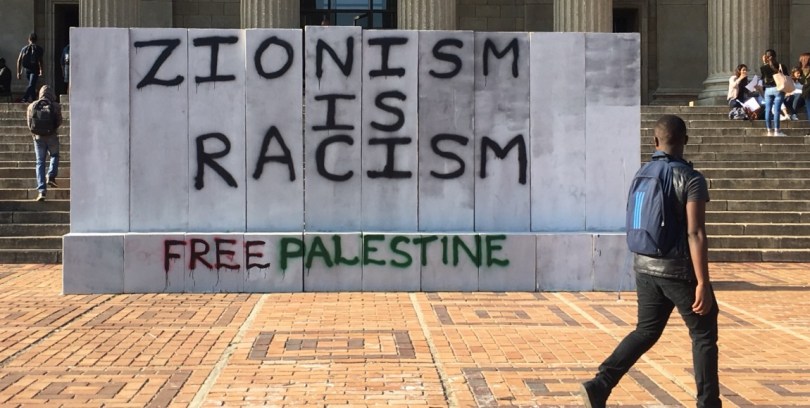
Trump antisemitism executive order invokes anti-KKK law and targets ‘leftist, anti-American’ universities
President Donald Trump’s executive order on antisemitism encourages the attorney general to use a federal law created to target the Klu Klux Klan, and will direct federal agencies to tell colleges and universities to “monitor” and “report activities” by foreign students, staff and faculty for activities related to terrorism, according to a draft of the order obtained by the Forward.
…
In addition, it says that the attorney general is “encouraged” to use the federal “conspiracy against rights” law “to combat antisemitism.” The measure was originally passed to combat KKK violence in the aftermath of the Civil War, and has since been used to prosecute civil rights violations related to elections. Trump himself was charged with violating the law in relation to his alleged attempt to subvert the results of the 2020 election.
…
The Anti-Defamation League has called for more aggressive action against students protesting Israel, including asking school presidents to investigate Students for Justice in Palestinechapters for providing material support to terrorist organizations. The Secure Community Network — the main organization providing security advice to synagogues and Jewish organizations in the United States — recently called for the country to “expel any non-citizen alien who supports terrorism,” including protesters.
Republicans have focused almost all of their attention on what they believe is antisemitism coming from left-wing activists and critics of Israel. The Heritage Foundation released a blueprint for the Trump administration to fight antisemitism called Project Esther that discussed how to dismantle a “Hamas Support Network” composed of progressive advocacy groups and foundations, while the author of that report said that he was not concerned with addressing the threat posed by white supremacists.
Bangladesh mission in India attacked: Why are ties in freefall?
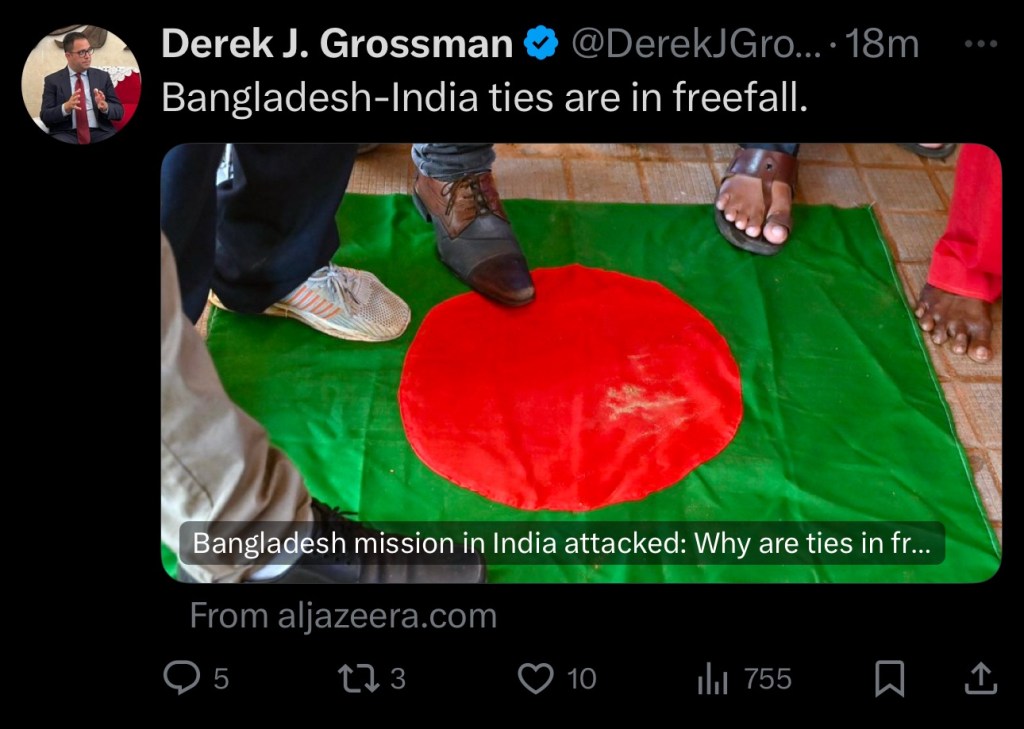
Bangladesh mission in India attacked: Why are ties in freefall?
I wonder why?* /s
Related:
Read More » Ms. Cat’s Chronicles
You must be logged in to post a comment.