

Related:
The Secrets Presidents Keep in Their Garages and Luxury Resorts
Biden Used Classified Documents Accusation Against Carter CIA Nominee
President Biden will change his Chief of Staff in the near future. Current Chief of Staff Ron Klain (Revolution LLC) will be replaced by Jeff Zients (The Cranemere Group and Portfolio Logic LLC). Biden will go from one private equity underwriter (PEU) to another.
Biden Chief of Staff: PEU to PEU
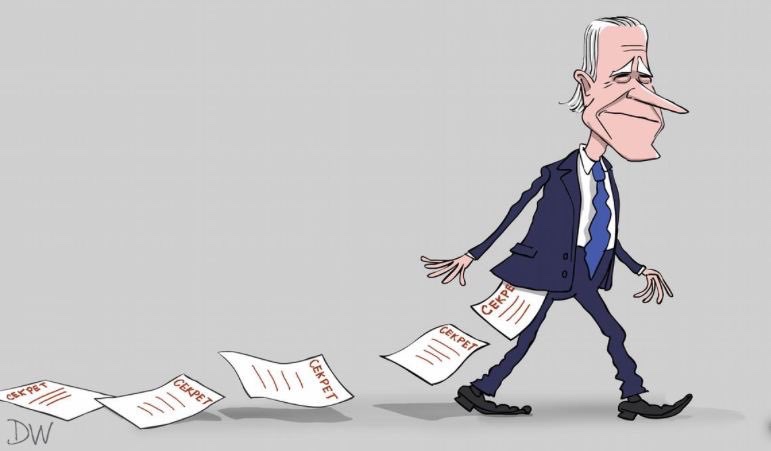
New search of Biden’s home turns up more classified documents
Some of the classified documents and “surrounding materials” dated from Biden’s tenure in the US Senate, where he represented Delaware from 1973 to 2009, the president’s personal lawyer, Bob Bauer, said in a statement on Saturday.
As I write, four days after it was revealed that classified documents had been found in the former personal office of President Joseph Biden when he was Barack Obama’s Vice President in charge of the 2014 U.S.-backed fascist-led coup in Ukraine, no one has revealed who found the secret documents, or others that were “discovered” soon after. No one has reported their contents, although a combination of government agencies, now in possession of the documents, including the keepers of the National Archives and Records Administration, the FBI and no doubt Republicans who today control the House of Representatives, will sooner or latter reveal whether they are deemed useful to bring charges against Biden or, as The Times reports, his drug-addicted, most likely corrupt, rich boy son Hunter.
Hoisted on His Own Petard: Biden’s Hidden Classified Documents Set to Expose U.S. Instigation of 2014 Ukraine Coup
To be honest, I’m not holding my breath for this to happen. “Ukrainegate” didn’t expose it because it would have revealed that both Republicans and Democrats were complicit!
The report focuses heavily on how the nuclear industry influences institutional output in its favor and works to censor its critics.
New study reveals rampant conflicts of interest at think tanks

from the us-vs.-them-means-they-still-get-to-kill-us-with-impunity dept – Mon, Jan 9th 2023 08:10pm – Tim Cushing
Law enforcement agencies have no interest in tracking how often officers kill people. Despite all the talk about police reform, very few states require accurate reporting on deadly force deployments.
Independent Reporting Shows Cops Are Still Killing People At An Alarming Rate
Making headlines around the world last week was the news that the Attorney General of the U.S. Virgin Islands, Denise George, was fired just days after she filed a federal lawsuit against JPMorgan Chase, charging it with facilitating the sex trafficking of children by Jeffrey Epstein. George was fired by the Governor of the Virgin Islands, Albert Bryan Jr.
JPMorgan Chase Hit with Lawsuit for Facilitating Jeffrey Epstein’s Crime Network; Similar Charges Were Brought Against It for Facilitating Madoff’s Ponzi Scheme
With new FBI and Department of “Justice” (DOJ) attacks expected in early January, a defense, mobilization and information session attracted hundreds of allies of the African People’s Socialist Party (APSP). On Friday, December 23 they zoomed into the “Emergency Mass Meeting: Hands Off Uhuru! Hands Off Africa!” The APSP told its supporters that it expects indictments in early January 2023 and possibly sooner.
Two Barrels Aimed at African People’s Socialist Party
Related:
Below is my column in the Hill on the need for a new “Church Committee” to investigate and reform the Federal Bureau of Investigation (FBI) after years of scandals involving alleged political bias. In response to criticism over its role in Twitter’s censorship system, the FBI lashed out against critics as “conspiracy theorists” spreading disinformation. However, it still refuses to supply new information on other companies, beyond Twitter, that it has paid to engage in censorship.
When the FBI Attacks Critics as “Conspiracy Theorists,” It’s Time to Reform the Bureau
Previously:
The FBI Paid Twitter $3.4 Million for Processing Requests:
Twitter’s “Guidelines for law enforcement” does state under a section titled “Cost reimbursement” that “Twitter may seek reimbursement for costs associated with information produced pursuant to legal process and as permitted by law (e.g., under 18 U.S.C. §2706).” But the fact that this garnered millions from the FBI was not, as far as I can tell, known until now.
 Ms. Cat’s Chronicles
You must be logged in to post a comment.