Woman’s fate is bound up with that of the exploited male. This is a fact. However, this solidarity, arising from the exploitation that both men and women suffer and that binds them together historically, must not cause us to lose sight of the specific reality of the woman’s situation. The conditions of her life are determined by more than economic factors, and they show that she is a victim of a specific oppression. The specific character of this oppression cannot be explained away by setting up an equal sign or by falling into easy and childish simplifications.
WASHINGTON—Back in the days when Stellantis was Chrysler, there was a sense of camaraderie on the shop floor, veteran Auto Workers say. Not anymore. Not under Stellantis. All they perceive now is corporate greed, satisfying investors, and filling honchos’ pockets with workers’ dollars.
The revival of the Stellantis plant is a stunning reversal of fortunes for Belvidere, Ill. But workers say they won’t rest until they see the concrete being poured.
The revival of the Stellantis plant is a stunning reversal of fortunes for Belvidere, Ill. But workers say they won’t rest until they see the concrete being poured.
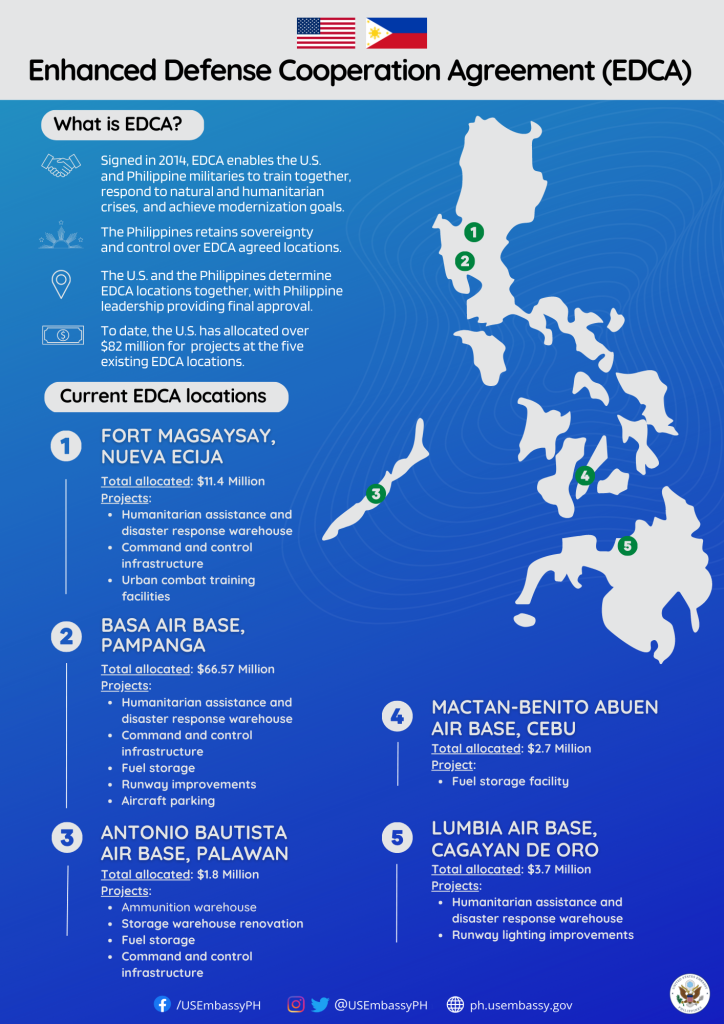
Moreover, the involvement of Subic Bay, a location not officially listed as a site/base under the expanded Enhanced Defense Cooperation Agreement (EDCA) as the alleged destination of US military fuel from Pearl Harbor, prompts a critical inquiry about its role and whether it might be serving as an unofficial or de-facto EDCA site. Hence, it begs to inquire if Subic Bay is now effectively functioning as a de-facto EDCA site. And if so, could there be other undeclared de-facto EDCA sites serving similar purposes other than the nine declared ones?
…
Could it be posited that the current Philippine administration appears to prioritize the demands and interests of the United States over its own national interests, sovereignty, and independence, suggesting a level of deference that could be interpreted as reminiscent of a vassal state? This perspective raises questions about the autonomy of the Philippine political leadership and the extent to which it serves the interests of its citizens first and foremost. The lack of public discussion, accountability, and transparency on matters that potentially impinge on national sovereignty could be seen as indicative of a disproportionate influence by the U.S. on Philippine domestic affairs and foreign policy, prompting a reevaluation of the true nature of the bilateral relationship between the two nations.
Part of that, as the above stories illustrate, is just plain ole price gouging. But the big picture is more complicated than that. According to the EIA, in addition to the 61 percent of the price of a gallon of gas that comes from the cost of crude oil, the other 39 percent shakes out as follows: the costs of refinement (14 percent), distribution and marketing (11 percent), and taxes (14 percent).
And refining* looks to be a particular problem right now. The EIA reports that as of January 1, 1982, the U.S. had 301 refineries in operation. That compares to just 129 in operation as of January 1, 2021.
What appears to be meant in the U.S. by ‘competing with China’ can be inferred by the rising Pentagon budget, by the failure to raise the minimum wage, by hiring private corporations to get around restrictions on domestic spying, and by appointing a high-level administrator to shut-down inconvenient political opinions on the internet. The political parties are now balkanized to the point where their adherents trust members of their own party, but not the other. What this likely means is an iterative process between ‘wealth of nations’ style economic nationalism and neoliberal internationalism where the only constant is the consolidation of political control by oligarchs and corporate executives. I believe that Italians in the 1920s and 1930s had a name for this type of governance.


 Ms. Cat’s Chronicles
You must be logged in to post a comment.