Chokepoints Are The Focus Of A New Cold War

By Captain John Konrad (gCaptain) In 1883, Alfred Thayer Mahan laid out the brutal truth of global power: Whoever rules the waves rules the world. He wasn’t just talking about fleets of warships. He was talking about chokepoints—the narrow passages through which the vast majority of the world’s trade must pass. Control them, and you don’t need to launch an invasion. You can starve an economy and restrict military sealift without ever firing a shot.

Chokepoints Are The Focus Of A New Cold War

Related:

Trump orders military to plan invasion of Panama to seize canal: report

US Seizing Panama & Greenland Aimed at China (archived)

Stranglehold: The Context, Conduct and Consequences of an American Naval Blockade of China

Offshore Control: A Proposed Strategy for an Unlikely Conflict

Pentagon Appointee Opposes ‘Belligerent Military Initiatives’ Aimed at China

The Pentagon official tasked with overseeing U.S. defense policy toward Southeast Asia recently advised against pursuing hawkish defense policies and a major trade war against China, a marked contrast with top Trump appointees.

John Andrew Byers, a longtime history professor who oversaw the Charles Koch philanthropic network’s grants promoting libertarian foreign policy stances at universities, was sworn in this week as the deputy assistant secretary of defense for South and Southeast Asia — a role that immediately thrusts him to the center of America’s response to China’s ongoing military pressure campaign targeting the Philippines, with which Washington holds a mutual defense treaty.

Pentagon Appointee Opposes ‘Belligerent Military Initiatives’ Aimed at China

Related:

Lowy Institute: Trump’s grand bargain? The Philippines caught between US and China by Richard Heydarian

CGS non-resident fellow Andrew Byers co-authors article with The American Conservative

Deputy Assistant Secretary of Defense for South and Southeast Asia: Andrew Byers

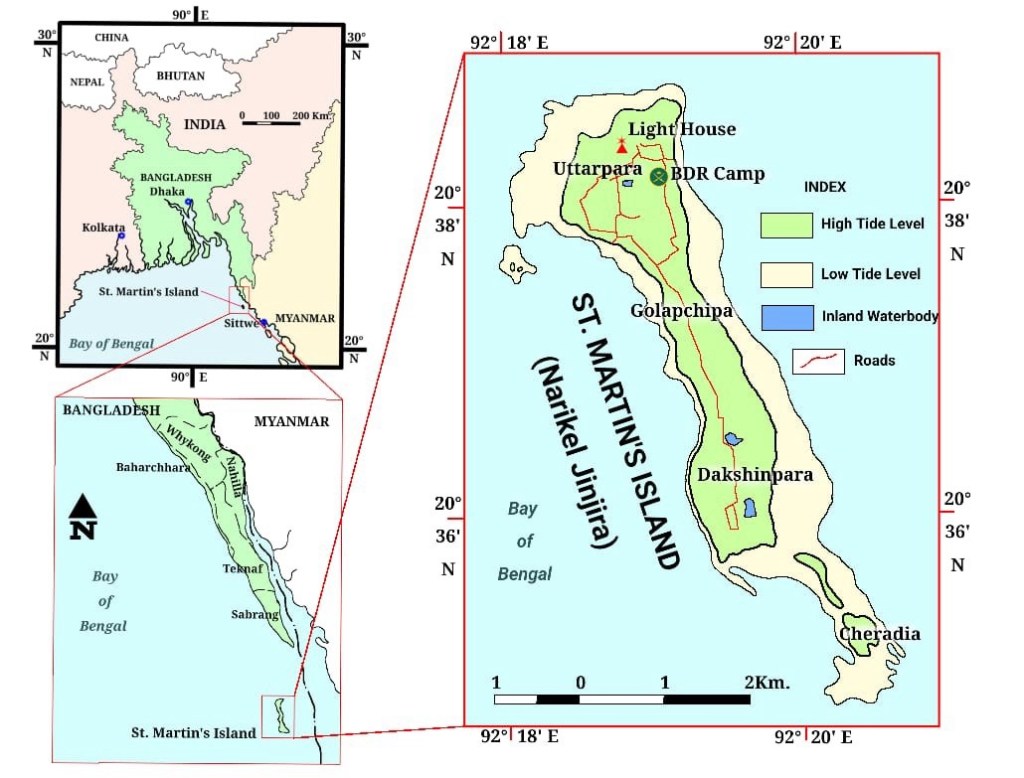
India is losing Bangladesh to China and Pakistan, and it could get worse

India is losing Bangladesh to China and Pakistan, and it could get worse

Source: St. Martin’s Island: A new flashpoint in the Bay of Bengal?Observer Research Foundation

by Derek J GrossmanRAND

Beijing has further sought to develop numerous Bangladeshi ports, including Chittagong, Mongla, and Sonadia ports, to achieve a maritime presence in the Bay of Bengal. Enhanced access to any or all of these ports could substantially add to Beijing’s “string of pearls” strategy to hem in India in the Indian Ocean.

Read More »

Transforming naval combat: Boeing’s Orca XLUUV in unmanned operations

Transforming naval combat: Boeing’s Orca XLUUV in unmanned operations

Report to Congress on Navy Large Unmanned Surface and Undersea Vehicles

The Navy wants to use XLUUVs to, among other things, covertly deploy the Hammerhead mine, a planned mine that would be tethered to the seabed and armed with an antisubmarine torpedo, broadly similar to the Navy’s Cold War-era CAPTOR (encapsulated torpedo) mine.

Hammerhead, Orca, SSGN

Read More »

Marcos Says Philippines Won’t Send Warships After China Clashes

Philippine President Ferdinand Marcos Jr. said his nation won’t deploy Navy warships to the South China Sea in response to recent clashes with Beijing in disputed waters.

Marcos Says Philippines Won’t Send Warships After China Clashes

Previously:

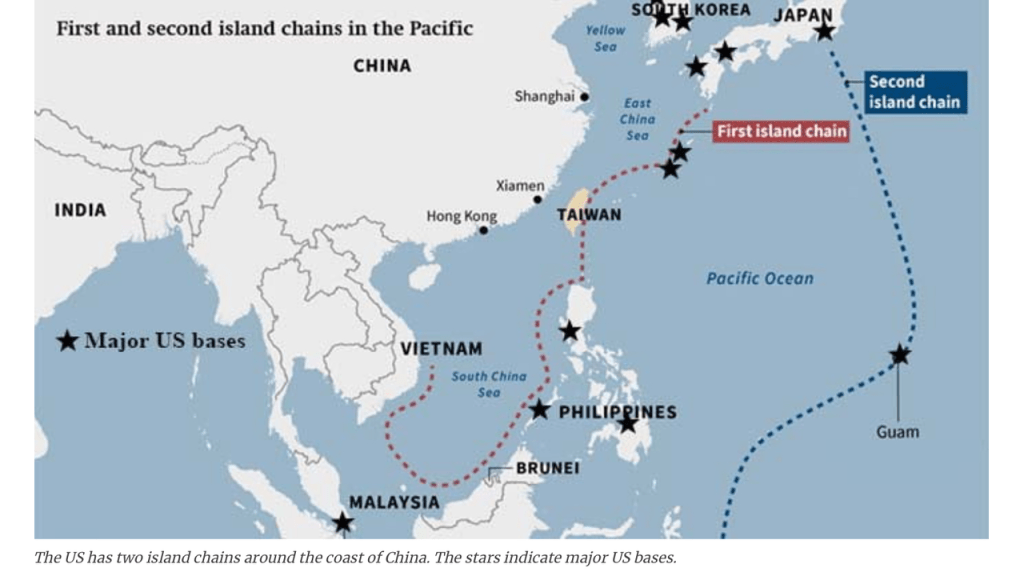
Philippines to match China’s gray zone tactics in South China Sea

What’s Really Going On In the South China Sea Between the Philippines and China

South China Sea: US troop aid may reassure Philippines but will prod China, analysts say

Has anyone realized that by disclosing the existence of “US Task Force Ayungin,” Biden admin implicitly recognized Philippines’ sovereignty over a disputed SCS feature?

Washington has never taken a position on SCS territories(but it has in ECS). This is a clear signal to China.*

Derek J. Grossman, RAND

South China Sea: US troop aid may reassure Philippines but will prod China, analysts say (archived)

The Philippines has said the US task force only offered support – in the form of intelligence and surveillance – and did not directly take part in its resupply missions to BRP Sierra Madre, the retired warship, but analysts suggested that China’s leadership could see it in a different light.

Zheng said the revelation about the American task force meant the US was likely to be more engaged in the drawn-out maritime conflicts in the region, even suggesting that Washington would “be the first to take part in the command and planning of Philippine maritime activities”.

Ding Duo, deputy director of the Centre for Oceans Law and Policy at the National Institute for South China Sea Studies in Hainan, said the presence of a special task force showed that Washington and Manila had long cooperated on resupply operations to Second Thomas Shoal.

“Such support emboldens the Philippines and is not conducive to China and the Philippines managing their differences,” Ding said. “The US involvement has also squeezed the political space for internal coordination and decision-making within the Philippines.”

He said it was also possible that American troops could be on Philippine ships and involved in front-line action “using a covert or concealed identity to participate in Philippine maritime operations” in future.

He said the US could “only intervene [in South China Sea disputes] in a covert manner and so it took the form of a task force”.

Related:

Read More »