
Related:
Trump wants US to ‘partner’ with Russia to weaken China: Divide-and-conquer strategy
Read More »
Pyongyang, June 27 (KCNA) — The Korean Central News Agency released an article “We Reject ‘American-first Principle’- Nazism in the 21st Century” on Monday to shed light on the criminal nature of “American-first principle” touted by the Trump group of the U.S.
Read More »
Trump and foolish old men who redraw maps
Donald Trump
In defiance of UN resolutions and international law, he recognised Jerusalem as Israel’s capital, recognised the Syrian Golan Heights as part of Israel, and now wants to turn Gaza into a US real estate development, reconquer Panama, turn Canada into the 51st State of the USA, rename the Gulf of Mexico and seize Greenland, if necessary by force. And it’s only February. The US spent blood, treasure and decades building the Rules-Based International Order. Biden and Trump have left it in tatters.
Read More »
After Kristi Noem, the newly confirmed secretary of the Department of Homeland Security (DHS), traveled to Guantánamo Bay earlier this week, she told CNN the Venezuelan migrants being transferred to the notorious U.S. naval base and military prison are “the worst of the worst that we’ve pulled off our streets.”
Immigration attorneys say the facts on the ground do not support Noem’s official narrative about what’s going on at Guantánamo Bay, where President Donald Trump has ordered the construction of a tent city in order to detain up to 30,000 migrants, regardless of the site’s capacity, including asylum seekers fleeing violence and poverty. For civil rights groups, the transfer is only the latest in a series of legally dubious efforts by the federal government to dodge constitutional requirements by incarcerating people at the notorious offshore facility.
Trump Admin Is Misleading Public About Venezuelans at Guantánamo, Attorneys Say
Nothing about the previous attempts by the US government to overthrow the Venezuelan government.
Support for Truthout comes from assorted left-leaning foundations and individual contributors. Major foundation donors include the Schumann Media Center, the Lannan Foundation, and the Cloud Mountain Foundation. Other donors include former militant extremist and academic William Ayers. Another donor is the Park Foundation, an environmentalist grantmaking group focused on opposing fracking, or drilling for natural gas.
Previously:
Venezuelan president blames opponent for post-election violence + More
As predicted: violence by the far-right Venezuelan opposition breaks out across Caracas
How the U.S. Drove Venezuelans North
When they request asylum in the United States, migrants have to say something against their government. But everyone in the Venezuelan community knows that it’s a lie. Venezuelan comedians in Florida, like George Harris, joke about the Venezuelans lying to the migration people just in order to receive asylum.
Tag: 2024 Venezuelan Presidential election
María Corina Machado is the female Javier Milei (aka US Puppet)
Data-mining company Palantir is poised to turbocharge its sales to the U.S. military under President Donald Trump, amid signs that his administration plans to loosen the hold of traditional defense contractors and tap Palantir executives for key government positions.
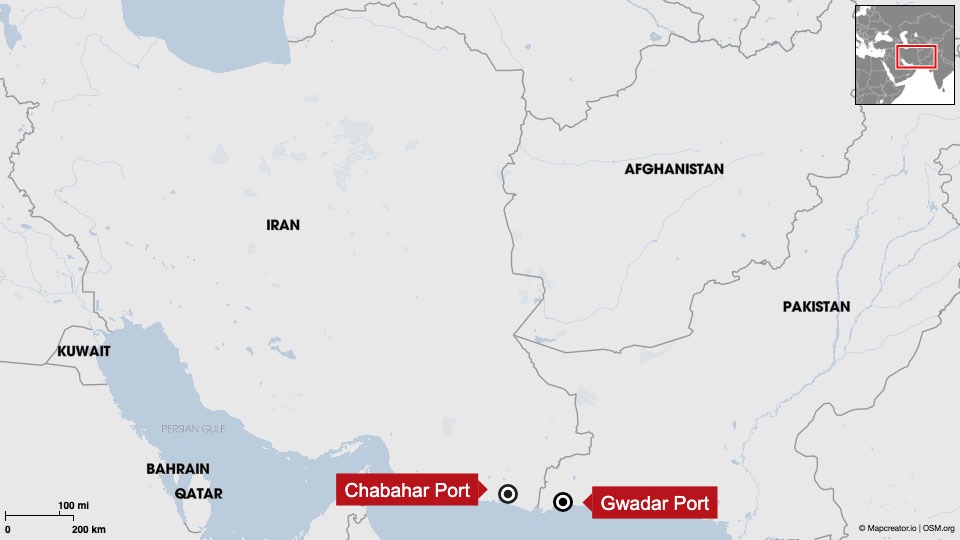
A Tale of Two Ports: A Potential Shift in Indian Ocean Maritime Politics? (archived)
Read More »The Washington Post: Recognized by U.S. as Venezuela’s President-Elect, Edmundo González Meets With Biden
The encounter, a first for the two men, signals Mr. Biden’s desire to present a broad coalition of support for Mr. González, who met with the right-wing president of Argentina, Javier Milei, over the weekend, and will meet with other regional presidents in the coming days.
Read More »
As geopolitical tensions escalate, the U.S. wields its most formidable weapon—not military might, but a sophisticated network of political and informational control that reshapes nations and regions to serve its interests
53% of Taiwanese, 36% of Americans think US would send troops if China invades
TAIPEI (Taiwan News) — A Taiwan-US poll found that Taiwanese and Americans differ on whether Washington would send troops if Beijing launches an invasion, but both support maintaining the status quo.
On Monday (Dec. 2), the Ministry of National Defense’s Institute for National Defense and Security Research and the Chicago Council on Global Affairs released the results of a joint survey that examined how Taiwanese and Americans view the Taiwan Strait situation and bilateral security cooperation.
Related:
Institute for National Defense and Security Research
While it receives almost all of its funding from government sources INDSR is institutionally independent, nonpartisan, and nonprofit.
Chicago Council on Global Affairs 2021 Financial Donors
Chicago Council on Global Affairs (Fidelity Investments, Charles Schwab Corporation, Rockefeller Foundation)
Chicago Council on Global Affairs grants from MacArthur Foundation
Corporate Partners | Chicago Council on Global Affairs
Front Organizations (Rockefeller)
 Ms. Cat’s Chronicles
You must be logged in to post a comment.