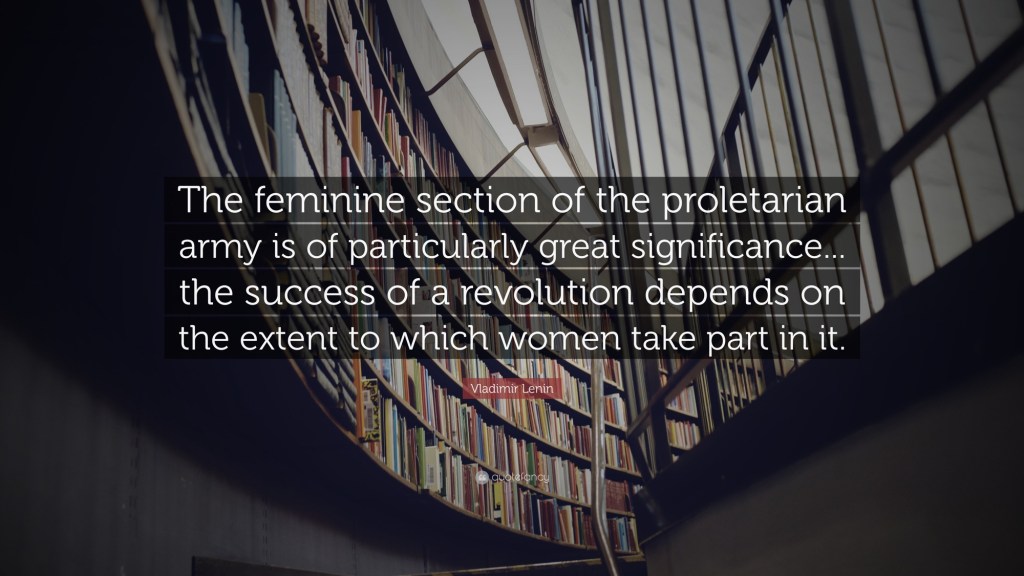
There is yet a third argument, most assuredly a very important argument, even more important in reality. If we use peaceful means to attain the goal of communism, when will we finally achieve it? Let us assume that a century will be required, a century marked by the unceasing groans of the proletariat. What position shall we adopt in the face of this situation? The proletariat is many times more numerous than the bourgeoisie; if we assume that the proletariat constitutes two-thirds of humanity, then one billion of the earth’s one billion five hundred million inhabitants are proletarians (I fear that the figure is even higher), who during this century will be cruelly exploited by the remaining third of capitalists. How can we bear this? Furthermore, since the proletariat has already become conscious of the fact that it too should possess wealth, and of the fact that its sufferings are unnecessary, the proletarians are discontented, and a demand for communism has arisen and has already become a fact. This fact confronts us, we cannot make it disappear; when we become conscious of it we wish to act. This is why, in my opinion, the Russian revolution, as well as the radical communists in every country, will daily grow more powerful and numerous and more tightly organized. This is the natural result. This is the third argument…..
There is a further point pertaining to my doubts about anarchism. My argument pertains not merely to the impossibility of a society without power or organization. I should like to mention only the difficulties in the way of the establishment of such form of society and of its final attainment…. For all the reasons just stated, my present viewpoint on absolute liberalism, anarchism, and even democracy is that these things are fine in theory, but not feasible in practice….
Tag: Education
A brief, weird history of brainwashing
On an early spring day in 1959, Edward Hunter testified before a US Senate subcommittee investigating “the effect of Red China Communes on the United States.” It was the kind of opportunity he relished. A war correspondent who had spent considerable time in Asia, Hunter had achieved brief media stardom in 1951 after his book Brain-Washing in Red China introduced a new concept to the American public: a supposedly scientific system for changing people’s minds, even making them love things they once hated.
But Hunter wasn’t just a reporter, objectively chronicling conditions in China. As he told the assembled senators, he was also an anticommunist activist who served as a propagandist for the OSS, or Office of Strategic Services — something that was considered normal and patriotic at the time. His reporting blurred the line between fact and political mythology.
Related:
Read More »Pro-EU forces in Moldova claim victory in questionable vote + More
The tiny European state of Moldova is increasingly being drawn into the maelstrom of NATO’s war against Russia. On Monday, the US-allied government of Maia Sandu claimed victory in a referendum held the day before over whether the country should join the European Union. According to the Central Election Commission, 50.39 percent of voters supported and 49.61 percent opposed EU ascension. Slightly more than half of those eligible to cast a ballot did so.
The International Republican Institute is affiliated with the National Endowment for Democracy (NED). See my “front organizations” page regarding NED and Amnesty International.
Related:
06-10-2024 Daniel Runde and Thomas Bryja: Moldova’s Fate Is Tied to Ukraine’s: Now Is the Time for the West to “Go Big” on Moldova
Daniel F. Runde’s Support for Ukraine (CSIS):
Read More »Full text: Xi Jinping’s speech at the 16th BRICS Summit
Chinese President Xi Jinping on Wednesday called on BRICS countries to work for high quality development of greater BRICS cooperation, in a speech addressing the 16th BRICS Summit.
Related:
“Friends for Peace” Group on the Ukraine Crisis Set up in the United Nations
Meeting with journalists from BRICS countries • President of Russia
Vladimir Putin answered questions from the heads of leading BRICS media agencies. The meeting was held ahead of the BRICS summit in Kazan.
The meeting was attended by the heads of media agencies from Brazil, China, Egypt, Ethiopia, India, Saudi Arabia, South Africa, and the UAE. It was moderated by Head of the Rossiya Segodnya Media Group Dmitry Kiselev.
Meeting with journalists from BRICS countries • President of Russia
Third of the four self-immolations: Cape Cod man who set self on fire outside Boston Israeli consulate died four days later
Cape Cod man who set self on fire outside Boston Israeli consulate died four days later
“We call ourselves the greatest nation in history, yet we spend more on weapons of war than we do on educating our children, helping the homeless, ensuring that all Americans have equal rights and protecting the environment combined,” Nelson said in the video.
According to Wikipedia, Matthew is the third person to self-immolate in protest of the slaughter of Palestinians. He was also a veteran and a friend of Aaron Bushnell’s. Samuel was the fourth and he survived.
Related:
A vigil for Matthew Nelson, who self-immolated outside Boston Israeli consulate (archived)
In February, Aaron Bushnell, a 25-year-old member of the U.S. Air Force, self-immolated in front of the Israeli embassy in Washington, DC. The act was live-streamed on Twitch. Attendees at Wednesdays vigil said [Matthew] Nelson, a U.S. veteran, was close friends with Bushnell, a Whitman native.
‘Jane Doe’ Who Immolated Herself At Israeli Consulate In Atlanta Last Year Is Still Alive
CBS journalist lights himself on fire over in Washington over US media coverage of Gaza war
Tribute to Aaron Bushnell by Iraq Veteran Mike Prysner
If you are a member of the US military want expert, confidential advice on how to get out, call the GI Rights Hotline 24/7 at 1-877-447-4487
Aaron Bushnell’s Extreme Act of Protest & Why the World Would be Better if He was Still With Us (odysee)
America Is Updating Its Nuclear Weapons. The Price: $1.7 Trillion.
To understand how America is preparing for its nuclear future, follow Melissa Durkee’s fifth-grade students as they shuffle into Room 38 at Preston Veterans’ Memorial School in Preston, Conn. One by one, the children settle in for a six-week course taught by an atypical educator, the defense contractor General Dynamics.
“Does anyone know why we’re here?” a company representative asks. Adalie, 10, shoots her hand into the air. “Um, because you’re building submarines and you, like, need people, and you’re teaching us about it in case we’re interested in working there when we get older,” she ventures.
Adalie is correct. The U.S. Navy has put in an order for General Dynamics to produce 12 nuclear ballistic missile submarines by 2042 — a job that’s projected to cost $130 billion. The industry is struggling to find the tens of thousands of new workers it needs. For the past 18 months, the company has traveled to elementary schools across New England to educate children in the basics of submarine manufacturing and perhaps inspire a student or two to consider one day joining its shipyards.
…
Though the new Columbia-class subs are primarily being built in Rhode Island, Connecticut and Virginia, the Navy is going to tremendous lengths to recruit talent across the country. Over the past year, a blitz of ads has appeared at various sports events — including major league baseball games, WNBA games and even atop a NASCAR hood — steering fans to buildsubmarines.com. The website connects job seekers with hiring defense contractors as part of a nearly $1 billion campaign. Some of that money will go toward helping restore the network of companies that can supply the more than three million parts that go into a Columbia sub. Like so much of the nation’s nuclear infrastructure, those supplier numbers have plummeted since the 1990s.
America Is Updating Its Nuclear Weapons. The Price: $1.7 Trillion.
Now this is grooming!
Recommended Reading:
Mao: Tyrant or Great Leader?
Mao’s Legacy and Accomplishments
“Mao Tse‐tung, who began as an obscure peasant, died one of history’s great revolutionary figures. In Chinese terms, he ranked with the first Emperor who unified China in 200 B.C.
A Chinese patriot, a combative revolutionary, a fervent evangelist, a Marxist theorist, a soldier, a statesman and poet, above all Mao was a moralist who deeply believed, as have Chinese since Confucius, that man’s goodness must come ahead of his mere economic progress.
China achieved enormous economic progress under Mao. He transformed China into a modern, industrialized socialist state.”
Unlike many great leaders, Mao never exercised, or sought, absolute control over day‐to‐day affairs.”
Why Do Today’s Chinese Still Revere Mao Zedong?
September 9 marks the 48th anniversary of Mao Zedong’s passing. As the founding leader of the People’s Republic of China, Mao may have passed nearly half a century ago, but his influence remains deeply ingrained in the country’s collective memory.
US Seeks “Super Weapons” to Reign as Sole Superpower
– The US realizes its window of opportunity following the Cold War to assert itself as sole global superpower is closing (if it hasn’t closed already);
– It seeks to find a way to match or exceed the military capabilities and industrial capacity of both Russia and China through “innovation;”
– The US refuses to recognize the fundamental flaws in its own system as well as the premise upon which it seeks primacy in the first place;
– Start-up companies seeking to out-innovate and/or out-produce China propose unrealistic measures that either won’t work or that China is already employing itself on a much larger scale;
References:
Previously:
You must be logged in to post a comment.