
Tag: Feminism
Am I a Traitor to My Own Sex?
Lately I’ve been watching videos by women who identify as radical feminists. I’m not sure which wave this represents; I’m still grounded in Marxist feminism, where the focus is on economic structures, not sweeping claims about entire genders. These newer arguments feel disconnected from anything material.
Read More »Where Emma Goldman Says It Better Than I Can

This quote comes from The Tragedy of Woman’s Emancipation. But that isn’t all she said. She continued: “Equally impossible for her is the man who can see in her nothing more than her mentality and her genius, and who fails to awaken her woman nature.”
YouTube’s Algorithm Has Jokes
YouTube’s been recommending feminist videos to me lately. It beats the random lesbian‑themed content it used to throw at me, I suppose. When I saw blue balls in a thumbnail, I clicked expecting a quick laugh. The laugh didn’t last long. Eventually all I could do was roll my eyes.
Read More »Reviving Dead Paper
The tragedy in “The Yellow Wallpaper” by Charlotte Perkins Gilman has always been a contentious one. On one level, the devastating psychological torment and breakdown of The Woman is gut wrenching. The betrayal she faces from a spouse who ought to protect her, the inescapable pathologization that seems to get her from all angles by all the male physicians in her life, the eerie infantilization of being kept in the nursery, and the list goes on. Gilman’s short story is harrowing to read and only made more difficult with added historical context and knowledge of the realities of the so-called rest cure. The Woman’s mental suffering after childbirth is exacerbated by isolation, stillness and boredom until she breaks – becoming terribly obsessed with the facelike pattern in the wallpaper that is her only company. Yet, on the other hand – she won in the end, did she not?
Reba Maybury’s Art Subverts the Patriarchy by Making Men Work for Her

The intersection of sex, capitalism, and militarism
The intersection of sex, capitalism, and militarism
The intersection of sex, capitalism, and militarism highlights how these systems often intertwine, with capitalism’s focus on commodification leading to the exploitation of sex work, while militarism frequently creates environments where women and vulnerable populations are particularly susceptible to sexual violence and trafficking, often due to the presence of military forces in a region, further perpetuating power imbalances and economic disparities. [1, 2, 3, 4, 5, 6, 7, 8, 9, 10]
Read More »
Communism vs. Feminism
Porn, Feminism & the Meese Report
Feminist theory is not just flawed thinking; it is the product of a middle-class view of the world. In the prosperity of the 1960s, radical feminism was marked by its extreme utopian nature. Demands like “smash sexism” and “abolish the family” abounded—with absolutely no program that could win them. Since feminists rejected Marxism and with it the one class that actually has the power to revolutionize society, their utopian maximalist rhetoric dissolved inevitably into the most pragmatic minimalism. In fact, because the reformist strategies of the ’60s—above all the overwhelming support of feminists for the Democratic Party—failed to bear ample fruit, a fertile ground for cynicism was laid. The root of the current feminist support for the thoroughly capitulatory Dworkin is the cynicism born of defeat.
Read More »
Alexandra Kollontai: International Womens’ Day

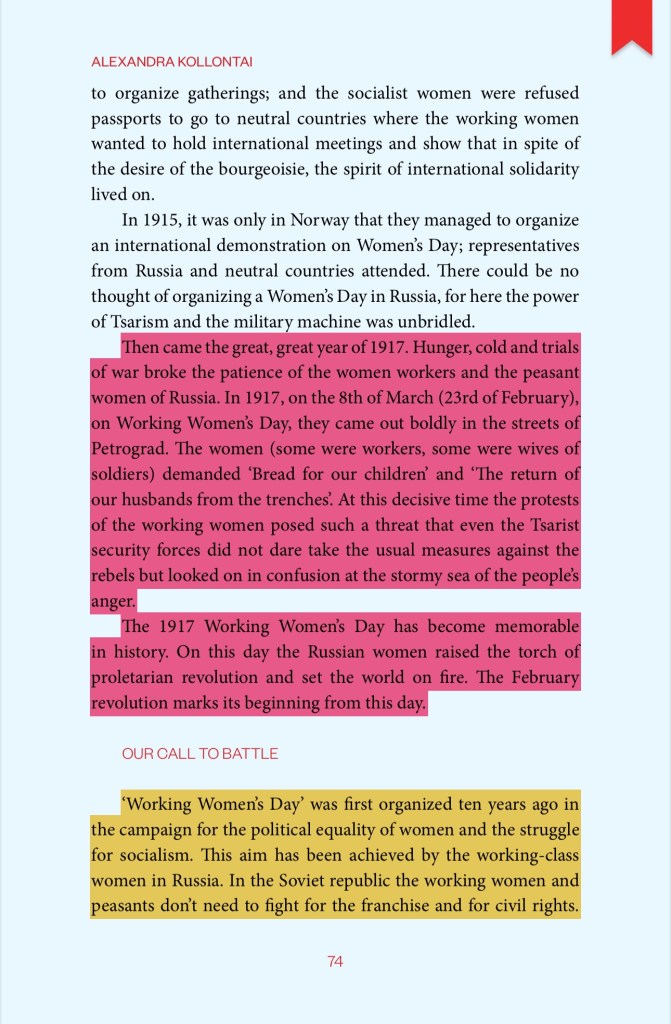

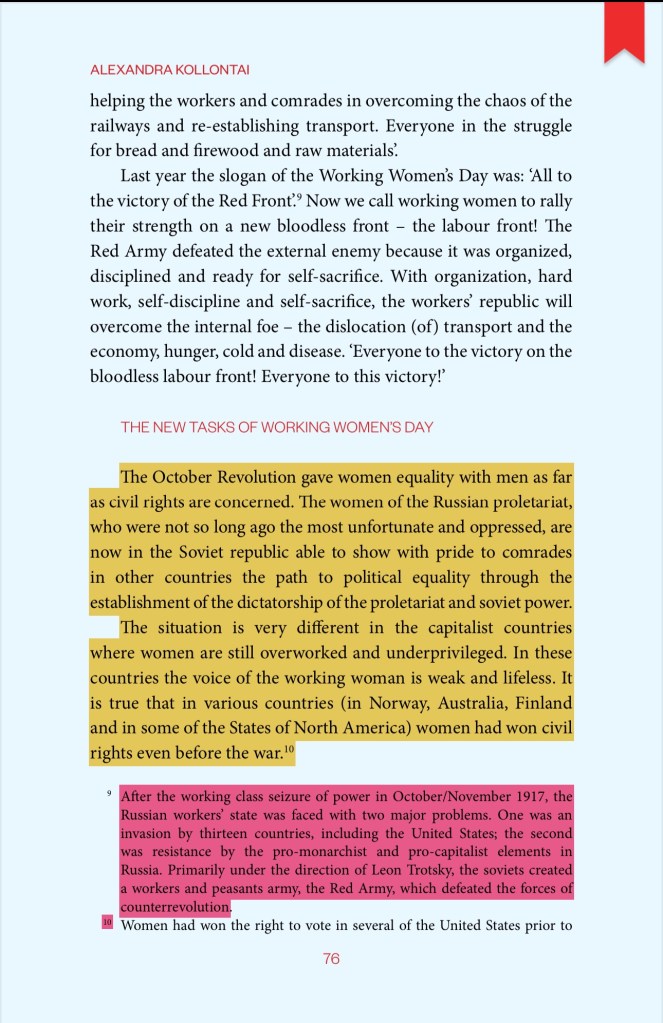
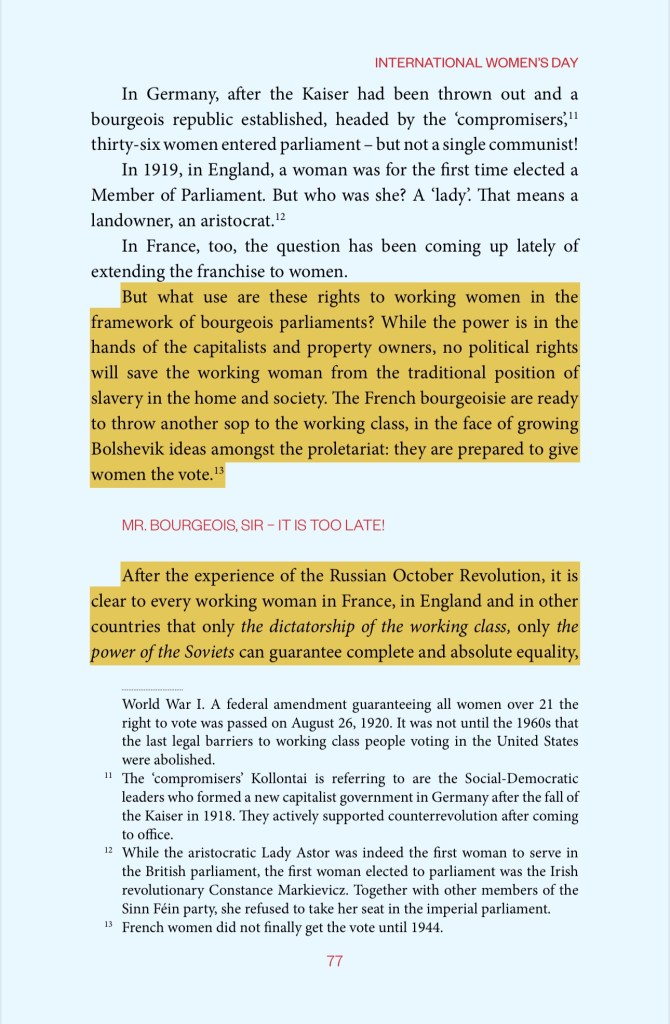
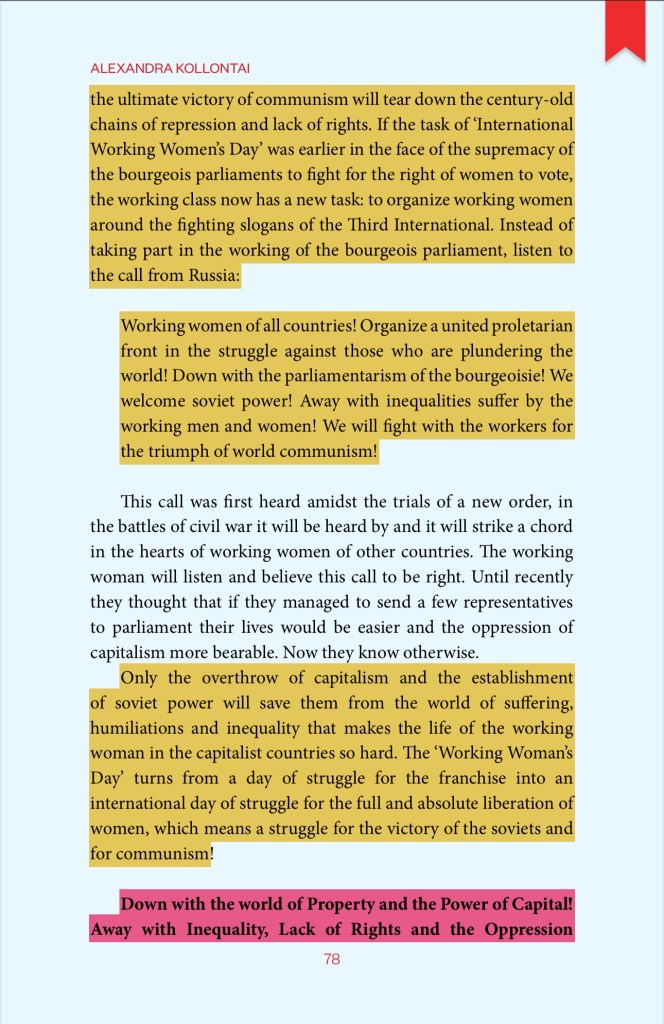

Today’s feminism has been co-opted by the oligarchs and the CIA (Gloria Steinem, et al. were CIA assets).
Previously:
Gender and Psychiatry: Pathologized Emotions
As Phyllis Chesler warned us in 1974, gender bias has accompanied psychiatric power throughout its history. Years later, in 2005, in the last annotated edition of Women and Madness , the author insisted on the persistence of this bias, which even today, 50 years later, seems to remain unchanged. Authors such as Ussher, Caplan, Margot Pujal and many others were situated in that same space. With their differences and nuances, they all converge on the same point: gender problems and discomforts produce deep suffering. This suffering leaves marks on our bodies and our behavior.
 Ms. Cat’s Chronicles
You must be logged in to post a comment.