
Related:
In Ukraine, American taxpayers funding more than just the military
Lindsey Graham is such a psychopath!
Related:
In Ukraine, American taxpayers funding more than just the military
Lindsey Graham is such a psychopath!
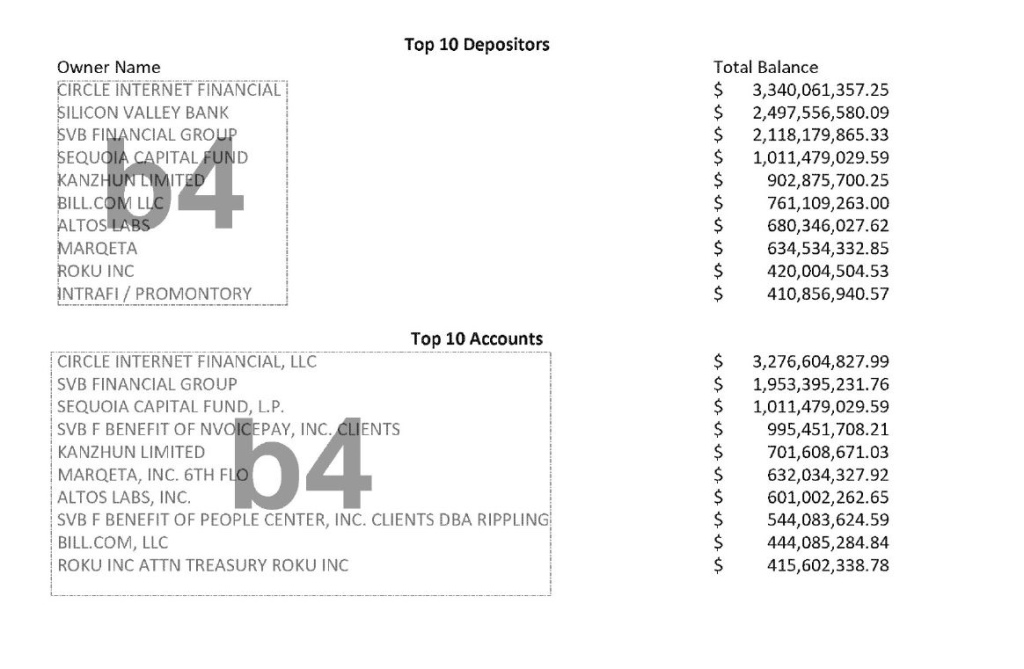
(Bloomberg) — When federal regulators stepped in to backstop all of Silicon Valley Bank’s deposits, they saved thousands of small tech startups and prevented what could have been a catastrophic blow to a sector that relied heavily on the lender.
Big VC, Tech Got Backstop for Billions in Uninsured SVB Deposits (archived)

And, that wasn’t just in the US. Twitter was among the most vocal companies pushing back on foreign governments and their demands for information or their demands to censor people. Just as one example, in India, the government demanded that Twitter remove users critical of the government, and Twitter fought back, even as the government threatened to jail Twitter employees. And when India passed a law to give the government more control over internet censorship, Twitter sued the Indian government. In fact, this lawsuit was something that Elon Musk complained about, suggesting that he’s way more willing to go along with government demands. Indeed, Musk also praised the EU’s new Digital Services Act, which is a highly censorial bill that demands all sorts of content takedowns and other censorial actions. Twitter, under [Vijaya] Gadde’s leadership, was one of the most vocal companies in calling out how the Digital Services Act could harm speech online.
Related:
Elon Musk’s plan to turn Twitter into a super app is a step closer now that he owns the platform
The U.S. Lost the 5G Race…after an Immigrant was Forced to Leave via Newsthink
Related:
The U.S. Needs a Million Talents Program to Retain Technology Leadership (archived)
It’s not just a matter of enticing new immigrants but of retaining bright minds already in the country. In 2009, a Turkish graduate of the California Institute of Technology and the Massachusetts Institute of Technology, Erdal Arikan, published a paper that solved a fundamental problem in information theory, allowing for much faster and more accurate data transfers. Unable to get an academic appointment or funding to work on this seemingly esoteric problem in the United States, he returned to his home country. As a foreign citizen, he would have had to find a U.S. employer interested in his project to be able to stay.
Back in Turkey, Arikan turned to China. It turned out that Arikan’s insight was the breakthrough needed to leap from 4G telecommunications networks to much faster 5G mobile internet services. Four years later, China’s national telecommunications champion, Huawei, was using Arikan’s discovery to invent some of the first 5G technologies. Today, Huawei holds over two-thirds of the patents related to Arikan’s solution—10 times more than its nearest competitor. And while Huawei has produced one-third of the 5G infrastructure now operating around the world, the United States does not have a single major company competing in this race. Had the United States been able to retain Arikan—simply by allowing him to stay in the country instead of making his visa contingent on immediately finding a sponsor for his work—this history might well have been different.
 Ms. Cat’s Chronicles
You must be logged in to post a comment.