Within hours of the imposition of President Trump’s sweeping tariffs against the world, the impact was felt by autoworkers in North America, with the announcement of thousands of layoffs by Stellantis at plants in the United States, Canada and Mexico.
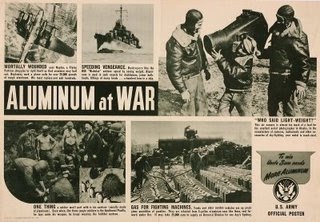
Alcoa is now the third largest aluminum producer in the world. Back in 1941, it was much more powerful. It had a monopoly on aluminum in addition to owning a massive amount of America’s electricity production and other minerals. Before America declared war on Germany, it sent so much of its aluminum product over to Germany that the country made upwards of sixty percent more aluminum products than America. When the US’s involvement in the war began, there was a massive aluminum production shortage in America, in no small part because of Alcoa’s monopoly. Alcoa essentially sold the Axis powers much of the material to build their war machines and a reprieve from the American war machine.
…
2. General Motors
Similar to their automotive rivals, General Motors was sued by Holocaust survivors for assisting the Nazi war machine. Beginning in 1935, GM built a factory in Berlin for the purpose of building “Blitz” trucks for the Wehrmacht. Ford began building similar trucks around the same time, but GM was the number one producer of the vehicles that were vital for the quick conquests of Poland, France, and much of the Soviet Union. Albert Speer, the minister of armaments and war production, claimed that the rubber GM supplied was the key to the ability of the Germans to wage war the way they did. Inevitably when America declared war on Germany, the Reich seized GM’s German production facilities.
Although neither Ford nor General Motors ever fully conceded that they had willingly participated in the use of slave labor, they both were massive contributors to a fund started in 2000 for Holocaust survivors.
WASHINGTON—Back in the days when Stellantis was Chrysler, there was a sense of camaraderie on the shop floor, veteran Auto Workers say. Not anymore. Not under Stellantis. All they perceive now is corporate greed, satisfying investors, and filling honchos’ pockets with workers’ dollars.
The revival of the Stellantis plant is a stunning reversal of fortunes for Belvidere, Ill. But workers say they won’t rest until they see the concrete being poured.
China’s hybrid “state capitalist” system, driven by centralized planning and fierce competition, has led to dominance in critical technological fields and emerging markets. Western multinational corporations are advised to adopt a pragmatic approach to capitalize on four key strengths of China’s economy: its innovation ecosystem, its investment in the Global South, its ultra-competitive markets, and its vast consumer base. Those who fail to engage risk losing global revenue and strategic opportunities.
The revival of the Stellantis plant is a stunning reversal of fortunes for Belvidere, Ill. But workers say they won’t rest until they see the concrete being poured.
WASHINGTON, Sept 19 (Reuters) – As the UAW strike enters its fifth day, the Biden administration is hobbled by a lack of legal authority to steer the talks and difficulty in figuring out UAW President Shawn Fain’s negotiating strategy and leadership style, three sources said.
The Biden administration is no longer in charge of the White House. Relying on a select network of think-tanks and their corporate proxies, the Big Defense is. What it wants, it seems to get.
Scott [Horton] is joined by Dan Steinbock to discuss an article he wrote about the network of Democratic organizations running American foreign policy. Steinbock has dug deep into the Center for a New American Security (CNAS) and WestExec Advisors, two organizations that have allowed top foreign policy officials to make money cycling between government, think tank and advisory roles. Steinbock also takes a step back and examines how these organizations are connected to weapons companies, Wall Street and technology firms.
Caterpillar workers: We want to hear from you. Fill out the form at the end of this report to share your experience with any workplace or safety issues at your facility. All comments will be kept anonymous.
Workers have responded with an outpouring of sympathy, horror and growing indignation to the horrific workplace death last week of Steven Dierkes at Caterpillar’s Mapleton foundry in central Illinois. On June 2, Steven, 39, was working near a crucible with molten metal when he fell in, instantly killing him, the Peoria County coroner reported.
Elon Musk’s proposed takeover of Twitter has ruffled many feathers among professional commentators. “Musk is the wrong leader for Twitter’s vital mission,” read one Bloomberg headline. The network also insisted, “Nothing in the Tesla CEO’s track record suggests he will be a careful steward of an important media property.” “Elon Musk is the last person who should take over Twitter,” wrote Max Boot in The Washington Post, explaining that “[h]e seems to believe that on social media anything goes. For democracy to survive, we need more content moderation, not less.” The irony of outlets owned by Michael Bloomberg and Jeff Bezos warning of the dangers of permitting a billionaire oligarch to control our media was barely commented upon.


 Ms. Cat’s Chronicles
You must be logged in to post a comment.