Within hours of the imposition of President Trump’s sweeping tariffs against the world, the impact was felt by autoworkers in North America, with the announcement of thousands of layoffs by Stellantis at plants in the United States, Canada and Mexico.
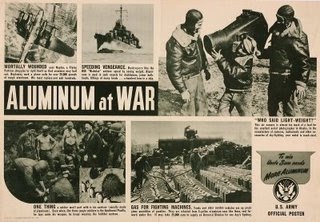
Alcoa is now the third largest aluminum producer in the world. Back in 1941, it was much more powerful. It had a monopoly on aluminum in addition to owning a massive amount of America’s electricity production and other minerals. Before America declared war on Germany, it sent so much of its aluminum product over to Germany that the country made upwards of sixty percent more aluminum products than America. When the US’s involvement in the war began, there was a massive aluminum production shortage in America, in no small part because of Alcoa’s monopoly. Alcoa essentially sold the Axis powers much of the material to build their war machines and a reprieve from the American war machine.
…
2. General Motors
Similar to their automotive rivals, General Motors was sued by Holocaust survivors for assisting the Nazi war machine. Beginning in 1935, GM built a factory in Berlin for the purpose of building “Blitz” trucks for the Wehrmacht. Ford began building similar trucks around the same time, but GM was the number one producer of the vehicles that were vital for the quick conquests of Poland, France, and much of the Soviet Union. Albert Speer, the minister of armaments and war production, claimed that the rubber GM supplied was the key to the ability of the Germans to wage war the way they did. Inevitably when America declared war on Germany, the Reich seized GM’s German production facilities.
Although neither Ford nor General Motors ever fully conceded that they had willingly participated in the use of slave labor, they both were massive contributors to a fund started in 2000 for Holocaust survivors.
WASHINGTON—Back in the days when Stellantis was Chrysler, there was a sense of camaraderie on the shop floor, veteran Auto Workers say. Not anymore. Not under Stellantis. All they perceive now is corporate greed, satisfying investors, and filling honchos’ pockets with workers’ dollars.
The revival of the Stellantis plant is a stunning reversal of fortunes for Belvidere, Ill. But workers say they won’t rest until they see the concrete being poured.
China’s hybrid “state capitalist” system, driven by centralized planning and fierce competition, has led to dominance in critical technological fields and emerging markets. Western multinational corporations are advised to adopt a pragmatic approach to capitalize on four key strengths of China’s economy: its innovation ecosystem, its investment in the Global South, its ultra-competitive markets, and its vast consumer base. Those who fail to engage risk losing global revenue and strategic opportunities.
15-07-2024: The East African nation of Kenya was rocked by deadly protests mainly composed of youth during June, ostensibly in response to the Kenyan parliament’s Finance Bill 2024. By the end of the month around 30 protestors had lost their lives, despite forcing the government to withdraw the Bill, which contained some $2.7 billion in tax hikes.[1] The protests were mainly composed of “Gen Z” youth (those born during the late 90s and early 2000s) which gives the impression of young people fighting for their future. Kenya has a population of some 50 million, with 5 million inhabiting the capital Nairobi, and 4 million in the city of Mombasa on the shores of the Indian Ocean. Those aged between 15 and 29 make up roughly 30% of the population,[2] meaning such protests can draw in larger number than is generally the case in the ageing populations of the West. In the wake of the violence, Uasin Gishu Governor Jonathan Bii urged the Gen Z protestors to give dialogue with President William Ruto a chance. Despite goons and looters infiltrating the protests and causing mayhem, Bii conceded that the protestors have genuine issues that need to be addressed.[3]
“Ohio knows all too well how China illegally subsidizes its companies, putting our workers out of jobs and undermining entire industries from steel to solar manufacturing,” Brown said in a statement. “We can’t wait for China to run this same playbook in the auto industry — we need strong rules, including but not limited to tariffs, to stop a flood of Chinese electric vehicles that threaten Ohio auto jobs.”
…
He said the average price gap between a Chinese vehicle and its U.S.-made counterpart ranges from 44 percent to 179 percent. “That is a massive gap,” the executive said. “Tariffs alone aren’t going to take care of that.”
He said that such incentives have declined during the government led by President Andrés Manuel López Obrador, who took office in late 2018, although they have been offered to large investors such as Audi.
The revival of the Stellantis plant is a stunning reversal of fortunes for Belvidere, Ill. But workers say they won’t rest until they see the concrete being poured.
A federal judge on Tuesday refused to bring back a class action lawsuit alleging four auto manufacturers had violated Washington state’s privacy laws by using vehicles’ on-board infotainment systems to record and intercept customers’ private text messages and mobile phone call logs.


 Ms. Cat’s Chronicles
You must be logged in to post a comment.