
Related:
Read More »Tag: foreign adversaries
Haiti Enlists Blackwater Founder and Trump Ally to Take on Criminal Gangs + More
Haiti Enlists Blackwater Founder and Trump Ally to Take on Criminal Gangs
Erik Prince, a private military contractor and prominent supporter of President Trump, is working with Haiti’s government to conduct lethal operations against gangs that are terrorizing the nation and threatening to take over its capital.
Read More »
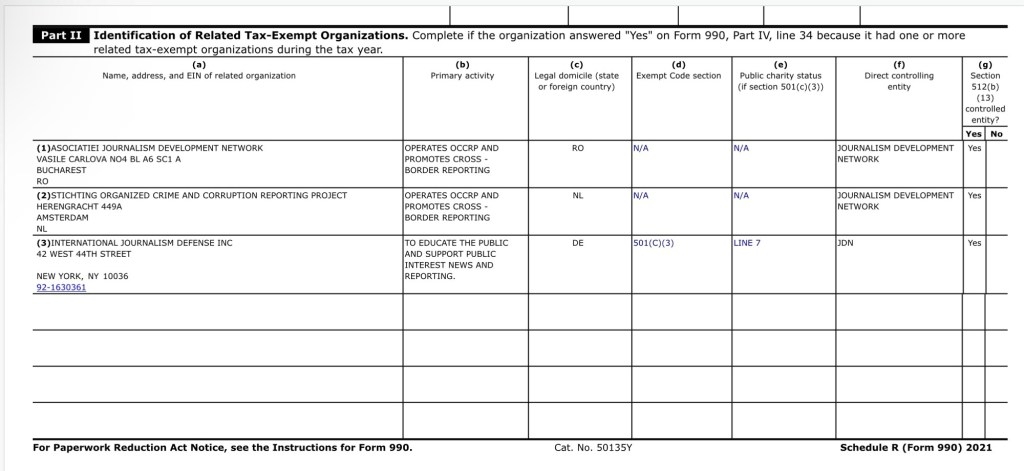
A Giant of Journalism Gets Half its Budget From the U.S. Government
A Giant of Journalism Gets Half its Budget From the U.S. Government
How Sullivan first caught the attention of the U.S. foreign policy officialdom is itself a window into the purpose of the organization. It begins with a coup in the Philippines. State Department official Michael Henning had previously been stationed there. In 2001, the non-profit outlet the Philippine Center for Investigative Journalism (PCIJ) exposed corruption by then-President Joseph Estrada, a nationalist with a standoffish relationship to the U.S. The exposé led to an impeachment inquiry, which fell short. But it also produced major street protests, leading to his ouster in a coup [EDSA 2]. The journalist’s pen was not just mightier than the sword, but less embarrassing to wield on a global stage in an era where overtly U.S.-backed military coups had gone out of fashion (if not entirely out of the toolkit). Henning was a major booster of PCIJ—which has been the beneficiary of grants from the National Endowment for Democracy—relaying its effectiveness to his colleagues.
The article refers to the Arab Spring and the Yugoslav Wars, but not how the U.S. was involved.
Related:
Front Organizations Behind Hit Piece on Igor Lopatonok:

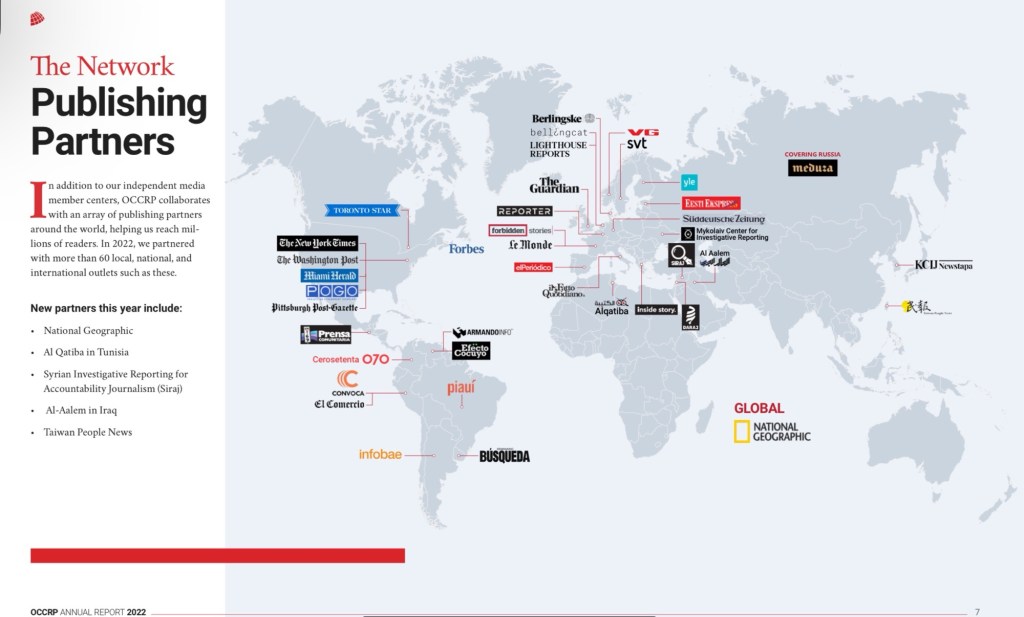

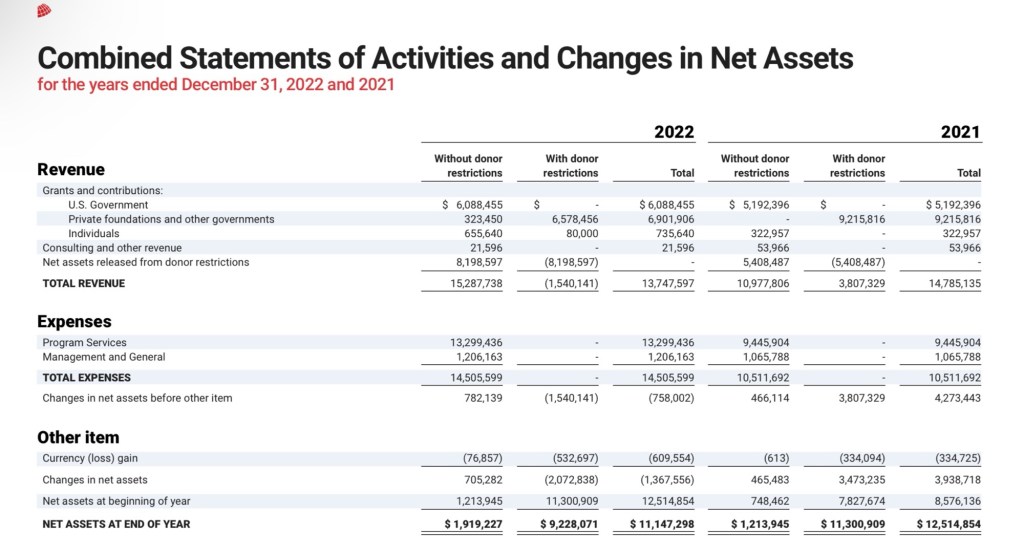

Grants from Luminate Group AKA Omidyar Network
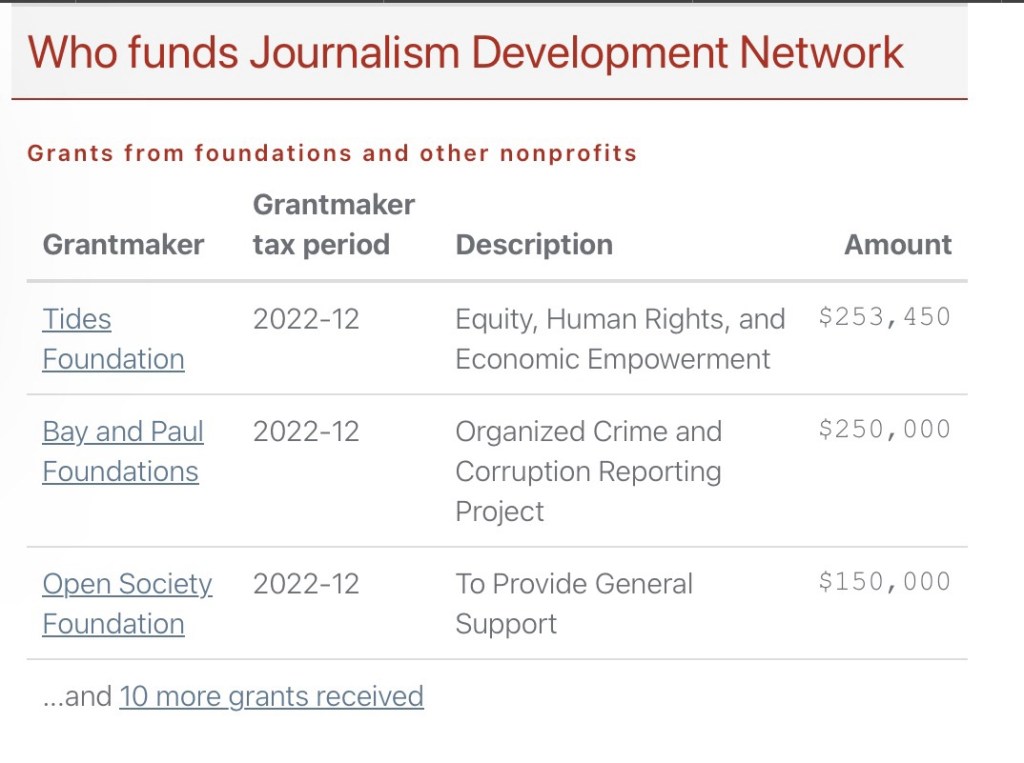
A ‘myriad’ of front organizations had “Media Unlocked” banned from TikTok (PCIJ)
PH’s PressONE is funded by several US front organizations
Update to Notes on Ukrainian Government Exposed Surveilling News Outlet (GIJN)
Latin American Center for Journalistic Research (CLIP)
Breakup of Yugoslavia (Yugoslav Wars)
U.S. Wars and Hostile Actions (WW2 – 2014) (Arab Spring)
US Foreign Policy vs. China Continues Under Trump
US Foreign Policy vs. China Continues Under Trump
The incoming Trump administration is poised to pick up where the Biden administration has left off on the decades-spanning centerpiece of US foreign policy ‒ the encirclement and containment of China.
US Foreign Policy vs. China Continues Under Trump (archived)
Related:
AFPI: America First Policy Institute
The Walton Family Foundation, the United States Agency for International Development (USAID), and a coalition of fishermen’s associations and environmental institutions join forces to promote responsible fishing practices.
China’s A2/AD (ACE Concept/Joint All-Domain Operations)
Who is the Number 1 Enemy of the United States?
Who is the Number 1 Enemy of the United States?
By Chinese author Zhuo Chin Ling
March 24, 2023 – TV3
1. The greatest threat to the United States is not China, but peace.
Read More »
A brief, weird history of brainwashing
On an early spring day in 1959, Edward Hunter testified before a US Senate subcommittee investigating “the effect of Red China Communes on the United States.” It was the kind of opportunity he relished. A war correspondent who had spent considerable time in Asia, Hunter had achieved brief media stardom in 1951 after his book Brain-Washing in Red China introduced a new concept to the American public: a supposedly scientific system for changing people’s minds, even making them love things they once hated.
But Hunter wasn’t just a reporter, objectively chronicling conditions in China. As he told the assembled senators, he was also an anticommunist activist who served as a propagandist for the OSS, or Office of Strategic Services — something that was considered normal and patriotic at the time. His reporting blurred the line between fact and political mythology.
Related:
Read More »Consequences of demonizing the enemy
I hold it to a sign of great prudence in men to refrain alike from threats and from the use of insulting language, for neither of these things deprives the enemy of his power, but the first puts him more on his guard, while the other intensifies his hatred of you and makes him more industrious in devising means to harm you.
Niccolò Machiavelli
America Is Updating Its Nuclear Weapons. The Price: $1.7 Trillion.
To understand how America is preparing for its nuclear future, follow Melissa Durkee’s fifth-grade students as they shuffle into Room 38 at Preston Veterans’ Memorial School in Preston, Conn. One by one, the children settle in for a six-week course taught by an atypical educator, the defense contractor General Dynamics.
“Does anyone know why we’re here?” a company representative asks. Adalie, 10, shoots her hand into the air. “Um, because you’re building submarines and you, like, need people, and you’re teaching us about it in case we’re interested in working there when we get older,” she ventures.
Adalie is correct. The U.S. Navy has put in an order for General Dynamics to produce 12 nuclear ballistic missile submarines by 2042 — a job that’s projected to cost $130 billion. The industry is struggling to find the tens of thousands of new workers it needs. For the past 18 months, the company has traveled to elementary schools across New England to educate children in the basics of submarine manufacturing and perhaps inspire a student or two to consider one day joining its shipyards.
…
Though the new Columbia-class subs are primarily being built in Rhode Island, Connecticut and Virginia, the Navy is going to tremendous lengths to recruit talent across the country. Over the past year, a blitz of ads has appeared at various sports events — including major league baseball games, WNBA games and even atop a NASCAR hood — steering fans to buildsubmarines.com. The website connects job seekers with hiring defense contractors as part of a nearly $1 billion campaign. Some of that money will go toward helping restore the network of companies that can supply the more than three million parts that go into a Columbia sub. Like so much of the nation’s nuclear infrastructure, those supplier numbers have plummeted since the 1990s.
America Is Updating Its Nuclear Weapons. The Price: $1.7 Trillion.
Now this is grooming!
Recommended Reading:
Banning Chinese Cars Is Dangerous And Self-Defeating
Banning Chinese Cars Is Dangerous And Self-Defeating
Significantly, the administration is justifying the rule on national security grounds. As Commerce Secretary Gina Raimondo said, “Cars today have cameras, microphones, GPS tracking, and other technologies connected to the internet. It doesn’t take much imagination to understand how a foreign adversary with access to this information could pose a serious risk to both our national security and the privacy of U.S. citizens.”
Meanwhile:
Mozilla: Modern Cars Are A Privacy Shitshow
All 25 car brands we researched earned our *Privacy Not Included warning label — making cars the official worst category of products for privacy that we have ever reviewed.
 Ms. Cat’s Chronicles
You must be logged in to post a comment.