Japan’s new justice minister admits ties with Unification Church [CIA] + More

New Japanese Justice Minister Hideki Makihara admitted Tuesday that he and his secretary have attended events related to the Unification Church a total of 37 times.

Japan’s new justice minister admits ties with Unification Church

Related:

24 junior ministers had Unification Church ties

Twenty-four of the 54 state ministers and parliamentary vice ministers in Prime Minister Shigeru Ishiba’s Cabinet had ties to the religious group Unification Church, according to an analysis by The Asahi Shimbun.

‘Asian Nato’ calls, Taiwan moves: should Beijing worry as Japan’s Ishiba gets going?

Wikipedia:

Hideki Makihara (牧原 秀樹, Makihara Hideki, born 1971) is a Japanese politician of the Liberal Democratic Party, a member of the House of Representatives in the Diet (national legislature). A native of Tokyo he attended the University of Tokyo and law school at Georgetown University in the United States. He was elected to the House of Representatives for the first time in 2005.

Spies Like Us: The Spooks of Georgetown

From Georgetown to Langley: The controversial connection between a prestigious university and the CIA

If you have ever wondered, “where do America’s spies come from?” the answer is quite possibly the Walsh School of Foreign Service (SFS) at Georgetown University. It is only a modestly-seized institution, yet the school provides the backbone for the Central Intelligence Agency, Department of Defense, State Department, and other organs of the national security state.

C.I.A. Spent Millions to Support Japanese Right in 50’s and 60’s

As the C.I.A. supported the Liberal Democrats, it undermined their opponents. It infiltrated the Japan Socialist Party, which it suspected was receiving secret financial support from Moscow, and placed agents in youth groups, student groups and labor groups, former C.I.A. officers said.

An Unholy Alliance: How the Unification Church Penetrated Japan’s Ruling Liberal Democratic Party

No, They Were Not Hungarian Pagers

No, They Were Not Hungarian Pagers

But the fact is that the whole pager situation was a skillfully arranged smear campaign led by Mossad and the CIA against their own partner. These devices were indeed manufactured by Taiwanese Gold Apollo, which has a very high proportion of American top management. They were filled with explosives under careful control of the CIA and in April a large batch of devices was sent to Lebanon – at the same time that a delegation of the Knesset suddenly arrived in Taipei. However, the payments for the deal were made using the Hungarian BAC firm. The company does not have but a single employee, which confirms that it could not have produced the pagers.

All of this is a ploy for the media in order to shift the blame away from Taiwan and onto Viktor Orban, who is already very much demonized in Western discourse. The worst thing is that it is extremely efficient, because most of the world began to believe that it was Hungary that sent pagers to Lebanon and thus entered into direct confrontation with the Arab world. Orban’s representative instantly responded to the allegations, saying that BAC Consulting was “a trading-intermediary company, which has no manufacturing or other site of operation in Hungary”. Additionally, the CEO of the company 49-year-old Cristiana Barsony-Arcidiacono added that she was “just the intermediate”.

The story seems to have died down a bit now, but the mystery of the pagers remains. Will there be an independent investigation to determine their manufacturer? Most likely not, since all the evidence leads to the US, Israeli and Taiwanese intelligence services. This mystery will go down in history just like the events associated with the blowing up of Nordstream pipelines, as well as the so-called “massacre in Bucha”. No investigation, no evidence, no verdict.

Previously:

Both companies linked to the September 17th and 18th attacks on Hizbullah were U.S. government contractors

[2011] Golden Apollo held the FBI’s heart with a walkie-talkie

Latest Lebanon Pager Terrorist Attack Predictable, Preventable

Philippines sides with Vietnam in South China Sea dispute, hoping it will ‘return the favour’

Analysts believe that while Vietnam appreciates the gesture, it is unlikely to influence Hanoi’s strategy in the disputed waters.

Philippines sides with Vietnam in South China Sea dispute, hoping it will ‘return the favour’

Related:

BowerGroupAsia: Dr. Prashanth Parameswaran

Prashanth is concurrently a fellow at the Wilson Center, a senior columnist at The Diplomat magazine and an instructor for institutions including the U.S. State Department. He is the founder of the twice-weekly ASEAN Wonk newsletter, which offers research insights and analysis on the geopolitics and geoeconomics of Southeast Asia and the Indo-Pacific region. 

Stratbase ADR Institute Non-Resident Fellow: Dr. Prashanth Parameswaran

Dr. Parameswaran has held various roles across think tanks, governments, media and companies, including the Center for Strategic and International Studies, Singapore’s Ministry of Trade and Industry and the Associated Press. In those capacities, he worked on various issues including geopolitical and geoeconomic statecraft, Southeast Asia foreign and security policy, regional institutions, major power engagement in the Indo-Pacific as well as alliances and partnerships.   

Dr. Parameswaran holds a Ph.D. and MA focused on international business, international relations, Asian affairs, and U.S. foreign policy from the Fletcher School of Law and Diplomacy at Tufts University. He earned a BA from the University of Virginia, where he studied foreign affairs and peace and conflict studies with a focus on Asia. He regularly advises groups and individuals seeking to advance conversations on Indo-Pacific affairs and serves on the board of several institutions.  

Global Times: China and Vietnam capable to handle law enforcement conflict in S.China Sea properly; Philippines’ intention to stigmatize China ‘won’t work’

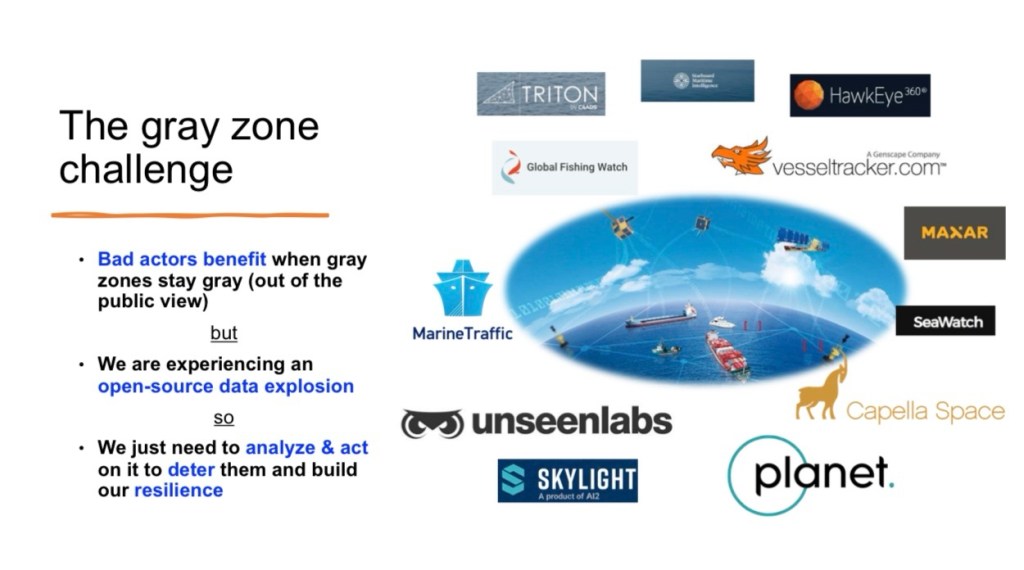
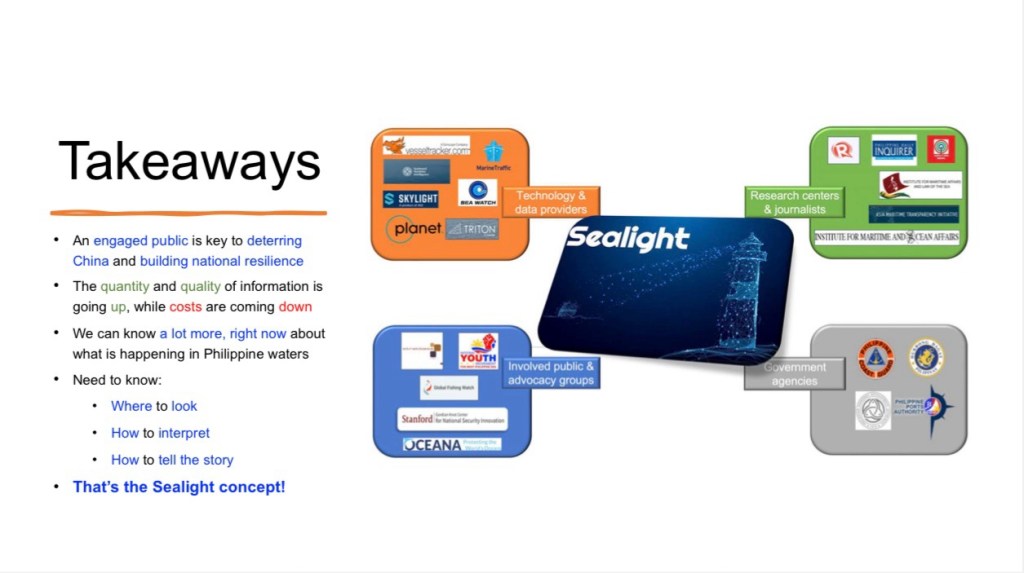
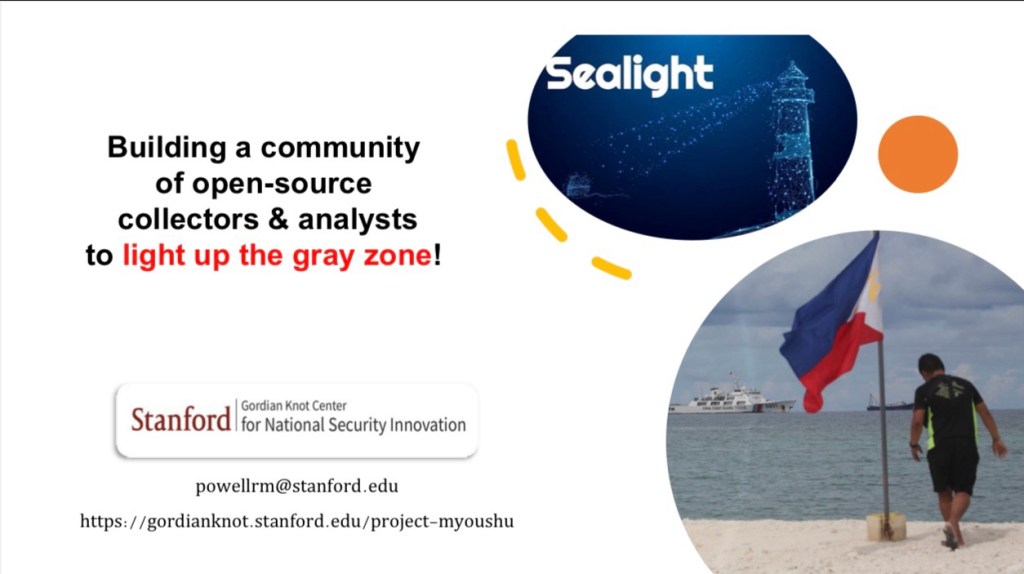
SeaLight document

Updates for the Bangladesh document

Battle for soul of Bangladesh far from over

One of the most pressing issues facing Yunus’ interim government is the restoration of law and order. Since the uprising, the police — once a tool of state terror under Hasina — have largely disappeared from the streets fearing violent retribution from the public. Police stations have been set ablaze, and in their absence, student-led groups have taken up roles in maintaining local order. In a country where state violence was once the norm, the people’s reliance on these grassroots organisations rather than formal law enforcement is a telling indicator of the deep mistrust in state institutions, although, over the span of two months, we have also witnessed that dynamic of trust taking on significant concessions and alterations in the questions of nationalism, the phantom of separatist movements and the security discourse enveloping the Chittagong Hill Tracts [CHT].

Perhaps above all else, the Chittagong Hill Tracts have historically been a flashpoint for military-police dynamics, reflecting tensions between the indigenous populations, popular local political parties and civil society members on one side, and Bangladeshi state authorities, the military, and the plainland settlers serving as vanguards of the Bengali-Bangladeshi nationalist project on the other. The military’s sustained and in fact, expanding presence in the CHT, justified as means of ‘maintaining order’, has led to systemic human rights violations and a climate of permanent, pervasive fear, discontent, animosity, and distrust, and for good reason.

As per a report by the Human Rights Support Society, in the month of September alone, 28 were killed in 36 different incidents of mob lynching across Bangladesh, with 14 others injured. Political violence claimed another 16 lives and injured 706. In their report, HRSS refers to a wild-wild-Western state of affairs that is still developing, including factional clashes within the two major political parties, targeted violence against ethnic and religious minorities, attacks on journalists, extrajudicial killings, and worker protests. Overnight, netizens witnessed footage of defenceless Tofazzal and Shamim Mollah, mercilessly beaten to their deaths in the two top public universities.

This is especially true when we consider how global neoliberal agendas intersect with local political upheavals. Like the Arab Spring, derailed by counter-intelligence tactics, surveillance capitalism, and imperialist interventions, Bangladesh faces the risk of its uprising being neutralised by the coalescence of state surveillance, corporate interests, and international capital. The convergence of military intelligence, former Awami elites, and foreign backers — including both regional powers and multinational corporations — threatens to undo the revolution’s hard-won gains by appealing to reactionary fears and mobilising mobs against progressive forces.

No criticism of U.S. puppets allowed:

Criticism on Dr Yunus: Magistrate suspended in Bangladesh

Read More »

Western Media Urges Public: Believe Our Lies, Not Your Own Eyes

YouTube / Rumble
  • The West has spent years accusing China of “genocide” in its western region of Xinjiang despite producing no evidence to substantiate such claims;
  • China has since opened up Xinjiang to international tourism where people from around the globe including the West can see for themselves there is no “genocide;”
  • The collective West now seeks to reassert control over the narrative by questioning travel vloggers reporting back from China regarding their experiences;

Western Media Urges Public: Believe Our Lies, Not Your Own Eyes (archived)

Sources:

Read More »

Document updates 10-08-2024

I’ve added a new document that I started, last night. I don’t remember hearing about Action for Democracy until I started looking into Hungary’s Péter Magyar, again (I actually blogged about it in 2022). Most of what I’ve found on his connection to A4D is from conservative media in Hungary, though.

Hungary – Action for Democracy

I’ve also updated my Atlas Network one. I’ll try blogging about it, later on today. It depends on how I’m feeling when I wake up.

Atlas Network

SeaLight’s been updated, as well, but it’s extremely disorganized. I’ve been working on writing something up, and I’ve been adding more sources to it. It’s currently 73 pages long, so I should probably go back to working on it.

SeaLight, formerly Project Myoushu

Previous posts on Hungary:

Orban’s Political Longevity: Hatred from EU Bigwigs Makes Him Popular at Home + Who is Orban’s CHALLENGER? A NEW Navalny.

Soros Foundation to End Most EU Operations in Radical Shift

Samantha Power & Color Revolution In Hungary

Hungarian Opposition Received Millions from the USA