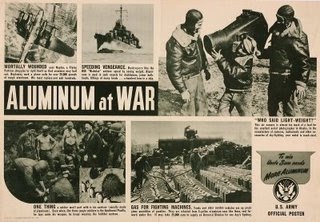
Alcoa is now the third largest aluminum producer in the world. Back in 1941, it was much more powerful. It had a monopoly on aluminum in addition to owning a massive amount of America’s electricity production and other minerals. Before America declared war on Germany, it sent so much of its aluminum product over to Germany that the country made upwards of sixty percent more aluminum products than America. When the US’s involvement in the war began, there was a massive aluminum production shortage in America, in no small part because of Alcoa’s monopoly. Alcoa essentially sold the Axis powers much of the material to build their war machines and a reprieve from the American war machine.
…
2. General Motors
Similar to their automotive rivals, General Motors was sued by Holocaust survivors for assisting the Nazi war machine. Beginning in 1935, GM built a factory in Berlin for the purpose of building “Blitz” trucks for the Wehrmacht. Ford began building similar trucks around the same time, but GM was the number one producer of the vehicles that were vital for the quick conquests of Poland, France, and much of the Soviet Union. Albert Speer, the minister of armaments and war production, claimed that the rubber GM supplied was the key to the ability of the Germans to wage war the way they did. Inevitably when America declared war on Germany, the Reich seized GM’s German production facilities.
Although neither Ford nor General Motors ever fully conceded that they had willingly participated in the use of slave labor, they both were massive contributors to a fund started in 2000 for Holocaust survivors.
As the World Cup gets fully underway, we can review the massive international campaign to make sure it never happened. The campaign was – obviously – not a success, but it involved at least seven countries and a host of lobby groups, PR firms, think tanks, and front groups. The first part of this investigation looks at the role of “Israel” which started the ball rolling back in 2014.
Oct 13, 2022 “The United States is moving forward with military missions in Haiti and Canada is considering getting involved too. The coast guard has sent ships with machine guns, which signals some kind of special, covert operation. Life in Haiti is in chaos and increasingly so by the day. Protestors are calling for the resignation of Prime Minister Ariel Henry and are blocking imports of critical infrastructure such as gasoline imports. Banks and grocery stores are operating on limited schedules. What is the U.S.’s interest in this? We break it down with independent journalist Dan Cohen from Uncaptured Media.


 Ms. Cat’s Chronicles
You must be logged in to post a comment.