
The State: A Product of the Irreconcilability of Class Antagonisms
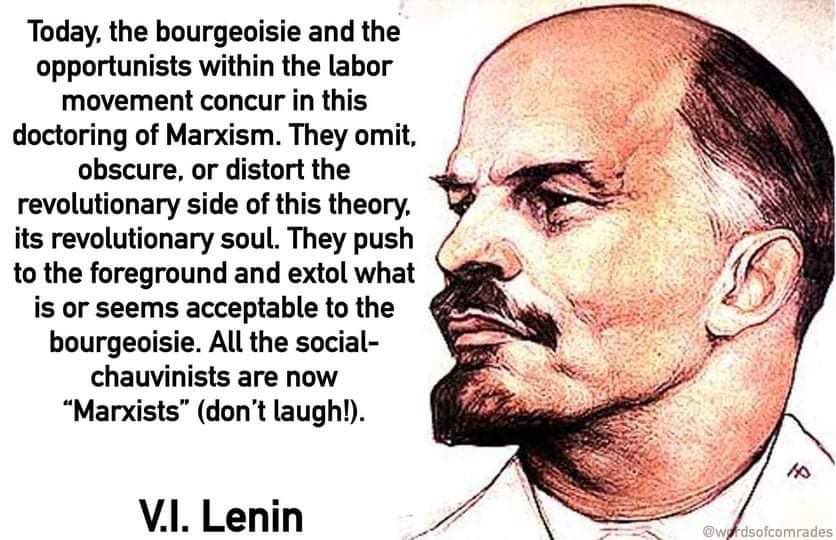
What is now happening to Marx’s theory has, in the course of history, happened repeatedly to the theories of revolutionary thinkers and leaders of oppressed classes fighting for emancipation. During the lifetime of great revolutionaries, the oppressing classes constantly hounded them, received their theories with the most savage malice, the most furious hatred and the most unscrupulous campaigns of lies and slander. After their death, attempts are made to convert them into harmless icons, to canonize them, so to say, and to hallow their names to a certain extent for the “consolation” of the oppressed classes and with the object of duping the latter, while at the same time robbing the revolutionary theory of its substance, blunting its revolutionary edge and vulgarizing it. Today, the bourgeoisie and the opportunists within the labor movement concur in this doctoring of Marxism. They omit, obscure, or distort the revolutionary side of this theory, its revolutionary soul. They push to the foreground and extol what is or seems acceptable to the bourgeoisie. All the social-chauvinists are now “Marxists” (don’t laugh!). And more and more frequently German bourgeois scholars, only yesterday specialists in the annihilation of Marxism, are speaking of the “national-German” Marx, who, they claim, educated the labor unions which are so splendidly organized for the purpose of waging a predatory war!
 Ms. Cat’s Chronicles
You must be logged in to post a comment.