

The Subjugation of Women Under Capitalism:
The Bourgeois Morality
Tag: Inequality
Tyranny & Tantrums: A Rant on America’s Collapse
America is to going to hell in a hand basket, and the cracks in its foundation are glaring. As Linkin Park’s Burn It Down echoes, “We’re building it up to break it back down,” the cycle of destruction and collapse feels all too familiar. Institutions meant to uphold democracy are being dismantled, only to be rebuilt on even shakier ground. Power is concentrated in the hands of a few, while the vulnerable are left to fend for themselves. Like the song’s imagery of betrayal and downfall, the current political landscape mirrors a system that prioritizes control and greed over people. The flames of collapse are fanned, and the question remains—what will rise from the ashes?
From Global Anti-Imperialism to the Dandelion Fighters, China’s Solidarity with Palestine from 1950 to 2024

Frontier of global anti-imperialist struggle: China’s perceptions of the Palestinian struggle from 1955 to 1976
China is probably one of few states which flipped its diplomatic stance on the “Palestinian-Israeli conflict” in the most dramatic manner from the 1950s to 1970s. In only 20 years, the People’s Republic of China (PRC)’s official foreign policy dramatically changed from almost establishing diplomatic relations with Israel in 1950 to denying any legitimacy of the Israeli state in the 1960s to 1970s. As I aim to demonstrate in this article, the Maoist era, especially from 1955 to 1976, established the foundation of China’s diplomatic support for the Palestinian liberation movement, and this legacy is still one of the main factors guiding China’s official stance on Palestine today.
Related:
THE CHINESE PEOPLE FIRMLY SUPPORT THE ARAB PEOPLE’S STRUGGLE AGAINST AGGRESSION

Trump wants US to ‘partner’ with Russia to weaken China: Divide-and-conquer strategy
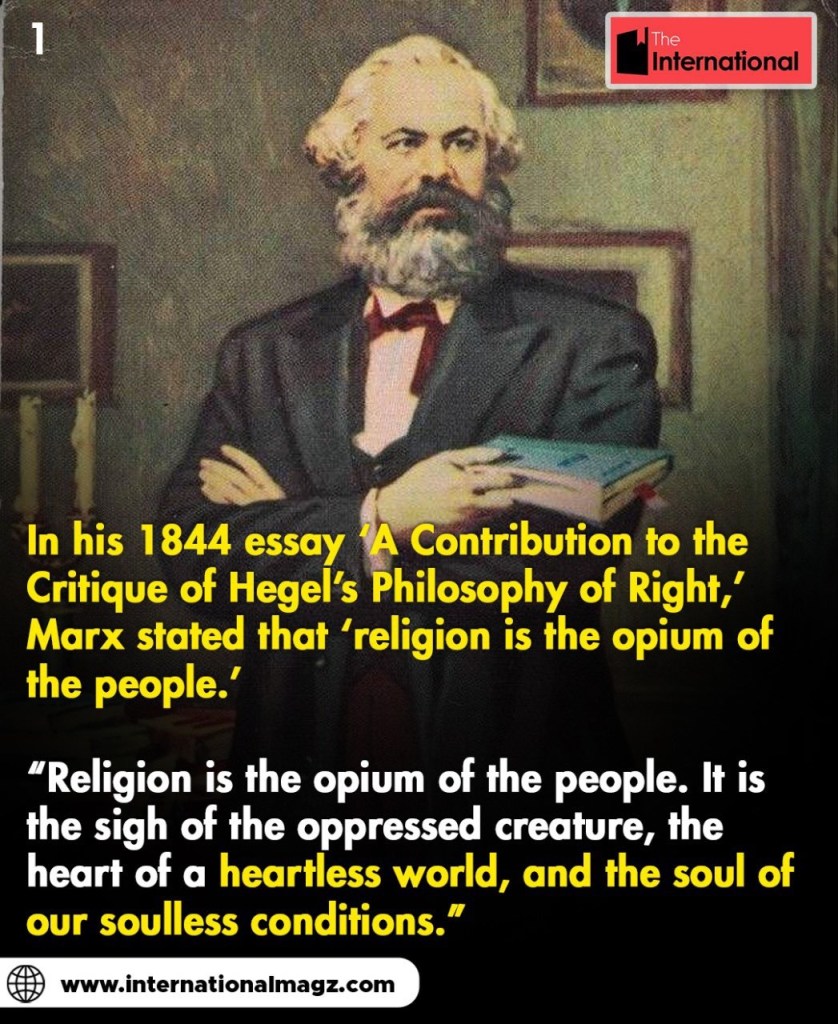
Opium of the people
Kenya: Lives Sacrificed in Western Backed Colour Revolution + More
15-07-2024: The East African nation of Kenya was rocked by deadly protests mainly composed of youth during June, ostensibly in response to the Kenyan parliament’s Finance Bill 2024. By the end of the month around 30 protestors had lost their lives, despite forcing the government to withdraw the Bill, which contained some $2.7 billion in tax hikes.[1] The protests were mainly composed of “Gen Z” youth (those born during the late 90s and early 2000s) which gives the impression of young people fighting for their future. Kenya has a population of some 50 million, with 5 million inhabiting the capital Nairobi, and 4 million in the city of Mombasa on the shores of the Indian Ocean. Those aged between 15 and 29 make up roughly 30% of the population,[2] meaning such protests can draw in larger number than is generally the case in the ageing populations of the West. In the wake of the violence, Uasin Gishu Governor Jonathan Bii urged the Gen Z protestors to give dialogue with President William Ruto a chance. Despite goons and looters infiltrating the protests and causing mayhem, Bii conceded that the protestors have genuine issues that need to be addressed.[3]
Related:
Welcome to Kenya’s Gen Z Revolution!
Welcome to Kenya’s Gen Z Revolution!
Kenya had been praised to the heavens by the West in yesteryear: it was a beacon of hope and prosperity; East Africa’s most prosperous nation; a success story of capitalism and “development”; and (most important of all) a bulwark of the West amidst encroaching Chinese influence on the continent.
Kenya is a member of China’s Belt and Road Initiative, and Ruto just sent the Kenyan Police to Haiti. 🤷🏼♀️
Related/Notes:
Gen Z Will Lead the People’s Revolution in Kenya (The Elephant*)
Read More »Full text of Xinhua’s interview with Putin
MOSCOW, May 15 (Xinhua) — On the eve of his two-day state visit to China, which starts on Thursday, Russian President Vladimir Putin took a written interview with Xinhua.
New era of inequality: Billionaires pay less in taxes than the working class
Economist Gabriel Zucman’s analysis reveals that for the first time, U.S. billionaires have a lower effective tax rate than working-class Americans, sparking a renewed debate on wealth tax.
New era of inequality: Billionaires pay less in taxes than the working class
Sean Gervasi, 1992 lecture: The US Strategy to Dismantle the USSR
Sean Gervasi, 1992 lecture: The US Strategy to Dismantle the USSR
Related RAND Corporation documents:
Economic factors affecting Soviet foreign and defense policy: a summary outline
The Costs of the Soviet Empire
Sitting on bayonets : the Soviet defense burden and the slowdown of Soviet defense spending
 Ms. Cat’s Chronicles
You must be logged in to post a comment.