
The Shadow Funders
How USAID, Soros, and Corporate-Backed NGOs Shape Global Narratives
by Tina Antonis
Read More »The Shadow Funders
How USAID, Soros, and Corporate-Backed NGOs Shape Global Narratives
by Tina Antonis
Read More »A Giant of Journalism Gets Half its Budget From the U.S. Government
How Sullivan first caught the attention of the U.S. foreign policy officialdom is itself a window into the purpose of the organization. It begins with a coup in the Philippines. State Department official Michael Henning had previously been stationed there. In 2001, the non-profit outlet the Philippine Center for Investigative Journalism (PCIJ) exposed corruption by then-President Joseph Estrada, a nationalist with a standoffish relationship to the U.S. The exposé led to an impeachment inquiry, which fell short. But it also produced major street protests, leading to his ouster in a coup [EDSA 2]. The journalist’s pen was not just mightier than the sword, but less embarrassing to wield on a global stage in an era where overtly U.S.-backed military coups had gone out of fashion (if not entirely out of the toolkit). Henning was a major booster of PCIJ—which has been the beneficiary of grants from the National Endowment for Democracy—relaying its effectiveness to his colleagues.
The article refers to the Arab Spring and the Yugoslav Wars, but not how the U.S. was involved.
Related:
Front Organizations Behind Hit Piece on Igor Lopatonok:

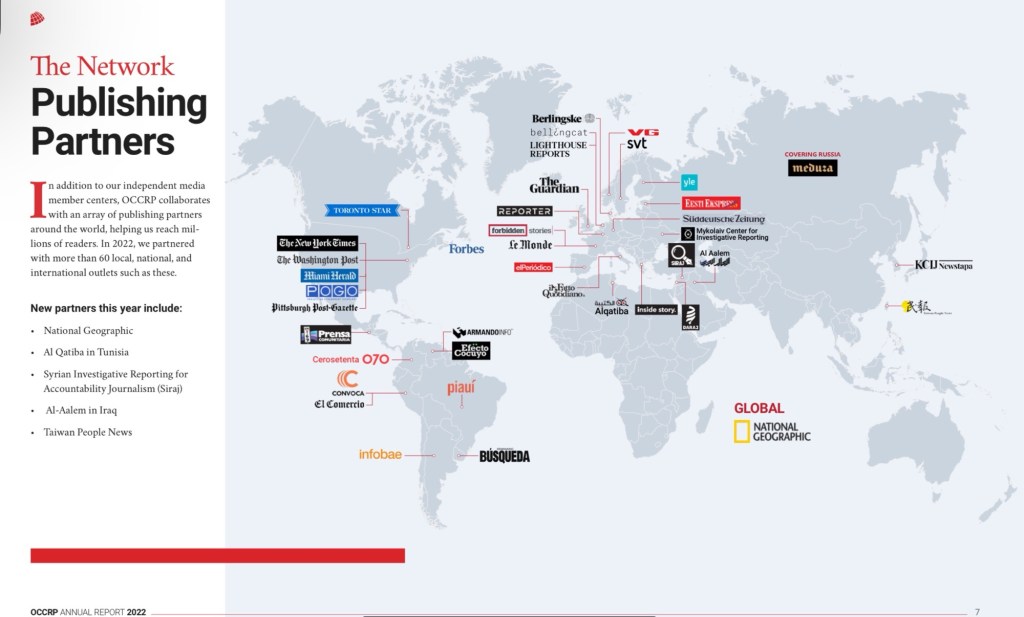

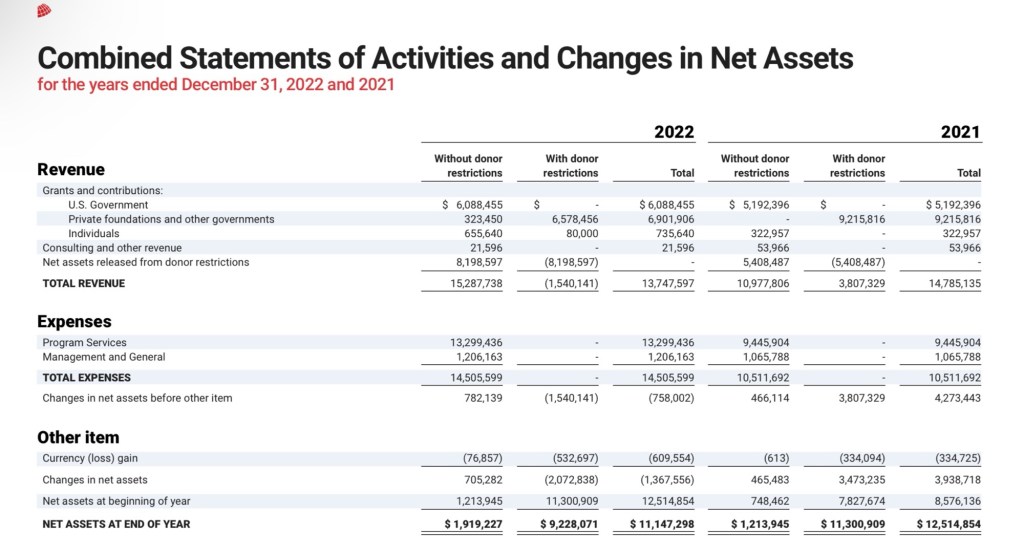

Grants from Luminate Group AKA Omidyar Network
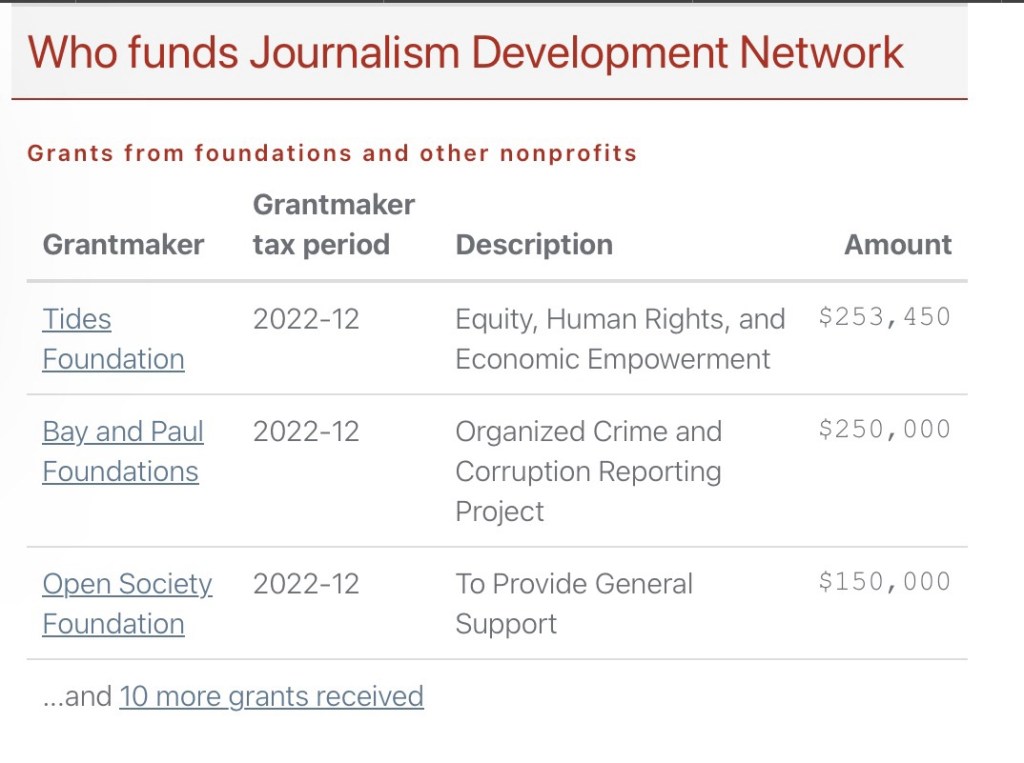
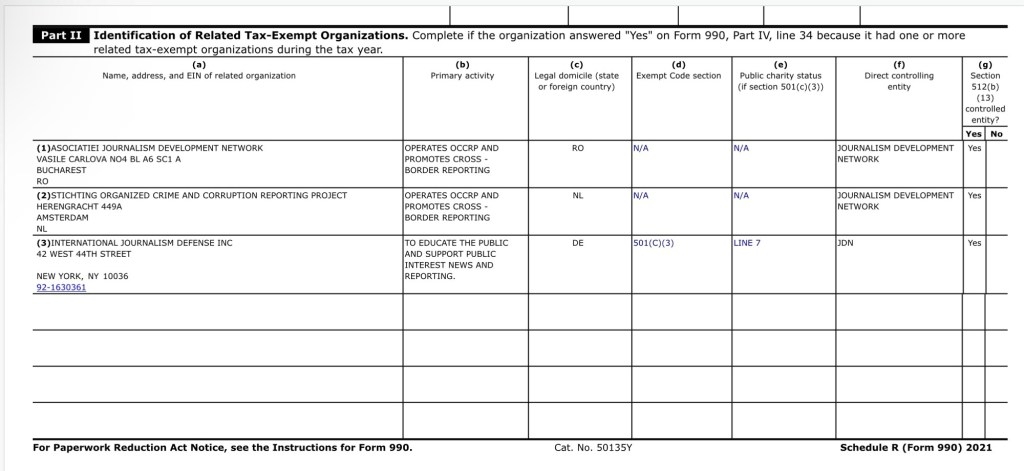
A ‘myriad’ of front organizations had “Media Unlocked” banned from TikTok (PCIJ)
PH’s PressONE is funded by several US front organizations
Update to Notes on Ukrainian Government Exposed Surveilling News Outlet (GIJN)
Latin American Center for Journalistic Research (CLIP)
Breakup of Yugoslavia (Yugoslav Wars)
U.S. Wars and Hostile Actions (WW2 – 2014) (Arab Spring)
Unlocking China’s “Media Unlocked” Propagandists
Recently, Media Unlocked unveiled its latest triumph–an interview with a former U.S. president’s brother, Neil Bush, whose George H.W. Bush Foundation For U.S.-China Relations has allegedly received millions of dollars from a group associated with CCP influence operations. Bush–apparently unconcerned that he was participating in Beijing’s propaganda campaign–helpfully sang the praise of China’s communist system, its electric vehicle industry and, incredibly, even announced that he was observing a “massive freedom movement” in today’s China.
Propagandists? Und das bist du nicht?
Now, let’s get into who’s funding the George H.W. Bush Foundation For U.S.-China Relations. Powell links to a Fox News article about its funding from the China–United States Exchange Foundation, based in Hong Kong. The Fox News article links to an Axios article (which is behind a paywall). Nowhere does Powell mention that the foundation also gets funding from the U.S. Department of State, The Rockefeller Foundation, etc.
Read More »US’ $1.6 billion fund for ‘Info-War’ vs. China
The fund is assigned to the US State Department and USAID for spending over the next five years to “subsidize” media and civil society sources around the world and “counter Chinese ‘malign influence’ globally.
In the Philippines, this funding is already showing in many State Department and USAID funded reports in mainstream media outlets such as the Philippine Star and popularly known US shills such as Rappler.
These two US info-war outlets I mentioned regularly publish reports on “Chinese influence operations” basing all on materials provided by AidData and Internews, both of which are verifiable as US-funded anti-China operations.
There are tons of evidence of the AidData and Internews ties to the State Dept. and USAID. As well, there are more than enough proof that Philippine Star, Rappler and their ilk are “agents of influence of the US.”
Rappler and AidData for example jointly “launched a journalism training for Filipino journalists, and students” just this September. Philstar of course has Christina Chi and a staff of four writing about “Chinese influence ops” all based on Internews and AidData reports.
Our “mosquito” think tank, Asian Century Philippines Strategic Studies Institute (ACPSSII) has researched Internews and AidData, and we discovered the usual US oligarchs and US government donors to Internews. These include Omidyar (which donated at least $1.5-million to Rappler in 2018), Rupert Murdock’s Sky News and stated previously, the State Dept. and USAID.
Likewise, AidData and its parent organization, College of William and Mary’s have links to USAID, a fact that is open for anyone to see on the Internet.
Rappler, of course, has been “convicted” of violating Philippine law for being a foreign owned company which it eventually skirted when its foreign investors agreed to “donate” its PDR investment to Rappler’s 14 directors.
I find this very profitable for the directors and for the information warfare of the State Department courtesy of the highly “malleable” Philippine justice system, especially when it is the US pushing the levers of justice behind the scene.
Marites Vitug, Rappler editor-at-large was recently ‘honored’ by the US. Rogue State’s top foreign policy rag, ‘Foreign Affairs,’ by publishing her rubbish article. “America and the Philippines Should Call China’s Bluff.”
Related:
Read More »China Daily’s ‘Media Unlocked’ TikTok account banned
Media Unlocked’s accounts on Facebook, YouTube, and X, which are not flagged as government media outfits, are still up, however. Felipe F. Salvosa II
IN-DEPTH: AI bolsters China state media’s TikTok offensive to influence narrative on sea dispute
Seeking credibility, China Daily’s ‘Media Unlocked’ TikTok passes off opinion as news
CNN:
Erin Burnett OutFront May 23, 2024 1PM Transcript
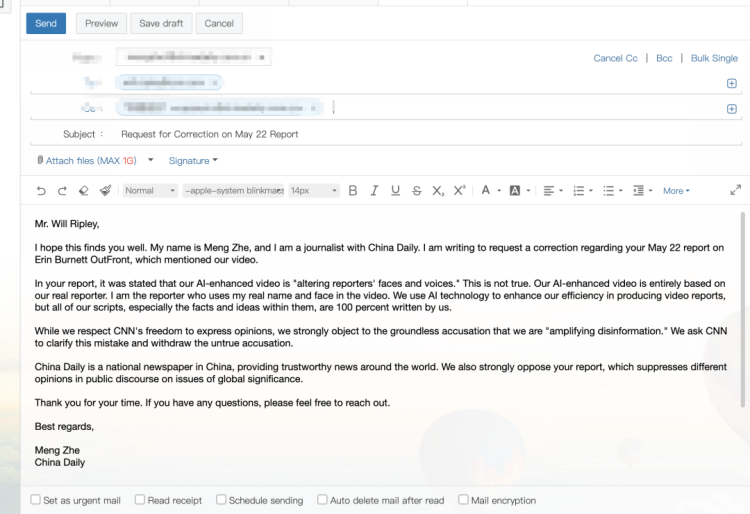
“RIPLEY (voice-over): Chinese state media is using A.I.-enhanced videos on TikTok, altering the reporter’s voice and face. A disclosure on screen for just a few seconds, easy to miss.
[01:39:52]
UNIDENTIFIED FEMALE: Under China’s jurisdiction.
RIPLEY: The video is pushing Beijing’s narrative on the South China Sea.
Is this a threat to democracy?
FELIPE SALVOSA II, JOURNALISM PROFESSOR, UNIVERSITY OF SANTO TOMAS: Most definitely. I think China has found a more cost-effective way to get its message across.
RIPLEY: Turning today’s digital landscape into a battleground for truth, where seeing is no longer believing.
Every time I do a story about these deepfake videos, what strikes me is the quality keeps improving. Our researcher (INAUDIBLE) spent hours putting these through algorithms to determine with 99 percent accuracy whether these videos are real, whether they’re fake, whether the voice has been altered, the face has been altered. Who on social media has time for that and a lot of people don’t take the time which experts say is dangerous, particularly in democracies when people are watching these videos and then potentially using the information they hear to make decisions about how to vote.
Maria Ressa is calling for the revocation of Section 230 of the Communications Decency Act. Revoking Section 230 would increase social media censorship and remove competition for Facebook, Twitter, WordPress, and YouTube (Google). Why? Due to threats of being sued, social media companies could ‘hold’ your posts until approved by artificial intelligence or a human. They’d also be inclined to remove more content. As for competition, smaller companies can’t afford the legal teams and/or fees that large companies can. The lawsuits could bankrupt a smaller company. Considering that Rappler is also funded by Big Tech, I’m not surprised that she’s on their side. This isn’t about hate speech, or ‘disinformation’, it’s about controlling the narrative!
In this clip, she complains about being criticized for appearing with Clinton and for being accused of being a CIA agent and a Communist. Of course, she’s not going to mention why she’s been accused of being a CIA agent (because she’s been funded by the CIA-cutout National Endowment for Democracy and other front organizations)!
Related:
AI Briefing: Hillary Clinton and Google’s Eric Schmidt both suggest Section 230 reform
Some speakers — including Clinton, former Google CEO Eric Schmidt and Rappler CEO Maria Ressa — also called on Congress to reform Section 230 of the Communications Decency Act. Ressa, a journalist who won the Nobel Peace Prize in 2021, also noted it’s hard for people to know what it’s like to be a victim of online harassment or misinformation until they’ve been attacked.
Maria A. Ressa, LL.D. ’24, Harvard Commencement Address 2024
Communications Decency Act – Section 230
WikiSpooks: Rappler (Sponsored by Facebook, Friedrich Naumann Foundation, Google, Internews, National Endowment for Democracy, Open Society Foundations, Omidyar Network)
American taxpayers are footing the bill for Ukrainian NGOs focused on smearing proponents of a diplomatic solution as “Russian disinformation” agents.
U.S. Funds Ukraine Groups Censoring Critics, Smearing Pro-Peace Voices
Related:
U.S. Helps Pro-Ukraine Media Run a Fog Machine of War + Supporting Front Orgs
Pro-Russian “disinformation” network
Ukraine’s ‘Press Freedom’ Score Increases Despite Martial Law, Banned Media
Read More »U.S. Helps Pro-Ukraine Media Run a Fog Machine of War
As Congress debates major new funding to support the Ukrainian war effort, U.S. taxpayer dollars are already flowing to outlets such as the New Voice of Ukraine, VoxUkraine, Detector Media, the Institute of Mass Information, the Public Broadcasting Company of Ukraine and many others. Some of this money has come from the $44.1 billion in civilian-needs foreign aid committed to Ukraine. While the funding is officially billed as an ambitious program to develop high-quality independent news programs; counter malign Russian influence; and modernize Ukraine’s archaic media laws, the new sites in many cases have promoted aggressive messages that stray from traditional journalistic practices to promote the Ukrainian government’s official positions and delegitimize its critics.
Related (front organizations):
Read More » Ms. Cat’s Chronicles
You must be logged in to post a comment.