
🚨🇲🇲The Ukraine-Myanmar connection: Former US Marine links two Western proxy battlefields
— Sputnik India (@Sputnik_India) March 17, 2026
The arrest of six Ukrainians and one 🇺🇸American for supporting terrorism in Myanmar “should come as no surprise.”
🗣️“For decades the US government through the National Endowment for… https://t.co/Mpi0c3ArxI pic.twitter.com/oVDXv9BN6w
Tag: ISIS
CIA Arms Iran’s Kurds For Regime Change — Why Is The Opposition Against Them? +
The CIA is working to arm Kurdish forces inside Iran. President Trump called Kurdish leaders personally over the weekend — and on Tuesday spoke directly with Mustafa Hijri, president of the Democratic Party of Iranian Kurdistan, whose camps the IRGC had just struck with drones. Benjamin Netanyahu arrived at the White House with Kurdish uprising numbers already mapped. Weapons have reportedly been smuggled into western Iran since last year’s twelve-day war. Israeli strikes are targeting Iranian military outposts along the Iraq border to clear a path for ground operations.
CIA Arms Iran’s Kurds For Regime Change — Why Is The Opposition Against Them? (archived)
Related:
Exclusive—Türkiye wary US attack may turn Iran into breeding ground for PJAK: Sources
Report: Kurdish Fighters Have Been Entering Iran From Iraq and Clashing With the IRGC
[06-15-2025] Iran’s Dissident Kurds Seek US Help to Pave Way for Government’s ‘Collapse
Greater Kurdistan: A Work in Progress Brought to You by NATO, President Peace Prize and… Israel
The SDF equals the YPG/PKK/Kurds: A timeline of the PKK’s war on Türkiye
Europe creates a ‘Russian government-in-exile’, consisting of a bunch of losers
Europe creates a ‘Russian government-in-exile’, consisting of a bunch of losers
Among the members of the so-called Russian government-in-exile are names such as Mikhail Khodorkovsky, the oligarch once convicted in Russia for fraud and theft, who has already served time in a Russian prison, and chess grandmaster Garry Kasparov, who has a far stronger connection to modern-day Azerbaijan or Armenia, having been born and spent his entire childhood in Baku, present-day Azerbaijan.
Read More »
Trump says strikes carried out at request of Nigerian government
ISIS has its sights set on a new potential ally—Uyghur jihadi groups

Why Does Trump Want U.S. Troops Back in Afghanistan?
Syrian Kurdish official rejects Turkish calls to lay down arms, says SDF seeks integration instead +
A top Syrian Kurdish official has rejected Turkish calls for the Syrian Democratic Forces (SDF) to give up their weapons as part of Ankara’s broader peace efforts with Kurdish militants, saying the situation in Syria requires integration, not the laying down of arms.
Ilham Ahmed, co-chair of the Foreign Relations Committee of the Autonomous Administration of North and East Syria (Rojava), told BBC’s Turkish service that the SDF’s continued armed presence is necessary due to ongoing security threats, particularly from Islamic State in Iraq and the Levant (ISIL) remnants and the lack of a permanent Syrian constitution.
Syrian Kurdish official rejects Turkish calls to lay down arms, says SDF seeks integration instead
The U.S. continues to back the Syrian Democratic Forces (SDF)—a coalition dominated by the YPG, which Turkey sees as indistinguishable from the PKK. Despite the PKK’s recent disarmament announcement, Washington has resuscitated funding and military coordination with the SDF—a coalition whose very name was crafted to obscure its PKK lineage. This comes even as the U.S. consolidates its military presence to a single base in Hasakah, signaling a shift from occupation to strategic entrenchment.
In 2019, as Trump was weighing a withdrawal of U.S. troops from Syria during his first term, Tulsi Gabbard brought Ilham Ahmed—the then-head of the Syrian Democratic Council, political wing of the U.S.-backed Syrian Democratic Forces in Rojava—as her guest to Trump’s second State of the Union. The message was clear: autonomy should have air support. Ahmed currently serves as Co-Chair of the Foreign Affairs Department of Rojava, also known as the Democratic Autonomous Administration of North and East Syria.
Related:
Trump should be convinced of US pullout from Syria- but… (Disarmament, dissolution of YPG)
The SDF equals the YPG/PKK/Kurds: A timeline of the PKK’s war on Türkiye
Tulsi Gabbard Is Taking Part In The Iran Policy She Once Strongly Opposed.

How Tulsi Gabbard Sold Out To The Neo-Cons She Once Opposed.
Tulsi Gabbard Is Taking Part In The Iran Policy She Once Strongly Opposed.
I’ve documented how Gabbard hasn’t been anti-war for years.[1] This war against Iran has been the plan all along, as Brian Berletic has pointed out several times.[2]
Related:
2. US Using Israel to Provoke Iran War, Deny Responsibility, Minimize Retaliation
Continuity of Agenda: Trump Administration White-Washes Bush-Obama-Biden-backed Al-Qaeda in Syria
Why Washington is Worried About Burkina Faso’s Young Revolutionary Leader
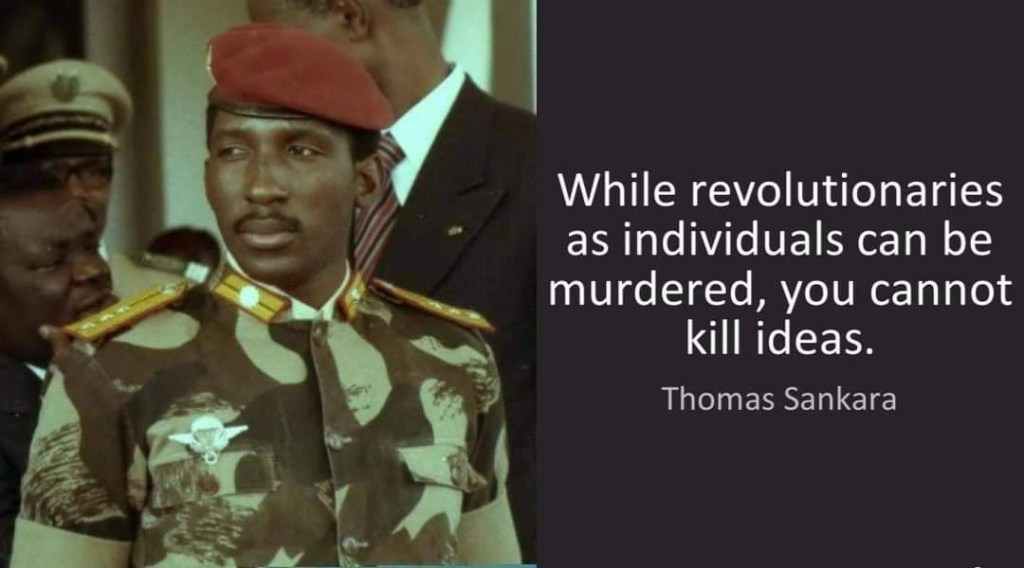
Why Washington is Worried About Burkina Faso’s Young Revolutionary Leader
Related Videos:
HRW accused Burkina Faso of war crimes
Related Articles:
The US/EU/NATO’s Regime Change Playbook for Burkina Faso and Captain Ibrahim Traoré
The Rising Star of Cpt. Ibrahim Traore – Burkina Faso’s Spirit of Sankara
In February 2024, Traoré ordered the suspension of the issuance of export permits for small-scale private gold production, a move aimed at tackling illegal trade. According to the World Gold Council’s 2023 figures, Burkina Faso is the 13th-largest gold producer in the world, producing about 100 tonnes, equivalent to about US$6 billion in value, each year.
Document: Burkina Faso
 Ms. Cat’s Chronicles
You must be logged in to post a comment.