While much of the world’s attention is currently focused on the economic fallout of the tariffs imposed by the United States on allies and designated adversaries alike, they are only one part of a much wider strategy aimed at what U.S. policymakers themselves claim is a bid to maintain the U.S. as “the world’s dominant superpower.”
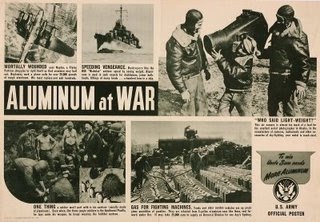
Alcoa is now the third largest aluminum producer in the world. Back in 1941, it was much more powerful. It had a monopoly on aluminum in addition to owning a massive amount of America’s electricity production and other minerals. Before America declared war on Germany, it sent so much of its aluminum product over to Germany that the country made upwards of sixty percent more aluminum products than America. When the US’s involvement in the war began, there was a massive aluminum production shortage in America, in no small part because of Alcoa’s monopoly. Alcoa essentially sold the Axis powers much of the material to build their war machines and a reprieve from the American war machine.
…
2. General Motors
Similar to their automotive rivals, General Motors was sued by Holocaust survivors for assisting the Nazi war machine. Beginning in 1935, GM built a factory in Berlin for the purpose of building “Blitz” trucks for the Wehrmacht. Ford began building similar trucks around the same time, but GM was the number one producer of the vehicles that were vital for the quick conquests of Poland, France, and much of the Soviet Union. Albert Speer, the minister of armaments and war production, claimed that the rubber GM supplied was the key to the ability of the Germans to wage war the way they did. Inevitably when America declared war on Germany, the Reich seized GM’s German production facilities.
Although neither Ford nor General Motors ever fully conceded that they had willingly participated in the use of slave labor, they both were massive contributors to a fund started in 2000 for Holocaust survivors.
A little more than a century ago the world’s superpower was the British Empire. Despite being a constitutional monarchy where the aristocracy and monarchy still retained significant power, the British Empire was arguably the birthplace of the industrial revolution and it played a significant role in spreading capitalism around the world through colonialism. From around the 19th century until the early 20th century, many saw the British Empire as quite possibly the most affluent and powerful capitalist-colonial empire in the world. The British Empire as the capitalist-colonial hegemon extracts resources from its colonies, transforms them into commodities, and sells them for a profit that would go into the pockets of capitalists and royal colonizers alike. There were other competing colonizers such as France, The Netherlands, Spain, Portugal, Germany, Japan, and the U.S., but none of them (except the U.S. in the late 20th century) could quite surpass the British Empire. The British Empire was the largest epicenter of world capitalist imperialism and being an anti-imperialist was almost (though not quite) synonymous with being against the British Empire. The geopolitical status of the British Empire is roughly or loosely analogous to the geopolitical status that the U.S. enjoyed since the late 20th century. Both the British Empire and the U.S. enjoy the status of being a hegemonic empire due to their overwhelmingly powerful military (especially their navy) and almost unparalleled economic power.
President Joe Biden has made a habit of putting the interest of foreign governments before that of the American people. Like the Kingdom of Saudi Arabia and its de facto ruler, Crown Prince Mohammed bin Salman.
URUMQI (China): China has been dealing with the issue of terrorism in the autonomous region of Xinjiang in accordance with law and the untoward incidents here have witnessed a decline since 2016.
Washington: As China’s human rights record came up for Universal Period Review (UPR) at the UN, the Government-in-Exile of East Turkistan, also known as Xinjiang Province in China, has said the international community must move beyond the diplomatic means and urgently take “decisive” and “tangible” actions to stop genocide against Uyghur Muslims.
The ghosts of 1968 are haunting Barack Obama, which is tremendously unfair, I say as his coeval, given that our cohort spent the Chicago Democratic Convention sticking baseball cards in our bicycle spokes rather than pelting Mayor Daley’s finest with porcine epithets. But guilt by association is ironclad in these days when American political discourse is controlled by hall monitors and tattletales. Obama’s friendship—acquaintance?—with Bill Ayers and Bernardine Dohrn is about to get extended play as the Republicans contrast Obama’s Weatherfriends with their nominee’s stint in the Hanoi Hilton.
In history classes (in public or private schools, colleges, and others), state propaganda, and mainstream history, a historical fiction has been spun that allegedly debunks any notion of noninterventionism. This is the myth of American isolationism.
The Monroe Doctrine was first discussed under that name as justification for the U.S. war on Mexico that moved the western US border south, swallowing up the present-day states of California, Nevada, and Utah, most of New Mexico, Arizona and Colorado, and parts of Texas, Oklahoma, Kansas, and Wyoming. By no means was that as far south as some would have liked to move the border.
President of Serbia, Aleksandar Vučić, said tonight that he was afraid that no one wanted to talk about the context, the circumstances and what Serbia is really facing when referring to the Franco-German plan for Kosovo and Metohija.
But Washington is ready to offer Belgrade economic and diplomatic support on the condition that Serbia joins Western allies in sanctions against Russia.
…
If Serbia fully participates with the West then Washington and Brussels may ask Kosovo to meet Serbia’s demand in granting Serbs the right to live in Northern Kosovo. [Community of Serb Municipalities]


 Ms. Cat’s Chronicles
You must be logged in to post a comment.