
Biden officials worry their Russia sanctions were so powerful they also brought economic suffering to the US, report says

Corporate ‘Self-Sanctioning’ of Russia Has US Fearing Economic Blowback

But some Biden administration officials are now privately expressing concern that rather than dissuading the Kremlin as intended, the penalties are instead exacerbating inflation, worsening food insecurity and punishing ordinary Russians [they don’t care about the people, the true purpose of sanctions is to encourage people to overthrow their leader] more than Putin or his allies.

When the invasion [special military operation] began, the Biden administration believed that if penalties exempted food and energy [what exemptions?!], the impact on inflation at home would be minimal. Since then, energy and food have become key drivers of the highest US inflation rates in 40 years, a huge political liability for President Joe Biden and the Democratic party heading into November’s mid-term elections [they only care about winning the midterms].

There’s no sign that administration officials feel their sanctions policy was a mistake or that they want to dial back the pressure. If anything, officials have said a key US goal is to ensure Russia can’t do to other nations what it has done in Ukraine [then tell Puppet Zelensky to negotiate instead of flooding Ukraine with weapons!!].

The Biden administration rejects [denies] any suggestion that sanctions are part of the problem, emphasizing that the US isn’t penalizing humanitarian goods or food, and putting [shifting] the blame on Putin’s decision to attack Ukraine, including by targeting shipping on the Black Sea [which is blocked with mines].

About 1,000 companies have so far announced that they are curtailing operations in Russia, according to data collected by the Yale Chief Executive Leadership Institute. That underscores one reason sanctions are so popular with policy makers: They essentially outsource US policy to the private sector [intentional and/or just being lazy?!], which makes it less surgical, less calibrated and less responsive to policy changes, said Smith, the former OFAC adviser.

This becomes important as all sides seek an end to the war [no, they don’t]. The lifting of sanctions can be dangled as an incentive to help bring about a diplomatic resolution to the conflict. But right now it’s hard even to offer that as a potential benefit of entering into negotiations because much of the pullout by American businesses has been self-inflicted [they screwed themselves]. Companies could face public blowback if they are seen as rushing back into the Russian market.

Headline stolen from:
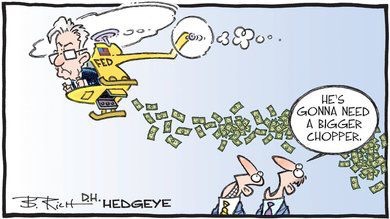
Biden officials worry their Russia sanctions were so powerful they also brought economic suffering to the US, report says

The scissors of slump

Last week, US Treasury Secretary Janet Yellen told the US Congress that “We now are entering a period of transition from one of historic recovery to one that can be marked by stable and steady growth. Making this shift is a central piece of the President’s plan to get inflation under control without sacrificing the economic gains we’ve made.”

It’s true that the US economy since the depths of the pandemic slump, (which remember in terms of national output, incomes and investment was the worst since the 1930s – even worse that the Great Recession of 2008-9) has made a recovery. But it could hardly be described as ‘historic’. And as for the claim that the US economy, the best performing of the major economies in the last year, is heading towards ‘stable and steady growth’, that is not supported by reality.

The scissors of slump

I Cannot Live on Tomorrow’s Bread

On April 19, the International Monetary Fund (IMF) released its annual World Economic Outlook, which forecasted a severe slowdown in global growth along with soaring prices.‘For 2022, inflation is projected at 5.7 percent in advanced economies and 8.7 percent in emerging market and developing economies – 1.8 and 2.8 percentage points higher than projected in … January’, the report noted. IMF Managing Director Kristalina Georgieva offered a sobering reflection on the data: ‘Inflation is reaching the highest levels seen in decades. Sharply higher prices for food and fertilizers put pressure on households worldwide – especially for the poorest. And we know that food crises can unleash social unrest’.

I Cannot Live on Tomorrow’s Bread

Related:

This Isn’t Putin’s Inflation

H/T: The New Dark Age

Response to Yellen’s “blatant threat to China” over Ukraine + Republican and Democratic Senators made a surprise trip to Taiwan

Response to Yellen’s “blatant threat to China” over Ukraine

Related:

China tears into ‘condescending’ U.S. and warns it is ‘going down a dangerous path’ after group of Republican and Democratic Senators made a surprise trip to Taiwan

PLA drills around Taiwan targeted at US lawmakers’ visit, rehearse ‘real action’ once necessary

Yellen Warns China Will Face Consequences If It Doesn’t Help Stop Russia’s War in Ukraine

‘Hell yeah, I’m bitter’: Obama’s ethics ex-chief rails against Biden White House nepotism in Twitter meltdown

‘Hell yeah, I’m bitter’: Obama’s ethics ex-chief rails against Biden White House nepotism in Twitter meltdown

“So, yeah. I’m disappointed. I’m angry. I supported this guy. I provided help to the campaign and the transition because I believed ethics was going to be a priority. Well, it isn’t even in the top 100 things the administration cares about,” he said.

Related:

A family affair: Children and other relatives of Biden aides get administration jobs