Marco Rubio, a Republican foreign policy hawk tapped by Donald Trump to lead the US Department of State in his new administration, is known for his confrontational stance toward Iran and close ties with anti-Iran groups.
For years the Israel on Campus Coalition—a little-known organization with links to Israeli intelligence—has used student informants to spy on pro-Palestinian campus groups.
A review by NBC News of thousands of documents filed with the U.S. Department of Agriculture, however, shows very few purchases by Chinese buyers in the past year and a half — fewer than 1,400 acres in a country with 1.3 billion acres of agricultural land. In fact, the total amount of U.S. agricultural land owned by Chinese interests is less than three-hundredths of 1%.
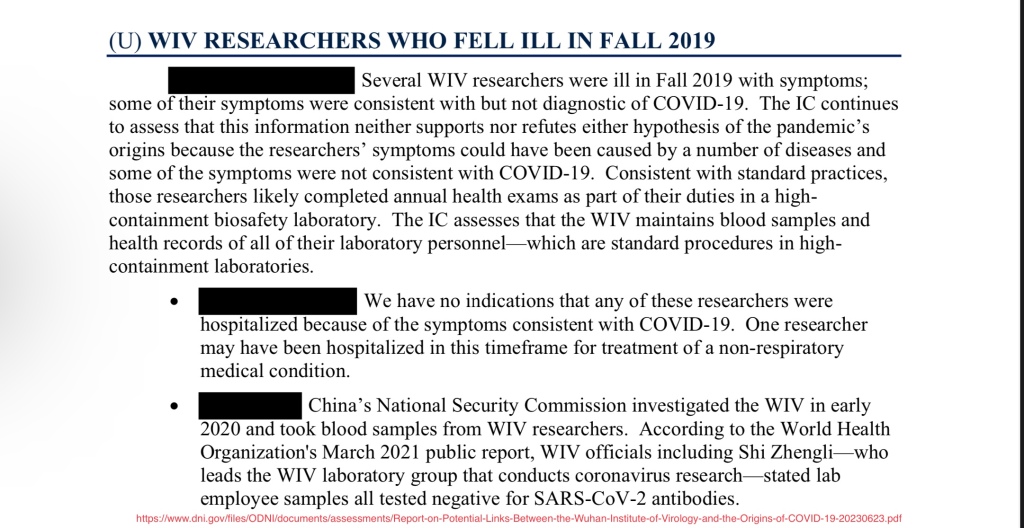
Cleared by Congress, legislation later signed by US President Joe Biden in March ordered the Director of National Intelligence (DNI) to declassify information regarding the potential origins of SARS-CoV-2, the virus that causes COVID-19. The measure forced the DNI to declassify its report within 90 days.
Hu and two of his WIV colleagues were thrown into the furious COVID-19 origin debate on 13 June when an online newsletter called Public said the three scientists developed COVID-19 in November 2019. That was prior to the outbreak becoming public when a cluster of cases at the end of December 2019 surfaced in people linked to a Wuhan marketplace. Public’s report was quickly embraced by a camp that argues COVID-19 came from a virus stored, and possibly manipulated, at WIV, rather than from infected animal hosts, perhaps being sold at the Wuhan market. A Wall Street Journal (WSJ) article on 20 June that said it had “confirmed” the allegations against the three, without referring to any public evidence or named sources with direct knowledge, fueled the flames even more. Social media and other publications spread the charges—and the scientists’ names.
But an out-of-pocket cap identical to that for Medicare was stripped from the bill for those with private insurance because Democrats are trying to pass the bill by a simple majority through the reconciliation process. That requires Senate Parliamentarian Elizabeth MacDonough to vet the provisions. She said most of the health-related features were fine, but the insulin proposal for those who have private insurance, not Medicare, violated the Byrd provision, which says that issues “extraneous to the federal budget” cannot be passed by simple majority through reconciliation.
…
Out-of-pocket spending for those with Part D Medicare drug coverage will be capped at $2,000 a year.
…
In 2024, a 5% coinsurance payment that now kicks in after someone reaches the catastrophic drug spending level of $7,050 in Medicare will end. Because drug companies set their own prices, 5% on expensive drugs can be a lot of money.


 Ms. Cat’s Chronicles
You must be logged in to post a comment.