A Giant of Journalism Gets Half its Budget From the U.S. Government

A Giant of Journalism Gets Half its Budget From the U.S. Government

How Sullivan first caught the attention of the U.S. foreign policy officialdom is itself a window into the purpose of the organization. It begins with a coup in the Philippines. State Department official Michael Henning had previously been stationed there. In 2001, the non-profit outlet the Philippine Center for Investigative Journalism (PCIJ) exposed corruption by then-President Joseph Estrada, a nationalist with a standoffish relationship to the U.S. The exposé led to an impeachment inquiry, which fell short. But it also produced major street protests, leading to his ouster in a coup [EDSA 2]. The journalist’s pen was not just mightier than the sword, but less embarrassing to wield on a global stage in an era where overtly U.S.-backed military coups had gone out of fashion (if not entirely out of the toolkit). Henning was a major booster of PCIJ—which has been the beneficiary of grants from the National Endowment for Democracy—relaying its effectiveness to his colleagues.

The article refers to the Arab Spring and the Yugoslav Wars, but not how the U.S. was involved.

Related:

Front Organizations Behind Hit Piece on Igor Lopatonok:

Wikipedia

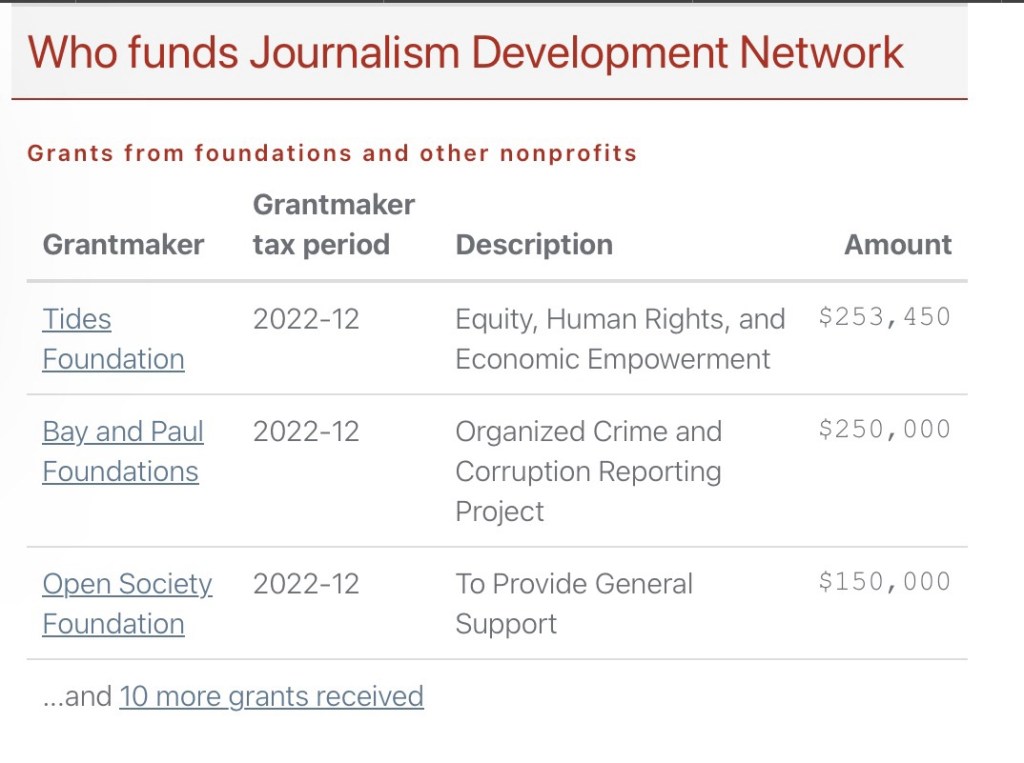
Grants from Luminate Group AKA Omidyar Network
Source
Source

A ‘myriad’ of front organizations had “Media Unlocked” banned from TikTok (PCIJ)

PH’s PressONE is funded by several US front organizations

Update to Notes on Ukrainian Government Exposed Surveilling News Outlet (GIJN)

Latin American Center for Journalistic Research (CLIP)

Front Organizations

Breakup of Yugoslavia (Yugoslav Wars)

U.S. Wars and Hostile Actions (WW2 – 2014) (Arab Spring)
China exposes Philippines’ reneging on South China Sea commitment

Source

Related:

China exposes Philippines’ reneging on South China Sea commitment

Wang pointed out that the Philippines has made a solemn promise to tow away the military vessel illegally grounded at Ren’ai Jiao, noting that 25 years have passed, and the Philippines has still not towed away the warship.

Noting that the Philippines has violated the understanding reached between the two sides on the proper management of the situation on Ren’ai jiao, the spokesperson said despite the Philippines’ commitment not to reinforce the grounded warship and to notify China in advance of any plans to resupply it, China, out of humanitarian considerations, has made temporary special arrangements for Philippine vessels transporting necessary supplies to the warship multiple times.

“However, the Philippines continues to send government vessels and warships to forcibly enter Ren’ai Jiao, attempting to transport construction materials for large-scale repairs and reinforcement of the warship in order to achieve permanent occupation of Ren’ai Jiao,” Wang said.

PH did promise to remove BRP Sierra Madre from Ayungin

Philippines Budgets for a Permanent Base at Second Thomas Shoal

It’s Time to Build Combined Forward Operating Base Sierra Madre

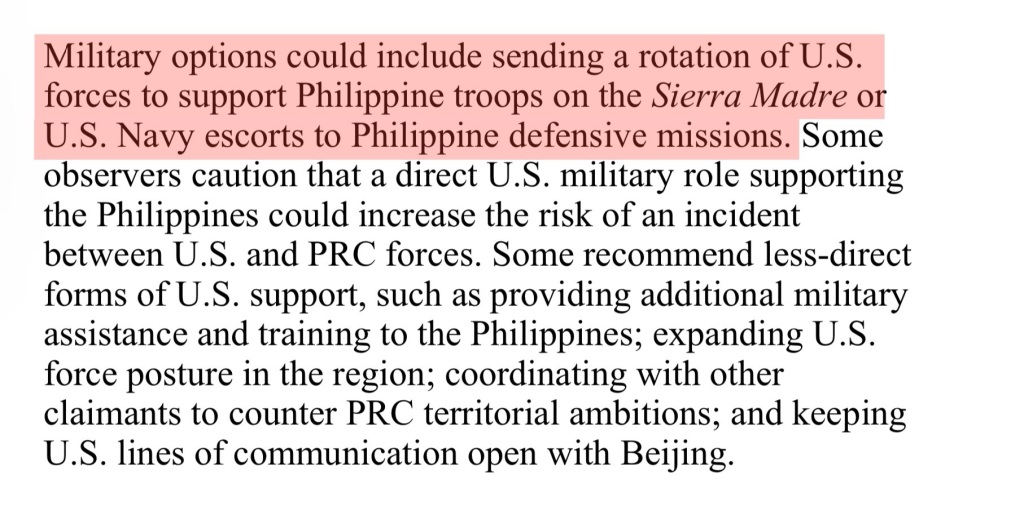
Report to Congress on China-Philippines Tensions in the South China Sea

The following is the Jan. 23, 2024, Congressional Research Service In Focus report, China-Philippines Tensions in the South China Sea.

Report to Congress on China-Philippines Tensions in the South China Sea

I’ll be updating this, soon: Philippines Game Changer – Project Myoushu – South China Sea Analysis. You can find it, here, as well. I just hope that they don’t end up stationing any US troops at the BRP Sierra Madre (see videos, below)!

Related:

Read More »