
Tag: Lin Jian
Philippine military drills to seize an island in the South China Sea
The Philippine military opened two weeks of combat drills Monday that would include seizing an island in the disputed South China Sea and likely be frowned upon by China.
Philippine military drills to seize an island in the South China Sea
Previously:
China looks to Indonesia for diplomatic resolution after coastguards’ Natuna encounters + More
China looks to Indonesia for diplomatic resolution after coastguards’ Natuna encounters + More
China looks to Indonesia for diplomatic resolution after coastguards’ Natuna encounters
Related:
[10-23-2024] Indonesian Coast Guard “Drives Out” Chinese Vessel Shadowing Seismic Ship (archived)
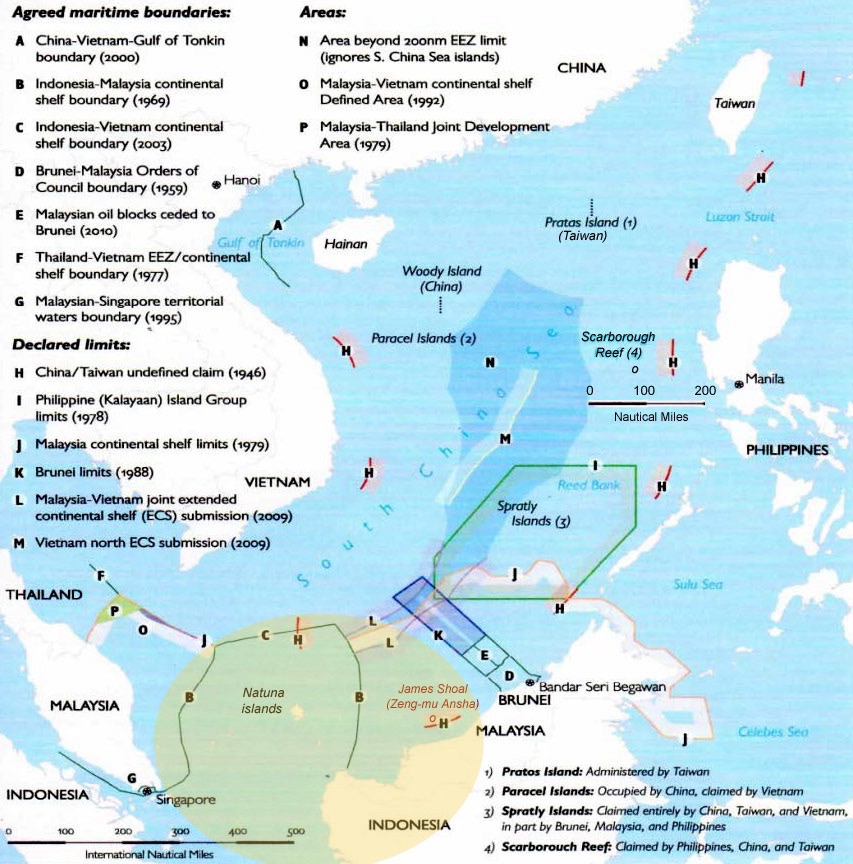
Read More »On Monday, Indonesia’s coast guard “drove out” a China Coast Guard cutter that was shadowing a survey vessel in Indonesian waters of the South China Sea. On Tuesday, the Chinese vessel was back again in the same spot, according to maritime security expert Ray Powell.
…
Geo Coral is a Norwegian-owned geophysical vessel flagged in Norway. She is operating under charter to PT Pertamina, Indonesia’s state-owned oil company, to conduct a 3D seismic survey off the Natuna Islands. “Pertamina East Natuna is focusing on oil and gas exploration activities in the East Natuna Working Area [East Natuna gas field], which has great potential to contribute to national energy security,” said a Pertamina spokesman on Tuesday.
US Keeps Missile System in Philippines as China Tensions Rise, Tests Wartime Deployment
MANILA (Reuters) – The United States has no immediate plans to withdraw a mid-range missile system deployed in the Philippines, despite Chinese demands, and is testing the feasibility of its use in a regional conflict, sources with knowledge of the matter said.
US Keeps Missile System in Philippines as China Tensions Rise, Tests Wartime Deployment
Previously:
Philippines aims to acquire Typhon missile launcher as regional arms race intensifies
Philippines aims to acquire Typhon missile launcher as regional arms race intensifies
China is against the deployment of the Typhon in the Philippines, which has been used in joint military exercises involving US troops
Philippines aims to acquire Typhon missile launcher as regional arms race intensifies
Related:
Foreign Ministry Spokesperson Lin Jian’s Regular Press Conference on August 30, 2024:
Bloomberg: The Philippines’ top military official said that the deployment of the US missile system in the country was mainly for training. China has been in the past said that the weapon system could be destabilizing. Does the Foreign Ministry have any comments on the recent comments by the Philippines’ military chief?
Lin Jian: On the US deployment of Mid-Range Capability missile system in the Philippines, China has made clear our opposition more than once. This move by the US and the Philippines incites geopolitical confrontation, escalates tensions in the region, and harms regional peace and stability. It has aroused high vigilance and concerns of countries in the region. The Philippines needs to have a clear understanding of the real intention of the US, respond to the common concerns of regional countries, avoid acting as the cat’s paw for the US at the expense of its own security interest, and quickly pull out the missile system as publicly pledged.
Philippine Sailor Severely Injured, Vessels Damaged as Chinese Block South China Sea Mission + Notes
It was the Philippines that rammed the CCG!* US-funded Rappler** doesn’t mention the other soldiers who were injured.
Philippine Sailor Severely Injured, Vessels Damaged as Chinese Block South China Sea Mission
Meanwhile, a Philippine government release from the National Task Force on the West Philippine Sea stated that ships from the People’s Liberation Army Navy, China Coast Guard and Chinese Maritime Militia performed “dangerous maneuvers.” However, there is no mention of injury to Philippine personnel in the release. The statement also claimed that Chinese forces rammed and towed Philippine vessels, although it’s unclear to what extent the latter occurred during the incident. This is the first reported instance of China towing – defined as pulling, pushing or hauling – Philippine vessels in their South China Sea disputes.
Related:
Read More »Xi’s whirlwind European tour, playing mediator to mixed reviews
The question is, will the US see this as a benefit or continue to play critic?
Xi’s whirlwind European tour, playing mediator to mixed reviews
Related:
Philippines accuses China of damaging its vessel in disputed South China Sea shoal (videos)
BEIJING/MANILA (Reuters) – The Philippines on Tuesday accused China’s coast guard of harassment and damaging one of its boats in a disputed area of the South China Sea, and rejected Beijing’s position that it had expelled two vessels from the hotly contested shoal.
The Philippine coast guard said its two vessels stood their ground at the Scarborough Shoal, a key battleground in the South China Sea, but one sustained damage from use of water cannon by two Chinese coast guard ships.
Philippines accuses China of damaging its vessel in disputed South China Sea shoal
This is the second ship that “stood its ground” /s:
PNoy, Del Rosario responsible for PH losing control of Scarborough
The term “lost* Scarborough shoal” is debatable. Security officials deny that. Foreign affairs officials will not say that because that would be detrimental to the claim of the Philippines on the shoal which is included in the case filed by the Philippines against China before the United National Arbitral Court.
*Yet, that’s precisely what Kurt Campbell said in his book, The Pivot (p. 225).
Note: VERA Files is funded by the National Endowment for Democracy, Check Global by Meedan, Facebook, Open Society Foundations, and International Media Support.
FAIR USE STATEMENT:
These videos may contain copyrighted material the use of which has not been specifically authorized by the copyright owner. This material is being made available within this transformative or derivative work for the purpose of education, commentary and criticism, is being distributed without profit, and is believed to be “fair use” in accordance with Title 17 U.S.C. Section 107.
 Ms. Cat’s Chronicles
You must be logged in to post a comment.