The previous generation had their own Left Behind series – another mega-bestseller (28 million copies) futurist geopolitical fiction mapping Darby’s doctrines on to the 1970s it was called The Late Great Planet Earth by Hal Lindsay. Lindsay’s genius was to update versions of the book as America’s enemies changed. In 1970, the threat to Israel came from Russia; by the 1990s, it was a joint Russia-Muslim operation; by 1999, China was in there too. “It is amazing, is it not”, wrote Lutheran critic of Christian Zionism Joseph Neuberger in his Master’s thesis, “that the great enemies of God’s people just happen to coincide with the national enemies of America at any given moment?” In the Christian Zionist reading of the bible, unlike non-Zionist Christian readings, “Israel” means the state of Israel – this is to be read literally. But Israel’s enemies in the bible are tribes (Canaanites, etc.) that don’t exist any more – these enemies have to be read figuratively and flexibly, which the Lindsay and the Left Behind authors do.
…
It is apparent that God’s will coincides perfectly with joint US/Israel geopolitical ambitions.
…
The murder of literature teacher Refaat Alareer, the target had been put on his back by social media figure Bari Weiss (Refaat had said, after the death threats started pouring in, that if he died he held Weiss responsible), looks like it was a targeted assassination. He had apparently “received an anonymous phone call from someone who identified himself as an Israeli officer and threatened Refaat that they knew precisely the school where he was located and were about to get to his location with the advancement of Israeli ground troops.”
Max Blumenthal writes: “According to EuroMed’s report, he then returned to his sister’s apartment to avoid endangering others in the school/shelter. There, he was killed by a “surgical” strike by the Israeli military.” Refaat Alareer’s murder was celebrated online by many pro-Israel people, “publicly, under their own names celebrating and cheering the killing of Refaat Alareer and his family which includes children”, as one tweeter noted. His poem, “If I must die”, is being translated into many of the languages of the earth in this twitter thread.
…
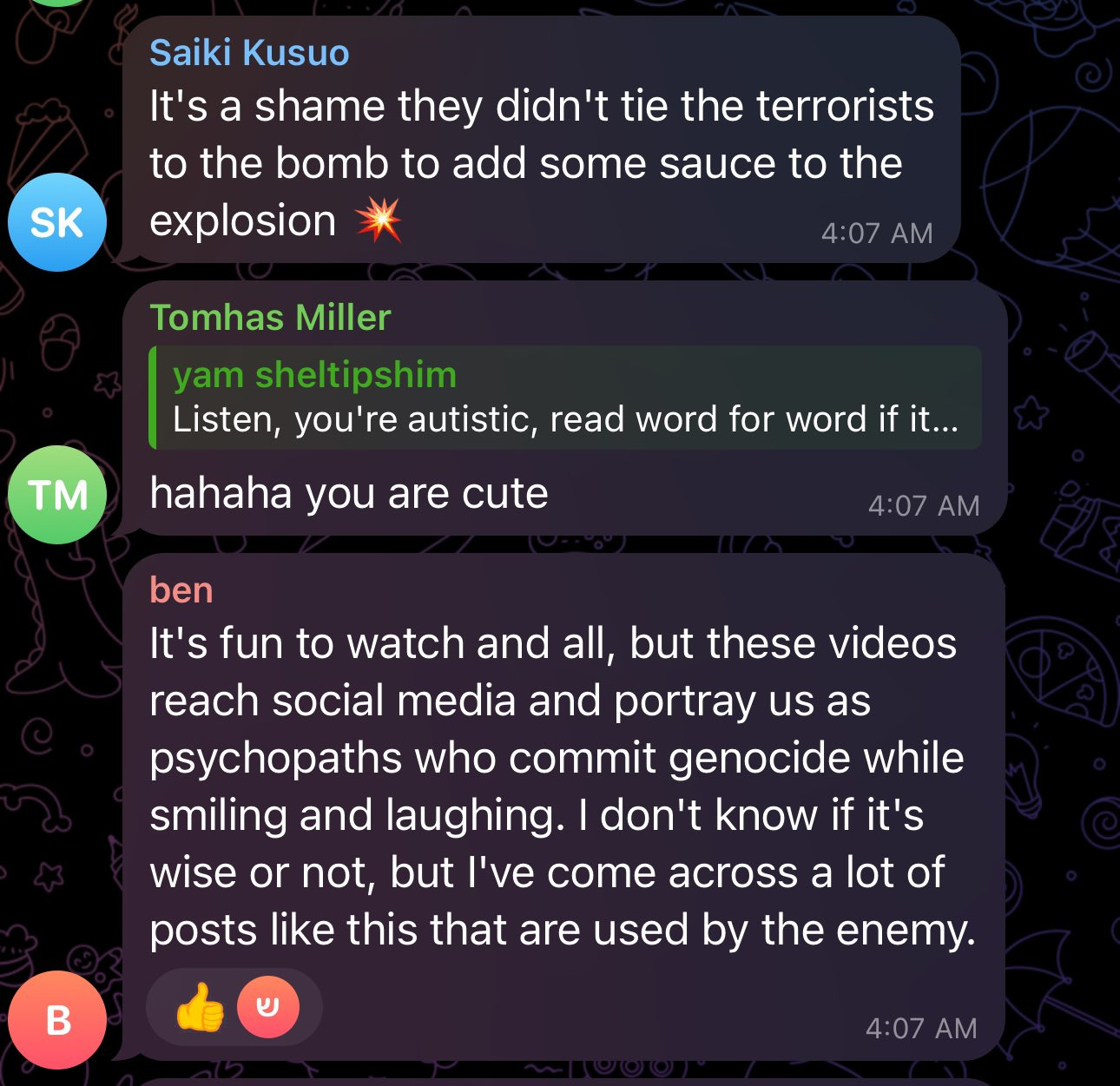
On one of the telegram channels where Israelis watch the carnage, one poster expressed concern about how the glee would be seen from the outside.
“It’s fun to watch and all,” wrote ben, “but these videos reach social media and portray us as psychopaths who commit genocide while smiling and laughing. I don’t know if it’s wise or not, but I’ve come across a lot of posts like this that are used by the enemy.”
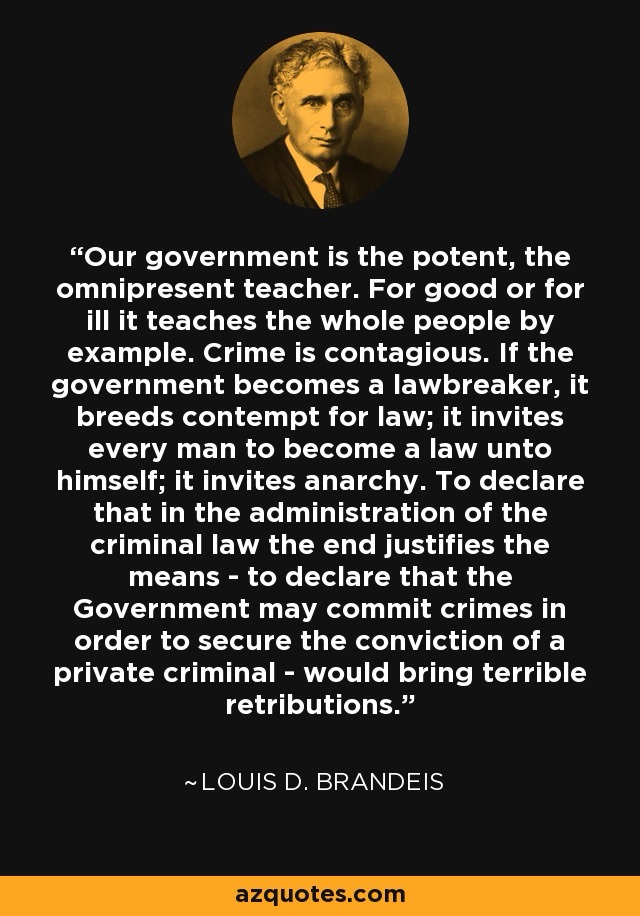
In his famous dissent in Olmstead v. United States, Supreme Court Justice Louis Brandeis in 1928 called the right to be left alone the most comprehensive of rights and the right most valued by civilized men. He was referring to the right to be left alone from the government — a right that today we call privacy.
In 1969, the Supreme Court’s decision in Brandenburg v. Ohio effectively overturned Schenck and any authority the case still carried. There, the Court held that inflammatory speech–and even speech advocating violence by members of the Ku Klux Klan–is protected under the First Amendment, unless the speech “is directed to inciting or producing imminent lawless action and is likely to incite or produce such action” (emphasis mine).
Today, despite the “crowded theater” quote’s legal irrelevance, advocates of censorship have not stopped trotting it out as thefinal word on the lawful limits of the First Amendment. As Rottman wrote, for this reason, it’s “worse than useless in defining the boundaries of constitutional speech. When used metaphorically, it can be deployed against any unpopular speech.” Worse, its advocates are tacitly endorsing one of the broadest censorship decisions ever brought down by the Court. It is quite simply, as Ken White calls it, “the most famous and pervasive lazy cheat in American dialogue about free speech.”

 Ms. Cat’s Chronicles
You must be logged in to post a comment.