
Rep. Massie Calls Out Trump’s Venezuela Oil Grab
Read More »Tag: Manhattan Institute for Policy Research
With 42% of Project 2025 enacted, Heritage Foundation turns toward Europe
The ideologues behind the blueprint for President Trump to “dismantle the administrative state” in the U.S. are working to shake up Europe, and they hope to dismantle the European Commission and the European Court of Justice.
With 42% of Project 2025 enacted, Heritage Foundation turns toward Europe
Related:
PDF – The Great Reset: Restoring Member State Sovereignty in the European Union
The US Treasury Claimed DOGE Technologist Didn’t Have ‘Write Access’ When He Actually Did
The US Treasury Claimed DOGE Technologist Didn’t Have ‘Write Access’ When He Actually Did (archived)
Sources tell WIRED that the ability of DOGE’s Marko Elez to alter code controlling trillions in federal spending was rescinded days after US Treasury and White House officials said it didn’t exist.
…
As WIRED has reported, Elez was granted privileges including the ability to not just read but write code on two of the most sensitive systems in the US government: the Payment Automation Manager (PAM) and Secure Payment System (SPS) at the Bureau of the Fiscal Service (BFS), an agency that according to Treasury records paid out $5.45 trillion in fiscal year 2024. Reporting from Talking Points Memo confirmed that Treasury employees were concerned that Elez had already made “extensive changes” to code within the Treasury system. The payments processed by BFS include federal tax returns, Social Security benefits, Supplemental Security Income benefits [Social Security Disability Insurance], and veteran’s pay.
…
On February 4, WIRED reported that Elez did, in fact, have admin access to PAM and SPS. Talking Points Memo reported later that day that Elez had “made extensive changes to the code base for these critical payment systems.” In a letter that same day that did not mention Musk or DOGE, Treasury official Jonathan Blum wrote to Senator Ron Wyden of Oregon, “Currently, Treasury staff members working with Tom Krause, a Treasury employee, will have read-only to the coded data of the Fiscal Service’s payment systems.” (Krause is the top DOGE operative at Treasury and CEO of Cloud Software Group.) The letter did not say what kind of access the staff members actually had.
Previously:
Cloud Software Group: As Elon Musk Begins Shutting Down Payments to Federal Contractors, a Strange Money Trail Emerges to His Operatives Inside the U.S. Treasury’s Payment System
As Elon Musk Begins Shutting Down Payments to Federal Contractors, a Strange Money Trail Emerges to His Operatives Inside the U.S. Treasury’s Payment System
Elon Musk is the billionaire CEO of the publicly-traded EV company, Tesla. As such, under corporate law, he owes a Duty of Loyalty to Tesla. Notwithstanding this well-established law, Musk is engaged in an array of other corporate endeavors outside of Tesla, including being the CEO of SpaceX, a private rocket company.
Read More »
Nothing is sacred to the Kochtopus
Stand Together Music, part of rightwing billionaire Charles Koch’s advocacy network, collaborates with Pitbull, Machine Gun Kelly and others
Revealed: how top pop stars are used to ‘launder the reputation’ of Koch family
Related:
Can Music Help Solve America’s Biggest Problems? | by Chase Koch
[2004] Go Figure: Ani DeFranco in Myanmar (Tom Morello)
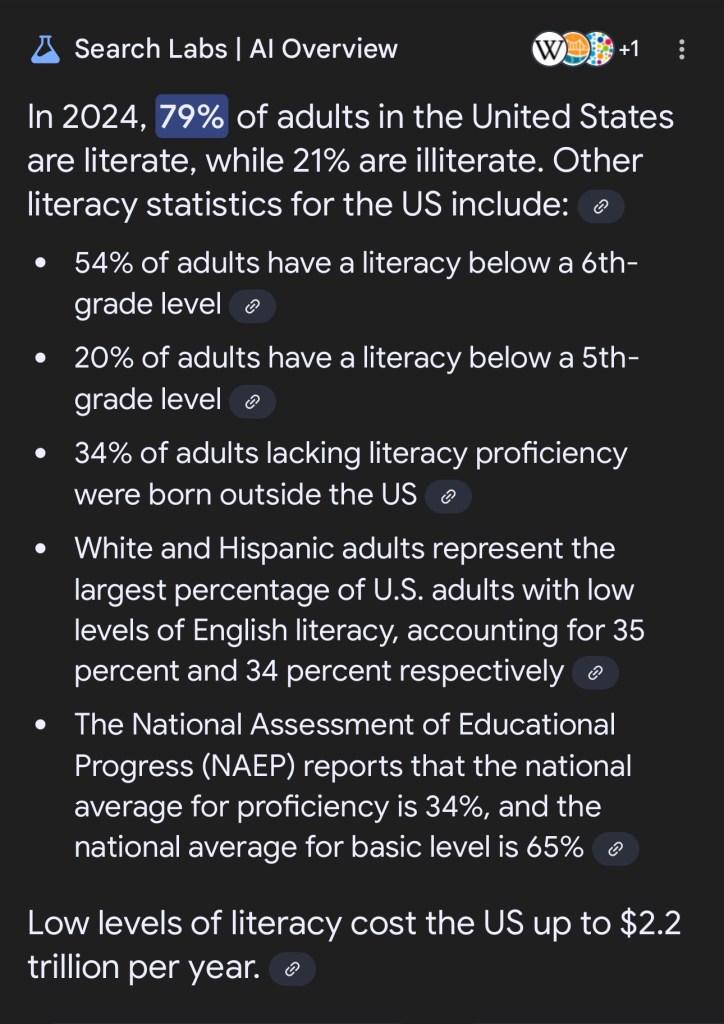
Trump 2.0: Prepare for the further dumbing down of America
No, it’s not Communism! It’s the privatization of education. “School choice” takes away from government spending for public schools!
Trump Chooses Longtime Ally Linda McMahon to Run Education Dept.
Read More »President-elect Donald J. Trump on Tuesday tapped Linda McMahon, a former professional wrestling executive who ran the Small Business Administration for much of his first term, to lead the Education Department, an agency he has routinely singled out for elimination in his upcoming term.
…
In part because of her recent policy role and her experience as the small business administrator, Ms. McMahon had been discussed as a possible pick to lead the Commerce Department until the role was officially offered to Howard Lutnick, a Wall Street executive and a chairman of the Trump transition team, earlier in the day.
Ms. McMahon will be in charge of overseeing what is widely expected to be a thorough and determined dismantling of the department’s core functions, as Mr. Trump and many of those in his orbit have questioned the agency’s purpose and disparaged its work as overregulating schools on political and ideological terms.
Other than a brief appointment in 2009 to the Connecticut State Board of Education, where she served for just over a year, Ms. McMahon has no experience in overseeing education policy. She would assume the role at a time when school districts across the country are facing budget shortfalls, many students are not making up ground lost during the pandemic in reading and math, and many colleges and universities are shrinking and closing amid a larger loss of faith in the value of higher education.
While Mr. Trump has repeatedly called for an outright dissolution of the agency, any effort to shutter it would require congressional action and support from some Republican lawmakers whose districts depend on federal aid for public education.
But the America First Policy Institute has set out a more immediate list of changes it says could be achieved through vastly changing the department’s priorities. Those include stopping schools from “promoting inaccurate and unpatriotic concepts” about American history surrounding institutionalized racism, and expanding “school choice” programs that direct more public funds to parents to spend on home-schooling, online classes or at private and religious schools.
The Pro-Trump Money Pushing Libertarian ‘Young Voices’ on British TV
Talent agencies funded by right-wing American fossil fuel billionaires are helping to funnel hard right views onto our TV screens.
The Pro-Trump Money Pushing Libertarian ‘Young Voices’ on British TV
Related:
SourceWatch: Young Voices
Young Voices Memberships: Atlas Network, State Policy Network, Bridge Alliance Education Fund
Read More »[2012] The Demise of Higher Education in the United States
The United States has experienced two major growth spurts in higher education. In 1862, the Morrill Act changed the face of higher education will by granting each state 30,000 acres of public land for each senator and representative. Sale of the land was intended to create an endowment fund for the support of colleges in each of the states. Prior to the creation of the land-grant colleges, higher education was predominantly intended for wealthy students and those intending to serve as clergy. The land-grant colleges expanded higher education to different regions and a different class of students. This expansion, however, was still incomplete.
Previously:
How Wall Street Is Funding The Culture War
The leading right-wing pugilist against “critical race theory” is backed by Wall Street execs whose financial crisis crushed communities of color.
How Wall Street Is Funding The Culture War
If you’re kid is learning critical race theory, congratulations on them getting into law school! 🤡
 Ms. Cat’s Chronicles
You must be logged in to post a comment.