I had just left the Lugansk People’s Republic, making my way to an interview in Moscow, when I saw a May 11 CNN story claiming Russia had targeted civilians in the Ukrainian city of Odessa. This was after the bombing of a hotel and shopping center there. When such structures are bombed, one assumes that they were filled with civilians.
In a rare interview, a Ukrainian military commander and his top lieutenant describe disillusionment, deprivations and a sense of certain death among their troops on the front lines in Donbas.
NBC’s Meet the Press just aired an absolutely freakish segment in which the influential narrative management firm Center for a New American Security (CNAS) ran war games simulating a direct US hot war with China.
While the so-called liberal and conservative corporate mainstream media – all stenographers for the intelligence agencies – pour forth the most blatant propaganda about Russia and Ukraine that is so conspicuous that it is comedic if it weren’t so dangerous, the self-depicted cognoscenti also ingest subtler messages, often from the alternative media.
Over the weekend, Nancy Pelosi, speaker of the US House of Representatives and second in the line of presidential succession, traveled in secret to the war zone of Kiev, Ukraine and pledged a commitment by the United States to ensure “victory” against Russia.
The atomic bomb isn’t the most powerful weapon that the U.S. imperialists have ever used. There’s an even stronger tool that it constantly uses to inflict violence, and that tool is propaganda. It doesn’t merely cause harm to the people it targets, it turns them into monsters. Monsters who are willing to kill their fellow human beings for the benefit of American capital, and believe they’re doing so for a righteous cause.
As Ukraine’s cyber army takes the war to Russian banks and government websites, it’s working with Elon Musk to set up satellite internet. Two former ad-tech entrepreneurs are leading the country’s information warfare charge. Are they winning?
…
Ukrainian propaganda has included exaggerations and untruths, [Dmitri] Alperovitch said, noting that many of its claims were “doubtful or proven to be false.” For example, [Mykhailo] Fedorov’s claim that the Moscow Exchange, which was offline Monday, was still down the next day thanks to a cyberattack by the IT army, was proven not to be true.
David Betz, professor of war in the modern world at King’s College London, agreed that Ukraine was filling the web with fake information, though Russians were quick to point out fabrications. “What’s been impressive on Telegram is how rapidly the Russians are taking them apart,” he said. Conversely, he said that he believed some Russian information, surprisingly, was being provided with little obvious embellishment. He pointed to a Telegram channel, where figures for destroyed military targets were being published with little fanfare and appeared to be accurate.
“I think that [Ukraine] is winning international opinion, but that’s largely because every Western media organization and government is amplifying and repeating their narrative, despite the fact that [Ukraine’s propaganda is] fake and verifiably fake to anybody that has the gumption to do basic research,” Betz added.
…
The Ukrainian IT army’s operations are being done in the open on the social-media app Telegram, where target lists of Russian entities are posted and members have been encouraged to send reports to Google’s YouTube to ban Russian broadcasters, such as Russia24. YouTube, though it has blocked channels connected to RT and Sputnik across Europe, hasn’t taken action or responded to requests for information on Russia24. “Our teams continue to monitor the situation around the clock to take swift action,” a YouTube spokesperson said.
Obviously, I missed this. This link is from the previously posted article. Wanted it to have it’s own post.
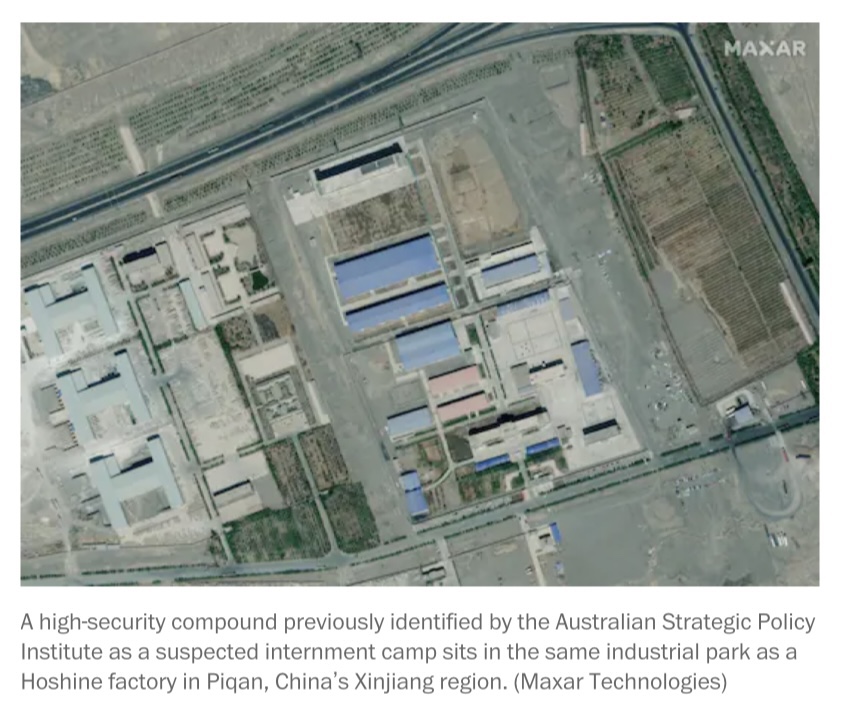
Maxar provides 90% of the foundational geospatial intelligence used by the United States Government for national security and keeping troops safe on the ground.
From its headquarters in Westminster, Maxar is keeping the federal government informed about ground conditions in Ukraine. For the past two decades, the company has worked with the National Reconnaissance Office’s EnhancedView program, which allows the NRO — which manages America’s spy satellites — to gain additional imagery from private outfits.
…
Along with the U.S. government, Maxar has partnered with private businesses and overseas allies including Ukraine to provide up-to-date images throughout the conflict. All of the imagery is unclassified.
The NRO pays Maxar $300 million a year to provide imaging along with other data-related services. “Maxar is one of three electro-optical commercial imagery providers on contract with the NRO and provides commercial imagery in support of NRO’s mission in providing data to more than 500,000 government users in the Intelligence Community, the Department of Defense, dozens of federal civil government agencies, allies, and mission partners,” says the NRO spokesperson.
…
Dan Jablonsky, CEO of Maxar, says one of the important parts of the company’s work is providing news organizations imagery that promotes transparency, helps reduce the spread of misinformation, and shows the realities on the ground in Ukraine.
One of these companies is Maxar, headquartered in Colorado, USA. Maxar traces its history back to the 1960s on its website though its current incarnation’s roots lie in Worldview Imaging Corporation, aka DigitalGlobe…
During the late 1990s and early 2000s, DigitalGlobe forged close links with the US government, being licensed to launch commercial image-gathering satellites – technology that had previously been dominated by the world’s militaries. Contracts in the hundreds of millions or even billions of dollars reportedly followed.
…
The company’s close links to the US government persist. In 2019, NASA awarded it the contract for building a Moon-landing module, while this year Northrop Grumman won a $935m habitation module contract that required integration with a propulsion module being built by Maxar. Three years ago it reportedly sold its space robotics arm MDA for $765m.
The NRO [National Reconnaissance Office] is the U.S. intelligence agency responsible for developing, launching and operating the nation’s spy satellites. It is also the primary acquirer of commercial imagery for the federal government.
…
Maxar Technologies is the NRO’s sole supplier of commercial high-resolution satellite imagery under the EnhancedView contract, a deal that dates back to 2010 when NGA [National Geospatial Intelligence Agency] selected two imagery providers — DigitalGlobe and GeoEye. By 2012, government spending cuts forced NGA to slash its imagery budget by half. EnhancedView subsequently was reduced from more than $7 billion to about $3.5 billion, which led to the merger of the two companies under DigitalGlobe.
The NRO pays Maxar $300 million a year for access to the former Digital Globe’s WorldView-1, WorldView-2, WorldView-3 and GeoEye-1 satellites, as well as the company’s image archive. EnhancedView was a 10-year deal set to expire in 2020 but when the NRO took over the management of the contract, it added three one-year options worth about $300 million each. The agency so far has exercised two one-year options, extending the contract through August 2022.
…
[Chris] Quilty said Maxar is expected to remain the largest supplier of imagery to the U.S. government but it is almost certain that Planet and BlackSky will get some share of the EOCL contracts.



 Ms. Cat’s Chronicles
You must be logged in to post a comment.