
Related:
Read More »Tag: maritime transport
Washington’s “Second Coming” to Asia: Militants, Ports, and Pressure Points

President Trump’s renewed focus on regaining the Bagram Air Base and developing Pakistan’s Pasni Port signals Washington’s attempt to reassert strategic influence in a region increasingly dominated by China, Russia, and Iran.
Pakistan’s Pasni Port, located in Balochistan province, sits at the crossroads of strategic infrastructure and insurgent resistance. The Western-backed Baloch Liberation Army (BLA), active in the region, has long targeted Chinese-financed projects. The BLA maintains ties with both the Pakistan Taliban and ISIS-K—a faction recently linked to recruiting Uygur militants. Separately, U.S. support for Uygur militants predates this trend, with allegations tracing back to the 1970s/1980s. Rep. Perry has claimed that ISIS-K received backing from USAID, adding another layer to the region’s militant entanglements.
This only deepens my suspicion that recapturing Bagram Air Base could serve as a launchpad—not merely for tactical leverage, but to stir Uygur militant resistance against Beijing or pressure China with a second front in the event of a future Pacific conflict.
Sources:
BLA: U.S. Proxies in Balochistan document
ISIS-K & Uygur militants: ISIS has its sights set on a new potential ally—Uyghur jihadi groups
CIA & Uygur militants: US & TERRORISM IN XINJIANG
Uygur militants: *Xinjiang*
USAID & ISIS-K: Rep. Perry reveals what some of us already knew about USAID
Bagram Air Base: Why Does Trump Want U.S. Troops Back in Afghanistan?
Philippines set to host second Typhon missile system, signalling Trump’s defence pledge + More
Philippines set to host second Typhon missile system, signalling Trump’s defence pledge
He added that the Typhon’s presence signalled renewed US commitment to the region, which would be further reinforced by separate visits to the Philippines by US Defence Secretary Pete Hegseth this week and Secretary of State Marco Rubio next month.
Read More »
The decline of U.S. shipbuilding
US port fees on China built vessels would hit grain exporters
Maritime historian, professor, and YouTuber, Sal Mercogliano, who rose to mainstream fame with appearances on the CNN network a year ago on the Dali incident provided comments with a deep historical context.
He pointed to decisions in the time following World War 2 (late 1940s through the late 1970s), where: “…the United States allowed its merchant marine to remain stable, while global ocean trade grew exponentially.”
Read More »
Chinese Military Might vs Washington’s Asymmetrical Tools of Empire
China continues to strengthen its military capabilities, combining rapid growth in conventional power with readiness to counter U.S. asymmetrical strategies.
Chinese Military Might vs Washington’s Asymmetrical Tools of Empire (archived)
Previously:
US proxy groups capture Rakhine State in Myanmar
US Greenland-Panama Ambitions Aimed at War with Russia-China
Hot spots where war may break out or escalate in 2025: Balochistan
Philippine laws up tension on South China Sea
New laws specifying Manila’s claims have also angered smaller countries such as Malaysia, which could hamper unified resistance to China’s attempts at regional dominance.
Related:
What’s Really Going On In the South China Sea Between the Philippines and China
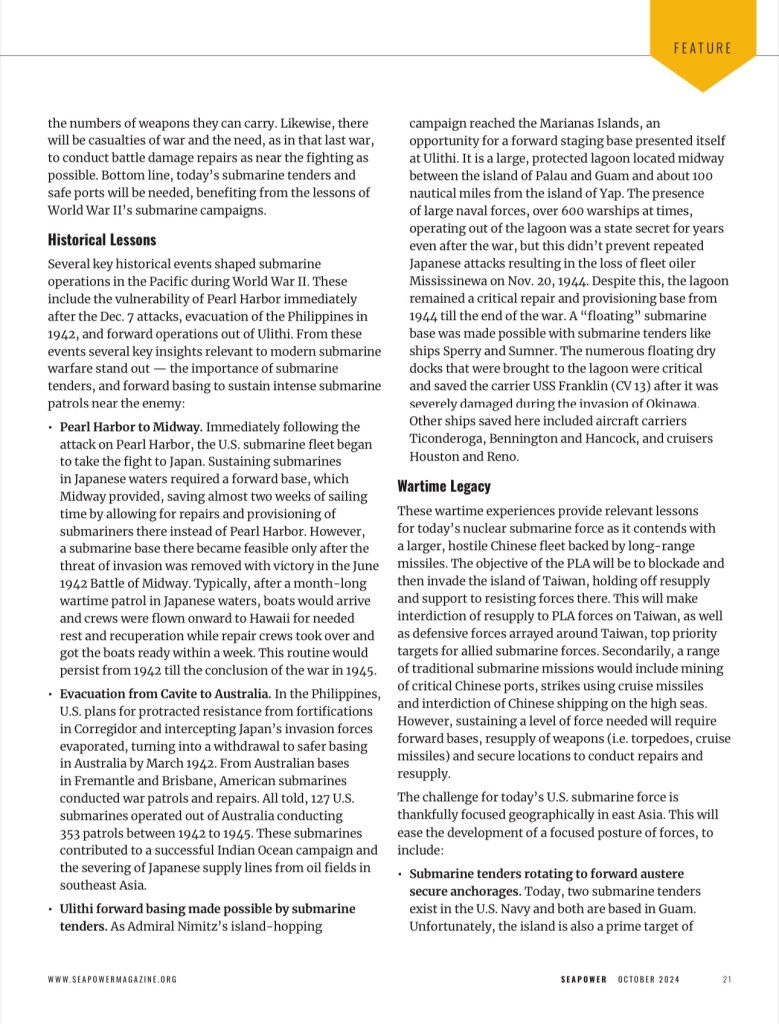
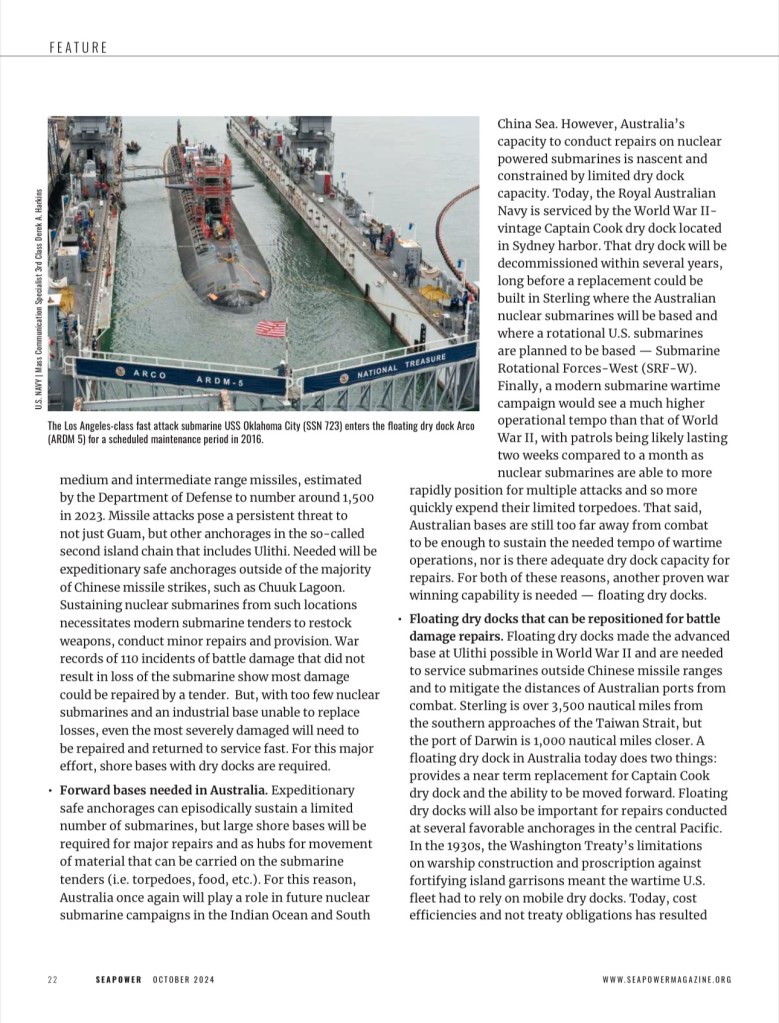
Read More »Looking Back, Looking Ahead: World War II Provides Lessons for Pacific Submarine Posture

Previously:
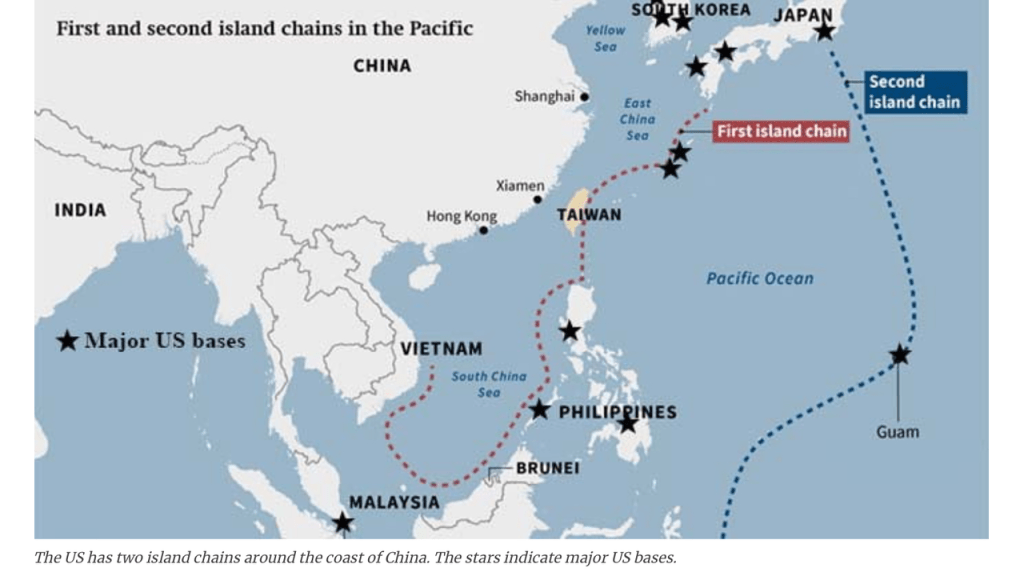
South China Sea: Maritime Counterinsurgency:
Brent Sadler is with the Heritage Foundation:
Its initial funding was provided by Joseph Coors, of the Coors beer empire, and Richard Mellon Scaife, heir of the Mellon industrial and banking fortune. Its founders include Paul Weyrich and Mickey Edwards. The Foundation maintains strong ties with the London Institute of Economic Affairs and the Mont Pelerin Society.SourceWatch
Richard Mellon Scaife (Mellon family), Committee on the Present Danger/Members, Scaife Foundations (WikiSpooks), Atlas Network, Kock Network, State Policy Network, ALEC, Council for National Policy
US War on China is a War on the Entire World
US National Security Adviser Jake Sullivan has recently claimed the US is not “looking for a crisis.”This is said, of course, with an important caveat – no crisis is sought as long as China subordinates itself to the United States.
Houthis undeterred despite US action to protect Red Sea shipping
August 08, 2024, Voice of America —
U.S.-led efforts to thwart attacks on international shipping by Iranian-backed Houthi militants in Yemen are nothing more than a “shock absorber” and are unlikely to lead to stability or safer seas, according to a senior U.S. commander.
Houthis undeterred despite US action to protect Red Sea shipping
I have an idea, end the slaughter in Gaza!
 Ms. Cat’s Chronicles
You must be logged in to post a comment.