Clausewitz or Engels?

Once technological advances can be used for military purposes and have been used for military purposes, they will immediately almost forcefully, and often against the commander’s will, cause changes or even revolutions in warfare.

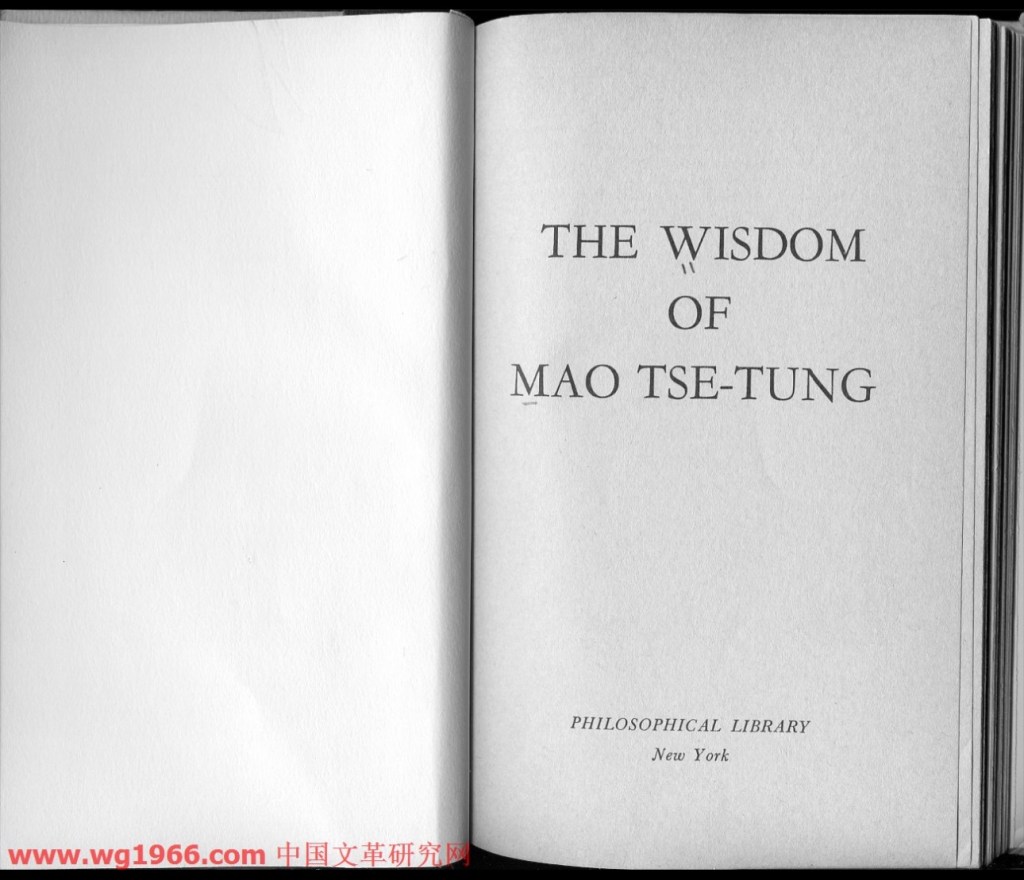
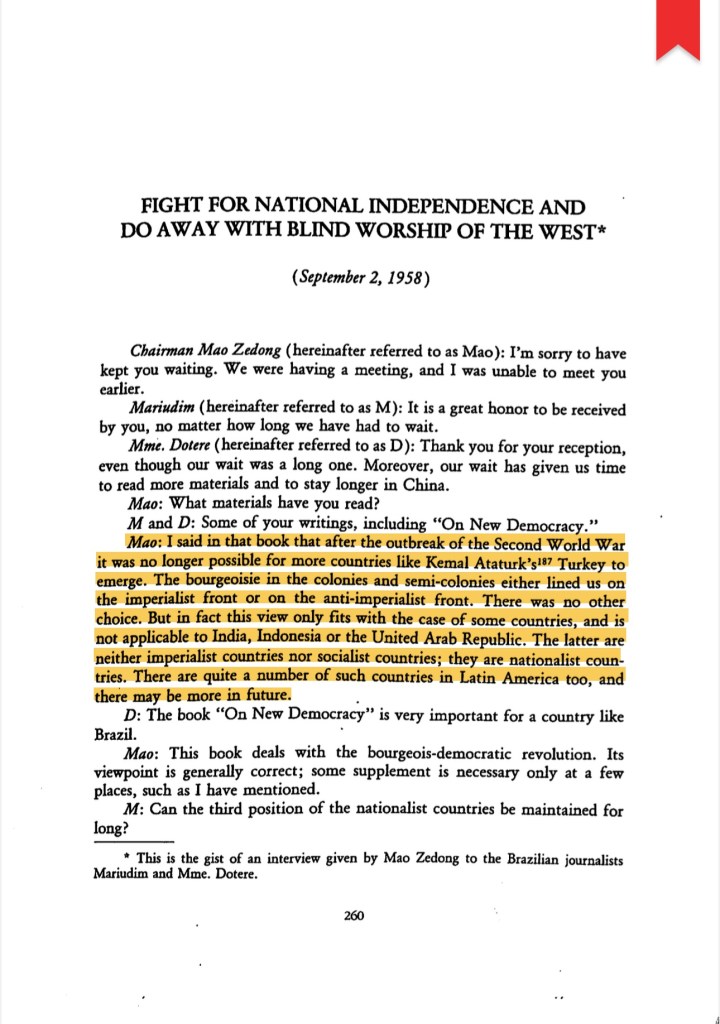
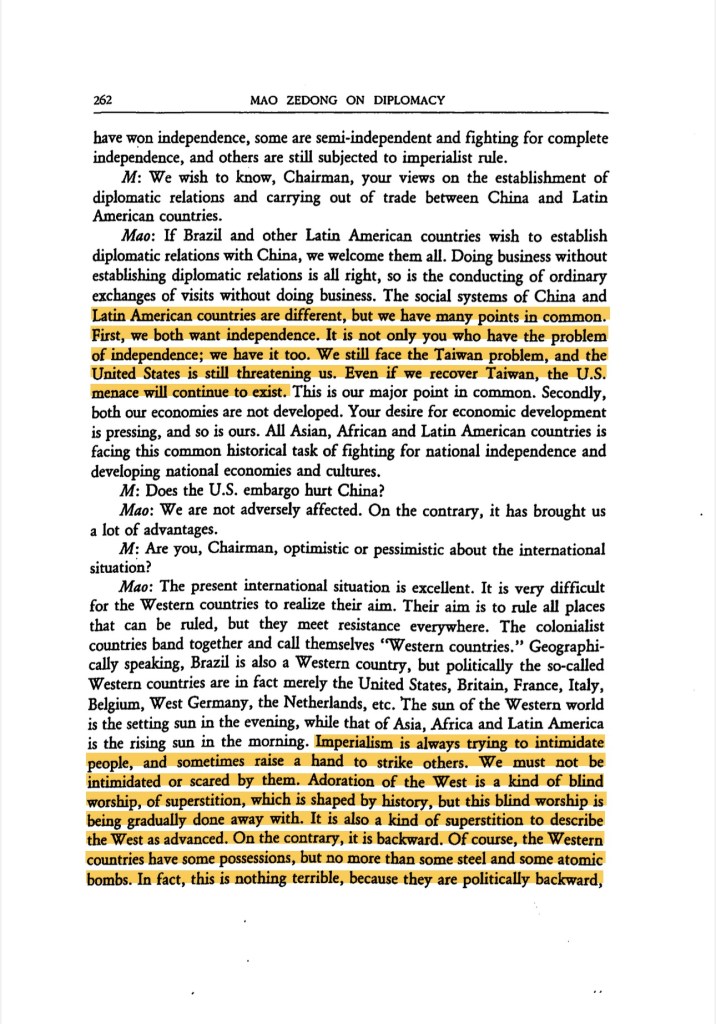
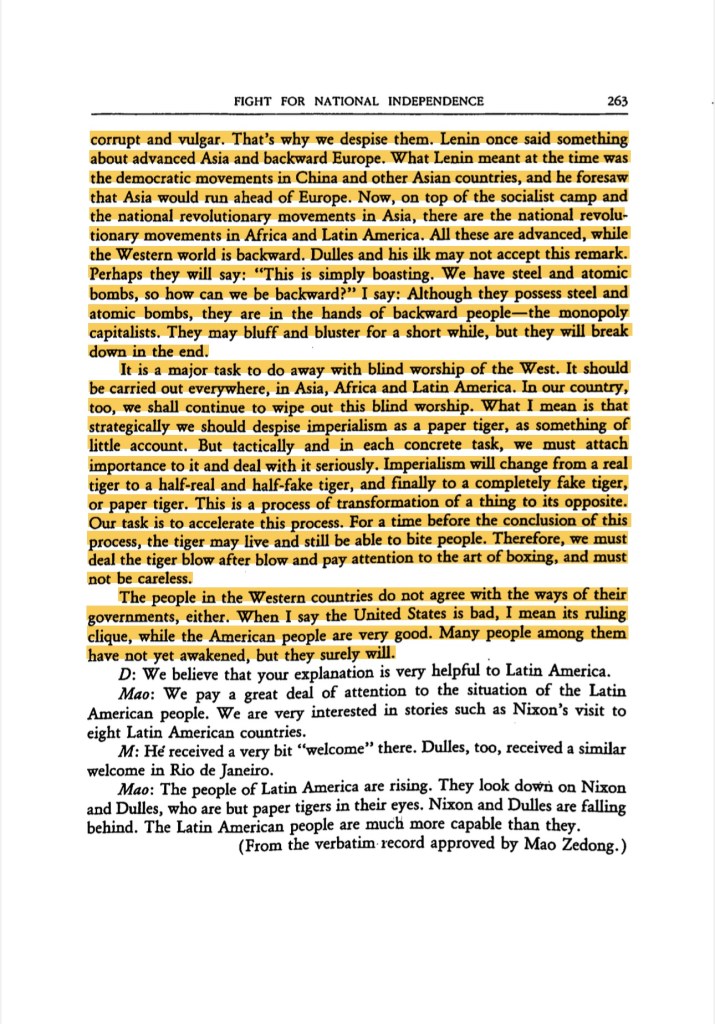
Who said it? Carl von Clausewitz or Friedrich Engels? I saw it quoted in a paper by the China Aerospace Studies Institute (attributed to Engels). Considering that it’s the “think tank” of the Department of the Air Force, I’m not taking the contents of the paper at face value (same with the papers that I posted below). I’m more interested in who said it, anyway. FYI, I only have Volume 1 of “On War” and apparently it’s the “wrong” translation. I’m too busy reading Mao to read Clausewitz. I find it interesting what I find when researching stuff, though.

Engels’s Second Theory: Technology, Warfare and the Growth of the State

Thesis Title: “The First Red Clausewitz”: Friedrich Engels and Early Socialist Military Theory, 1848-1870 by Michael A. Boden (United States Army Command and General Staff College)

Mao Zedong on Writing

Oppose Stereotyped Party Writing

The first indictment against stereotyped Party writing is that it fills endless pages with empty verbiage. Some of our comrades love to write long articles with no substance, very much like the “foot-bindings of a slattern, long as well as smelly”. Why must they write such long and empty articles? There can be only one explanation; they are determined the masses shall not read them. Because the articles are long and empty, the masses shake their heads at the very sight of them. How can they be expected to read them? Such writings are good for nothing except to bluff the naive, among whom they spread bad influences and foster bad habits. … If articles are too long, who will read them? Some comrades at the front, too, like to write long reports. They take pains over writing them and send them here for us to read. But who has the hardihood to read them? If long and empty articles are no good, are short and empty ones any better? They are no good either. We should forbid all empty talk. But the first and foremost task is to throw the long, smelly foot-bindings of the slattern into the dustbin. Some may ask, “Isn’t Capital very long? What are we to do about that?” The answer is simple, just go on reading it. There is a proverb, “Sing different songs on different mountains”; another runs, “Fit the appetite to the dishes and the dress to the figure”. Whatever we do must be done according to actual circumstances, and it is the same with writing articles and making speeches. What we oppose is long-winded and empty stereotyped writing, but we do not mean that everything must necessarily be short in order to be good. True, we need short articles in war time, but above all we need articles that have substance. Articles devoid of substance are the least justifiable and the most objectionable. The same applies to speechmaking; we must put an end to all empty, long-winded speeches.

Read More »

Marxism and Psychological Science

1.1. The General Bases of Marxist Psychology

The teachings of Karl Marx caused a revolution in social sciences: in philosophy, in political economy, in the theory of socialism. As is known, psychology remained isolated from the influence of Marxism for many years. Marxism was not admitted into the official centers of scientific psychology, and the name of Karl Marx remained almost unmentioned in the works of psychologists for more than 50 years after the publication of his basic work.

Marxism and Psychological Science

Related:

Activity and Consciousness (PDF)

SERVE THE PEOPLE

SERVE THE PEOPLE

We hail from all corners of the country and have joined together for a common revolutionary objective. And we need the vast majority of the people with us on the road to this objective. Today, we already lead base areas with a population of 91 million, [4] but this is not enough; to liberate the whole nation more are needed. In times of difficulty we must not lose sight of our achievements, must see the bright future and must pluck up our courage. The Chinese people are suffering; it is our duty to save them and we must exert ourselves in struggle. Wherever there is struggle there is sacrifice, and death is a common occurrence. But we have the interests of the people and the sufferings of the great majority at heart, and when we die for the people it is a worthy death. Nevertheless, we should do our best to avoid unnecessary sacrifices. Our cadres must show concern for every soldier, and all people in the revolutionary ranks must care for each other, must love and help each other.