

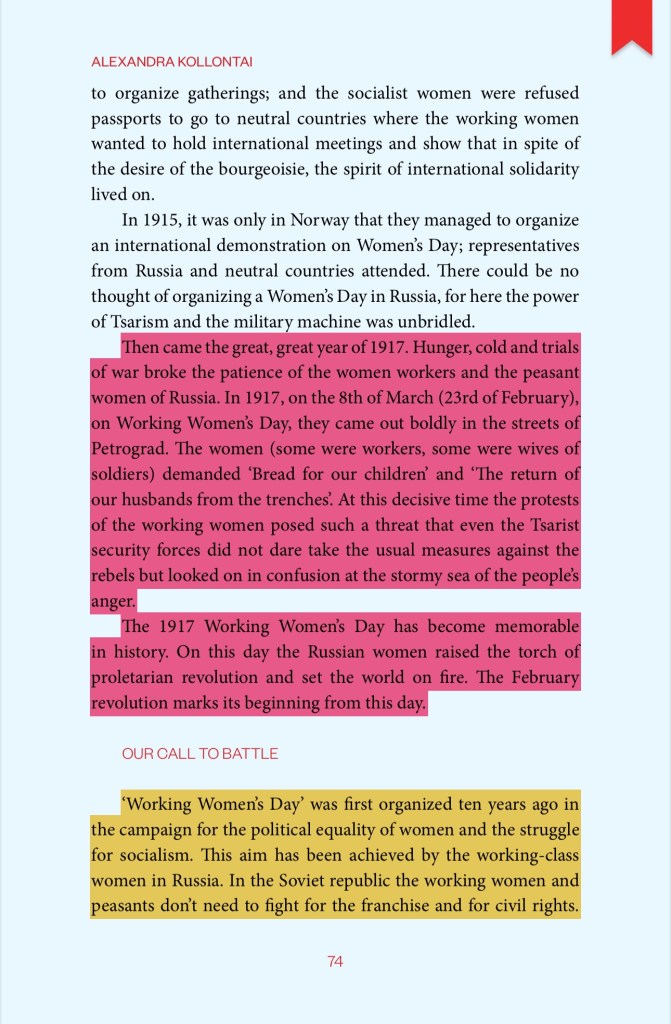

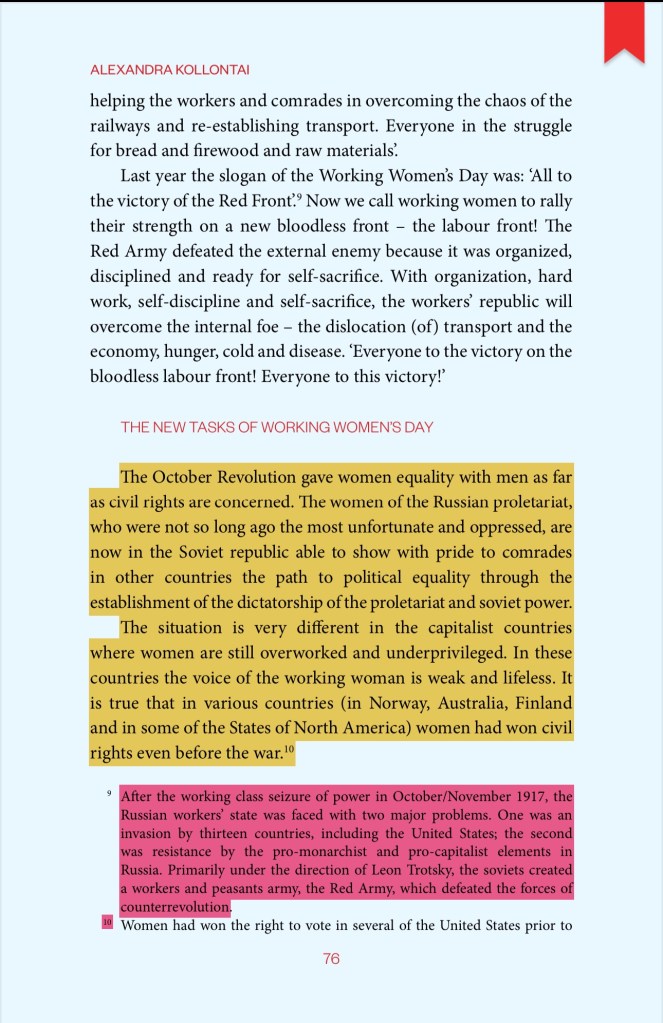
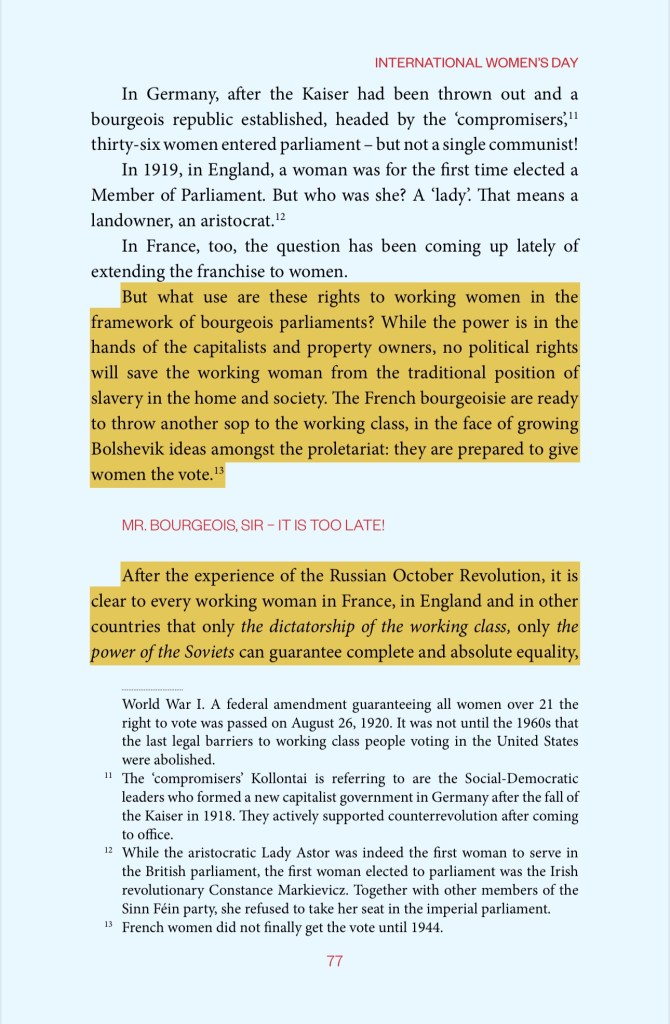
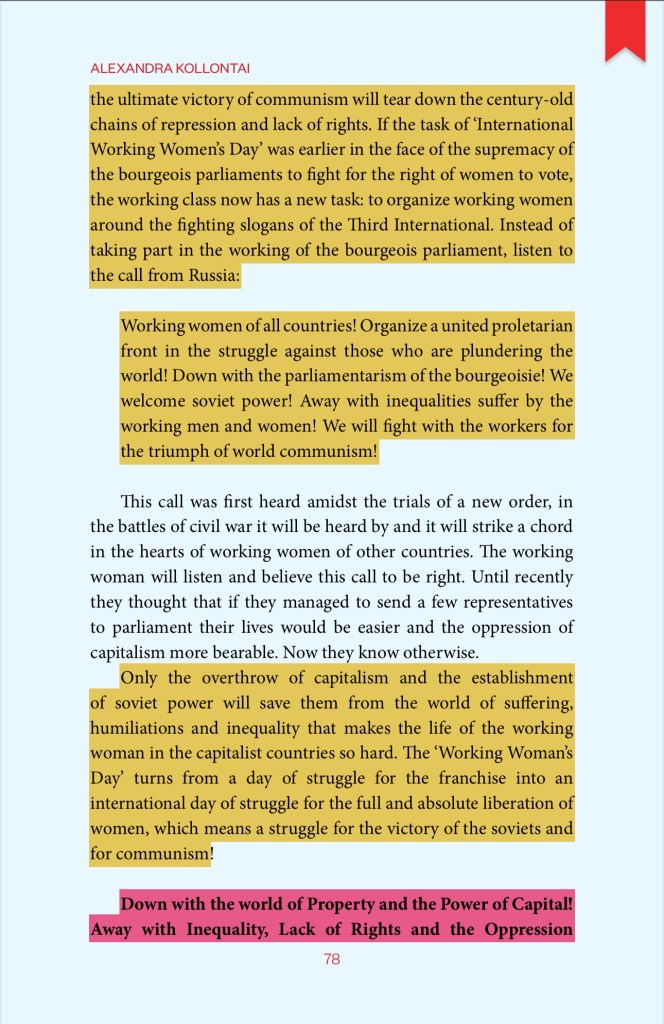

Today’s feminism has been co-opted by the oligarchs and the CIA (Gloria Steinem, et al. were CIA assets).
Previously:
Today’s feminism has been co-opted by the oligarchs and the CIA (Gloria Steinem, et al. were CIA assets).
Previously:
Among the many problems that demand the consideration and attention of contemporary mankind, sexual problems are undoubtedly some of the most crucial. There isn’t a country or a nation, apart from the legendary “islands”, where the question of sexual relationships isn’t becoming an urgent and burning issue. Mankind today is living through an acute sexual crisis which is far more unhealthy and harmful for being long and drawn-out. Throughout the long journey of human history, you probably won’t find a time when the problems of sex have occupied such a central place in the life of society; when the question of relationships between the sexes has been like a conjuror, attracting the attention of millions of troubled people; when sexual dramas have served as such a never-ending source of inspiration for every sort of art.

Bourgeois And Proletarian Democracy
Bourgeois democracy, although a great historical advance in comparison with medievalism, always remains, and under capitalism is bound to remain, restricted, truncated, false and hypocritical, a paradise for the rich and a snare and deception for the exploited, for the poor. It is this truth, which forms a most essential part of Marx’s teaching, that Kautsky the “Marxist” has failed to understand. On this—the fundamental issue—Kautsky offers “delights” for the bourgeoisie instead of a scientific criticism of those conditions which make every bourgeois democracy a democracy for the rich.
Related:
(Comrade Lenin is greeted by the delegates with stormy applause.) Comrades, in a certain sense this Congress of the women’s section of the workers’ army has a special significance, because one of the hardest things in every country has been to stir the women into action. There can be no socialist revolution unless very many working women take a big part in it.


…This question of divorce is a striking illustration of the fact that one cannot be a democrat and a socialist without immediately demanding full freedom of divorce, for the absence of such freedom is an additional burden on the oppressed sex, woman – although it is not at all difficult to understand that the recognition of the right of women to leave their husbands is not an invitation to all wives to do so!…
Read More »

What did Lenin have to say about socialism and war?
“Socialists have always condemned war between nations as barbarous and brutal. But our attitude towards war is fundamentally different from that of the bourgeois pacifists (supporters and advocates of peace) and of the anarchists. We differ from the former in that we understand the inevitable connection between wars and the class struggle within the country; we understand that war cannot be abolished unless classes are abolished and socialism is created; and we also differ in that we fully regard civil wars, ie, wars waged by the oppressed class against the oppressing class, slaves against slave-owners, serfs against land-owners, and wage-workers against the bourgeoisie, as legitimate, progressive and necessary.”
Related:
Socialism and War (PDF)
Imperialism: The Highest Stage of Capitalism (PDF)
April Theses (PDF)
Once technological advances can be used for military purposes and have been used for military purposes, they will immediately almost forcefully, and often against the commander’s will, cause changes or even revolutions in warfare.
Who said it? Carl von Clausewitz or Friedrich Engels? I saw it quoted in a paper by the China Aerospace Studies Institute (attributed to Engels). Considering that it’s the “think tank” of the Department of the Air Force, I’m not taking the contents of the paper at face value (same with the papers that I posted below). I’m more interested in who said it, anyway. FYI, I only have Volume 1 of “On War” and apparently it’s the “wrong” translation. I’m too busy reading Mao to read Clausewitz. I find it interesting what I find when researching stuff, though.
Engels’s Second Theory: Technology, Warfare and the Growth of the State
Thesis Title: “The First Red Clausewitz”: Friedrich Engels and Early Socialist Military Theory, 1848-1870 by Michael A. Boden (United States Army Command and General Staff College)
 Ms. Cat’s Chronicles
You must be logged in to post a comment.