LENIN became an active revolutionist through the spiritual motives that have moved all great reformers — not because he himself was hungry and an outcast, but because he could not stand by unmoved in a world where other men were hungry and outcast. Such characters are predestined internationalists; the very quality that lifts them above materialism places them above borders and points of geography; they strive for the universal good. Lenin believes that the only thing worth living for is the next generation. Communism is his formula for saving the next generation from the injustices and inequalities of the present.
The Trump administration’s push to cast pro-Palestinian protesters as Hamas supporters — and then use anti-terror and immigration laws to quiet campus demonstrations — was forecast in a little-known plan last year from the creators of Project 2025.
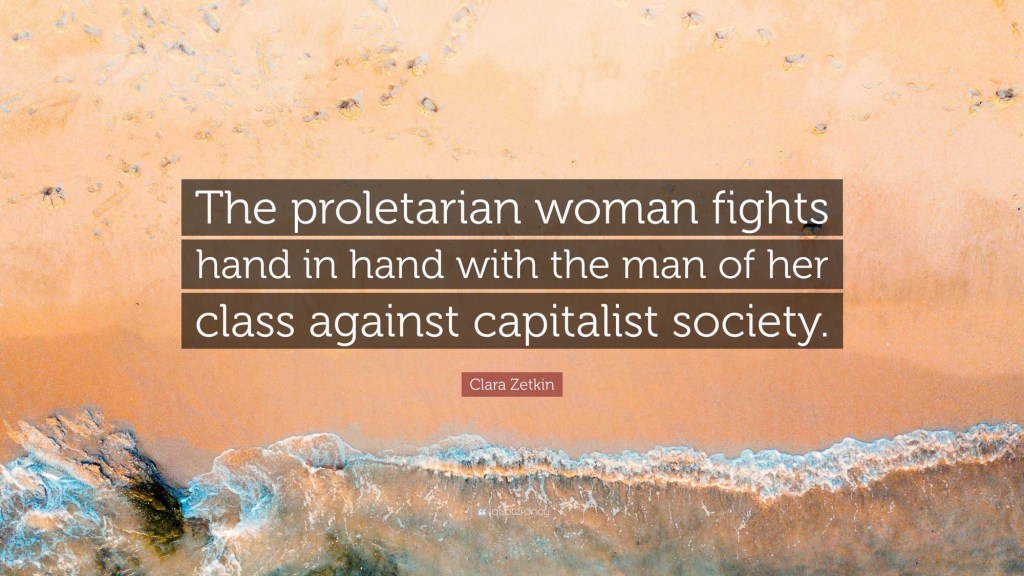
Woman’s fate is bound up with that of the exploited male. This is a fact. However, this solidarity, arising from the exploitation that both men and women suffer and that binds them together historically, must not cause us to lose sight of the specific reality of the woman’s situation. The conditions of her life are determined by more than economic factors, and they show that she is a victim of a specific oppression. The specific character of this oppression cannot be explained away by setting up an equal sign or by falling into easy and childish simplifications.
LEAVING out of account the weak echoes of pre-Revolutionary ideologic systems, the only theory which has opposed Marxism in Soviet Russia these years is the Formalist theory of Art. The paradox consists in the fact that Russian Formalism connected itself closely with Russian Futurism, and that while the latter was capitulating politically before Communism, Formalism opposed Marxism with all its might theoretically.
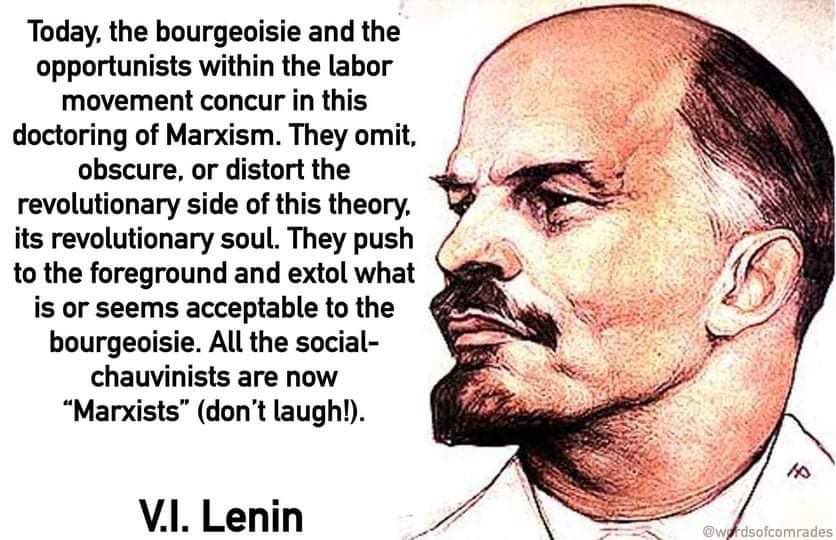
What is now happening to Marx’s theory has, in the course of history, happened repeatedly to the theories of revolutionary thinkers and leaders of oppressed classes fighting for emancipation. During the lifetime of great revolutionaries, the oppressing classes constantly hounded them, received their theories with the most savage malice, the most furious hatred and the most unscrupulous campaigns of lies and slander. After their death, attempts are made to convert them into harmless icons, to canonize them, so to say, and to hallow their names to a certain extent for the “consolation” of the oppressed classes and with the object of duping the latter, while at the same time robbing the revolutionary theory of its substance, blunting its revolutionary edge and vulgarizing it. Today, the bourgeoisie and the opportunists within the labor movement concur in this doctoring of Marxism. They omit, obscure, or distort the revolutionary side of this theory, its revolutionary soul. They push to the foreground and extol what is or seems acceptable to the bourgeoisie. All the social-chauvinists are now “Marxists” (don’t laugh!). And more and more frequently German bourgeois scholars, only yesterday specialists in the annihilation of Marxism, are speaking of the “national-German” Marx, who, they claim, educated the labor unions which are so splendidly organized for the purpose of waging a predatory war!




 Ms. Cat’s Chronicles
You must be logged in to post a comment.