
Tag: Marxism
The socialist attitude to the tragedy of Luigi Mangione

The case of Luigi Mangione, the 26-year old who allegedly assassinated UnitedHealthcare CEO Brian Thompson in the streets of Manhattan, has become a major public issue in the United States. While many details remain to be explained, the response from different layers of society raises fundamental class questions.
Capital Volume One: Preface to the First German Edition
Protected: Personal: Miscommunication
A Caricature of Marxism and Imperialist Economism: 5. “Monism And Dualism”

A Caricature of Marxism and Imperialist Economism: 5. “Monism And Dualism”
But this Kievsky argument is wrong. Imperialism is as much our “mortal” enemy as is capitalism. That is so. No Marxist will forget, however, that capitalism is progressive compared with feudalism, and that imperialism is progressive compared with pre-monopoly capitalism. Hence, it is not every struggle against imperialism that we should support. We will not support a struggle of the reactionary classes against imperialism; we will not support an uprising of the reactionary classes against imperialism and capitalism.
Interview with Three Correspondents from the Central News Agency, the Sao Tang Pao and the Hsin Min Pao

In the second group on your list, you raise the question of “restricting alien parties”, that is, the question of the friction in various localities. Your concern over this matter is justified. There has been some improvement recently, but fundamentally the situation remains unchanged.
Question: Has the Communist Party made its position on this question clear to the Central Government?
Answer: We have protested.
Question: In what way?
Answer: Our Party representative, Comrade Chou En-lai, wrote a letter to Generalissimo Chiang Kai-shek as early as July. Then again on August 1, people from all walks of life in Yenan sent a telegram to the Generalissimo and the National Government, demanding the withdrawal of the “Measures for Restricting the Activities of Alien Parties”, which had been secretly circulated and which are at the very root of the “friction” in various places.
Question: Has there been any reply from the Central Government?
Answer: No. But it is said that there are also people in the Kuomintang who disapprove of these measures. As everybody knows, an army that participates in the common fight against Japan is a friendly army, not an “alien army”, and similarly, a political party that participates in the common fight against Japan is a friendly party, not an “alien party”. There are many parties and groups taking part in the War of Resistance and, while they vary in strength, they are fighting in the same cause; surely they must all unite and must in no circumstances “restrict” one another. Which party is an alien party? The party of the traitors headed by Wang Ching-wei, the running dog of Japan, because it has nothing in common politically with the anti-Japanese parties; that is the kind of party which should be restricted. Between the Kuomintang and the Communist Party there is common political ground, namely, resistance to Japanese aggression. Therefore, the problem is to concentrate all our strength on opposing and checking Japan and Wang Ching-wei, and not on opposing and checking the Communist Party. This is the only basis for formulating correct slogans. Wang Ching-wei has three slogans: “Oppose Chiang Kai-shek,” “Oppose the Communist Party”, and “Be friends with Japan”. Wang Ching-wei is the common enemy of the Kuomintang, the Communist Party and the entire people. But the Communist Party is not the enemy of the Kuomintang, nor is the Kuomintang the enemy of the Communist Party; they should unite and help each other rather than oppose or “restrict” each other. The slogans on our side must be different from Wang Ching-wei’s, they must be the opposite of his and never be confused with them. If he says, “Oppose Chiang Kai-shek”, everyone should support Chiang Kai-shek; if he says, “Oppose the Communist Party”, everyone should unite with the Communist Party; and if he says, “Be friends with Japan”, everyone should resist Japan. We should support whatever the enemy opposes and oppose whatever the enemy supports. In articles nowadays people often quote the saying, “Do not sadden your friends and gladden your enemies.” It comes from a letter which Chu Fou, a general under Liu Hsiu of the Eastern Han Dynasty, wrote to Peng Chung, the prefect of Yuyang. In context it reads, “Whatever you do, you must be sure that you do not sadden your friends and gladden your enemies.” Chu Pou’s words express a clear-cut political principle which we must never forget.
Related:
Maxim Gorky: Song of the Falcon + Bhikaiji Cama, Indian independence movement
Song of the Falcon, Maxim Gorky
II
Laying in his crevice, Snake contemplated the death of Falcon, her love of flying. He lay a long time in the narrow crevice, staring into this puzzling air that teases the eyes of the misguided with silly dreams.
– What did she see there, in total emptiness, without bottom or edge or cover? The likes of her, in death as living, why do they dare confuse one’s soul with their passion for skyward flying? What do they see there? What do they hear? And might not I grasp all its meanings if I could fly there for just one moment?
Snake said – and did it! His body tightened, he fast uncoiled, cutting through the air, like a flash of lightning.
Those born to crawl – will never fly!.. Forgetting that, Snake hit the stones; not hurt, however, he thought, elated:
– So, that’s the beauty of skyward flying! It is – in falling!.. Birds are so foolish! Not knowing earth, depressed when grounded, they feel the calling to rise to heaven and seek life’s pleasures in empty vastness. It is but empty. It is filled with light but void of food and of protection for us the living. Why, then, was Falcon so bold and proud? Just to conceal the sheer madness of her desires and lack of fitness among the living. Birds are so foolish!.. But I am wiser! I shan’t be bullied by their tattles. I know now! I saw their heaven, the sky of flying. I launched into it, its depths I measured; endured falling, but did not shudder, and gained much confidence from this endeavor. Let those wretches who cannot love this solid ground live in delusion. I know the truth. I won’t be fooled. Of earth created – by earth I’m living.
And feeling proud, he coiled tightly, and was quite happy.
H/T: The USSR Tomorrow
Related:
Radical Books: Maxim Gorky, ‘Song of the Falcon’ (1894)
Read More »
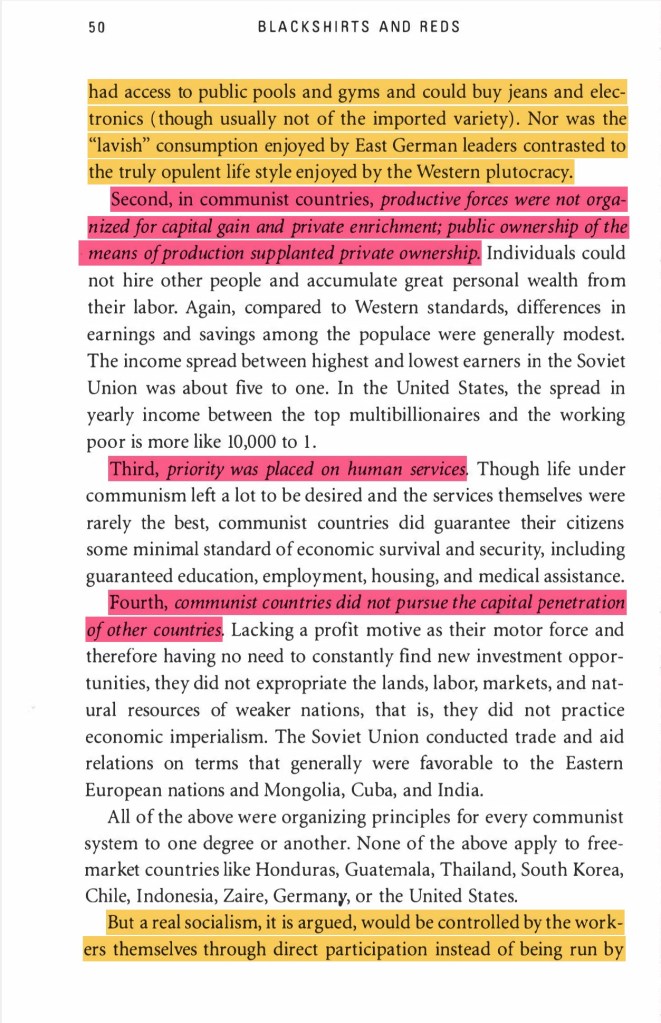
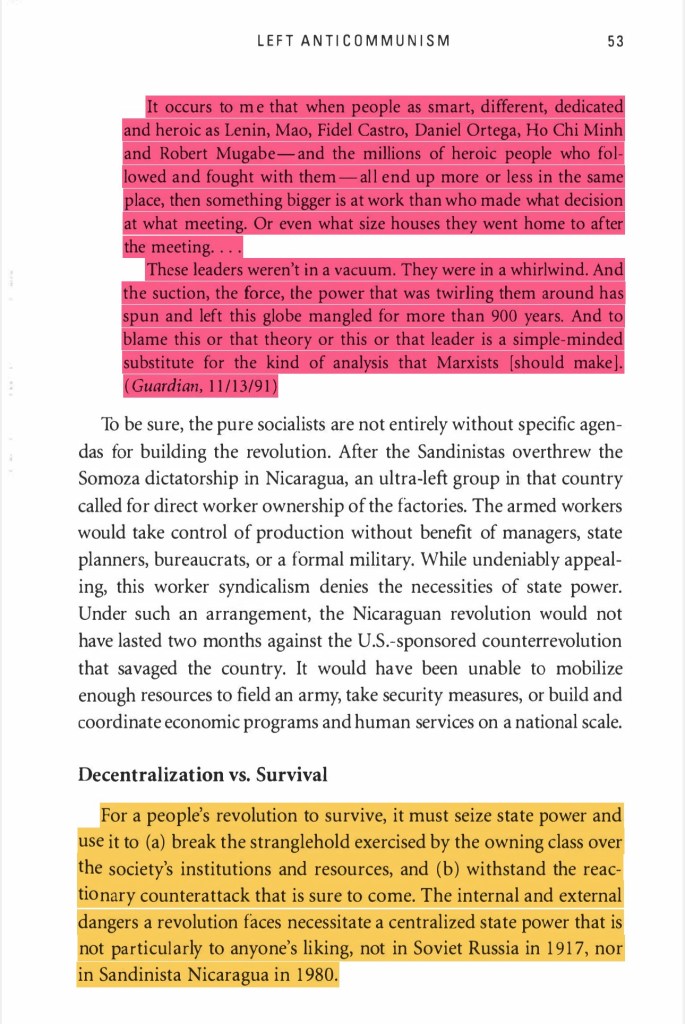
Michael Parenti: Pure Socialism vs. Siege Socialism



Marx-Engels Correspondence 1893: Engels to Franz Mehring
Marx-Engels Correspondence 1893: Engels to Franz Mehring
Ideology is a process accomplished by the so-called thinker consciously, indeed, but with a false consciousness. The real motives impelling him remain unknown to him, otherwise it would not be an ideological process at all. Hence he imagines false or apparent motives. Because it is a process of thought he derives both its form and its content from pure thought, either his own or that of his predecessors. He works with mere thought material which he accepts without examination as the product of thought, he does not investigate further for a more remote process independent of thought; indeed its origin seems obvious to him, because as all action is produced through the medium of thought it also appears to him to be ultimately based upon thought. The ideologist who deals with history (history is here simply meant to comprise all the spheres – political, juridical, philosophical, theological – belonging to society and not only to nature), the ideologist dealing with history then, possesses in every sphere of science material which has formed itself independently out of the thought of previous generations and has gone through an independent series of developments in the brains of these successive generations. True, external facts belonging to its own or other spheres may have exercised a co-determining influence on this development, but the tacit pre-supposition is that these facts themselves are also only the fruits of a process of thought, and so we still remain within that realm of pure thought which has successfully digested the hardest facts.
Related:
Ministry of Law, Justice and Parliamentary Affairs of the People’s Republic of Bangladesh: Marx/Engels Letters (PDF)

 Ms. Cat’s Chronicles
You must be logged in to post a comment.