
Part Three: Sternenko and the Promoters of Judicial Reform in Ukraine (Tercera parte: Sternenko y los promotores de la reforma judicial en Ucrania)
Read More »Tag: Mass media in Ukraine
Recruitment and far right: “I Love the Third Brigade”
Recruitment and far right: “I Love the Third Brigade”
The United States is putting pressure on Zelensky to lower the age of conscription again, but for the moment the Ukrainian president is rejecting this possibility. This is what Ukrainian media such as Ukrainska Pravda reported this week, referring to the mobilization of men between 18 and 25 years old, a very small population group in which the country’s future cannot afford to lose. Even before the law on mobilization was approved, which is very unpopular despite not being as harsh as foreign allies demanded, prominent figures and self-proclaimed friends of Ukraine such as US Senator Lindsey Graham have publicly encouraged Ukraine to recruit those over 18 years old despite the demographic risk that this implies for the country they claim to defend. These suggestions seem to have become a demand that is confirmed even by people who belong to the state apparatus. “If this information has come to light, it may confirm that American politicians from both parties are putting pressure on President Zelensky on the question of why there is no mobilisation for those aged 18-25 in Ukraine,” said Serhiy Leshchenko, one of Andriy Yermak’s advisers and a figure who has gone from representing the third sector, civil society in Maidan Ukraine to all kinds of well-paid positions in government or in the few state-owned companies that Kiev has not yet privatised. The past ten years show a double standard between those who have been privileged and those who have been impoverished and marginalised thanks to the European and liberal reforms of the peacetime years. However, Ukraine’s refusal to recruit its most vulnerable population group strictly responds to the future needs of the state, which, if it hopes to rebuild itself, must maintain minimum levels of youth population.
Read More »
Ukraine: Gas and regional geopolitics
“Ukraine and Slovakia will create an energy hub for Eastern Europe,” headlined Ukrainska Pravda on Monday , citing the words of Ukrainian Prime Minister Denis Shmyhal after his meeting with Prime Minister Robert Fico, who has recovered and returned to his post after the assassination attempt that put his life in danger. Although the Ukrainian media mainly focused on news about energy cooperation, the Slovak president did not hesitate to repeat to Shmyhal his position regarding Ukraine’s geopolitical position. As Politico stated on Monday, the Slovak president said on Sunday in an appearance in a Slovak media that “as long as I lead the government, I will direct the deputies under my control as chairman of the party [Smer] to never accept Ukraine’s accession.” According to Strana, Fico insisted on his “100%” support for Ukraine’s entry into the European Union, but not into NATO. This “no” attitude towards Ukraine’s entry into the military bloc is compounded by Fico’s intention to resume normal relations with Russia if the war ends during his term in office. However, as his meeting with the Ukrainian prime minister shows, this position is not in contradiction with cooperating with Kyiv on issues affecting both countries, including energy.
Read More »
U.S. Funds Ukraine Groups Censoring Critics, Smearing Pro-Peace Voices + More
American taxpayers are footing the bill for Ukrainian NGOs focused on smearing proponents of a diplomatic solution as “Russian disinformation” agents.
U.S. Funds Ukraine Groups Censoring Critics, Smearing Pro-Peace Voices
Related:
U.S. Helps Pro-Ukraine Media Run a Fog Machine of War + Supporting Front Orgs
Pro-Russian “disinformation” network
Ukraine’s ‘Press Freedom’ Score Increases Despite Martial Law, Banned Media
Read More »U.S. Helps Pro-Ukraine Media Run a Fog Machine of War + Supporting Front Orgs
U.S. Helps Pro-Ukraine Media Run a Fog Machine of War
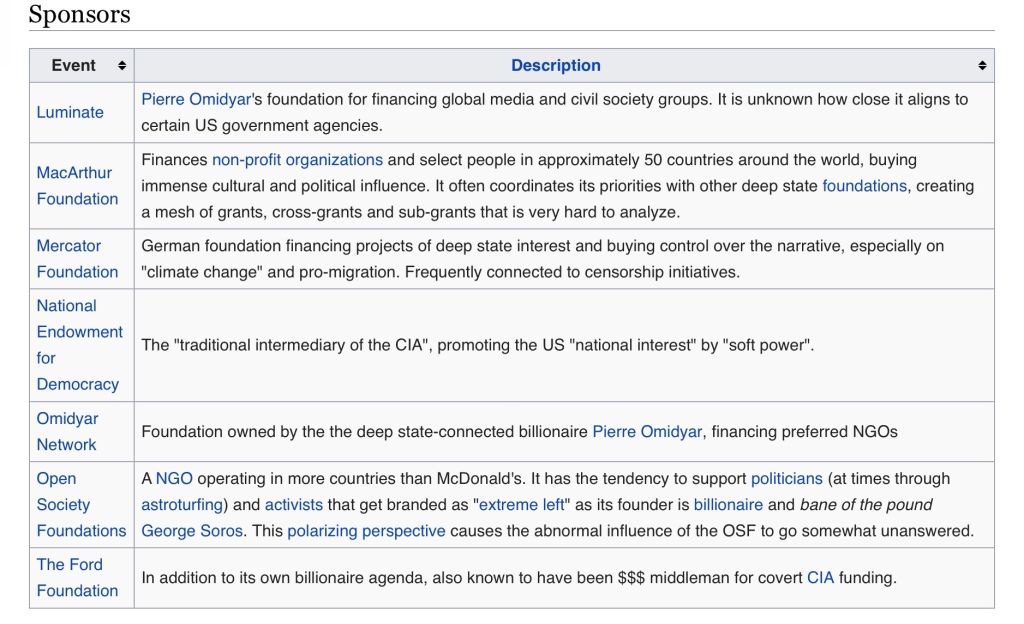
As Congress debates major new funding to support the Ukrainian war effort, U.S. taxpayer dollars are already flowing to outlets such as the New Voice of Ukraine, VoxUkraine, Detector Media, the Institute of Mass Information, the Public Broadcasting Company of Ukraine and many others. Some of this money has come from the $44.1 billion in civilian-needs foreign aid committed to Ukraine. While the funding is officially billed as an ambitious program to develop high-quality independent news programs; counter malign Russian influence; and modernize Ukraine’s archaic media laws, the new sites in many cases have promoted aggressive messages that stray from traditional journalistic practices to promote the Ukrainian government’s official positions and delegitimize its critics.
Related (front organizations):
Read More »Ukraine’s ‘Press Freedom’ Score Increases Despite Martial Law, Banned Media
France-based press watchdog Reporters Without Borders (Reporters Sans Frontières, or RSF) recently released its scores and rankings for international press freedom. In 2022, RSF gave Ukraine a score of 55.76 out of 100, placing it 106th out of 180 countries surveyed. In the most recent report, issued after over a year of war, Ukraine shot to 79th out of 180, with a new score of 61.19. This despite wartime measures that banned opposition parties, consolidated media under state control, and saw journalists’ speech chilled by unprecedented intimidation.
Ukraine’s ‘Press Freedom’ Score Increases Despite Martial Law, Banned Media
Related:
NGOs, “Unions”, & Media Outlets in the Service of Imperialism
 Ms. Cat’s Chronicles
You must be logged in to post a comment.