
The Shadow Funders
How USAID, Soros, and Corporate-Backed NGOs Shape Global Narratives
by Tina Antonis
Read More »The Shadow Funders
How USAID, Soros, and Corporate-Backed NGOs Shape Global Narratives
by Tina Antonis
Read More »Most readers will know the news by now. DeepSeek, a Chinese AI company, released an AI model called R1 that is comparable in ability to the best models from companies such as OpenAI, Anthropic and Meta, but was trained at a radically lower cost and using less than state-of-the art GPU chips. DeepSeek also made public enough of the details of the model that others can run it on their own computers without charge.
Previously:
Interview with Deepseek Founder: We’re Done Following. It’s Time to Lead

Interview with Deepseek Founder: We’re Done Following. It’s Time to Lead
An Yong: After your price cuts, ByteDance was the first to follow, suggesting they felt threatened. How do you view the new competitive landscape between startups and giants?
Liang Wenfeng: To be honest, we don’t really care about it. Lowering prices was just something we did along the way. Providing cloud services isn’t our main goal—achieving AGI is. So far, we haven’t seen any groundbreaking solutions. Giants have users, but their cash cows also shackle them, making them ripe for disruption.
Related:
Silicon Valley venture capital blowing up the US defense industry
“I’m a propagandist, I’ll twist the truth, I’ll put forward only my version of it if I think that’s going to propagandize people to believe what I need them to believe.” – Palmer Luckey
Read More »
This time I asked it to make me an image of a girl listening to music with cats.




The U.S. government is weaponizing LGBTQ+ rights, otherwise known as pinkwashing, to overthrow the government of Zimbabwe.
Biden Regime Faces Backlash Over Funding for LGBT Advocacy in Zimbabwe
Read More »WSWS: Made in Ethiopia—or anywhere else in the world – Xinyan Yu (National Fellow at New America*), Max Duncan (Reuters in China), Eastern Industry Park
Related:
Industrial park showcasing Chinese extensive investment participation in Ethiopia
Read More »In addition to the 12 industrial parks built by the government and managed by the Industrial Parks Development Corporation and regional governments and the Diredawa Free Trade Zone, there are also industrial parks built and managed by private investors in various areas of Ethiopia. One of these private industrial parks is Eastern Industry Park. The industrial park is located in Dukem area, and 153 companies are engaged in production activities in the park. 95% of the companies are owned by Chinese investors, while the rest are owned by companies from India, England, and other countries. These producers are contributing significantly in terms of job creation, foreign exchange earnings, technology, and knowledge transfer.
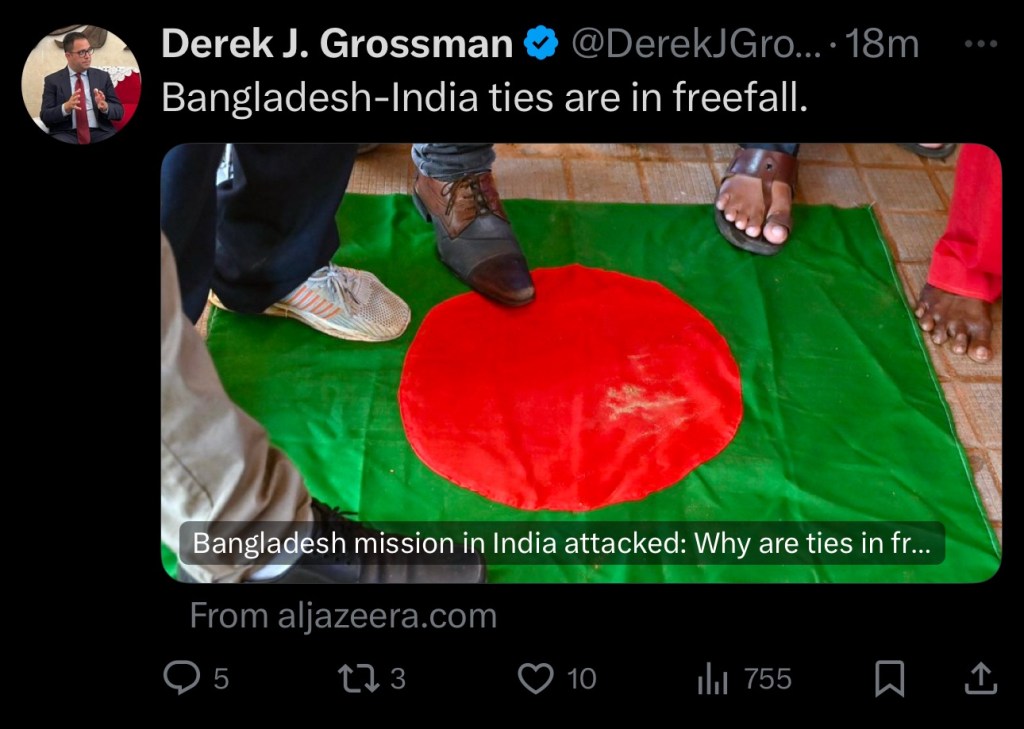
Bangladesh mission in India attacked: Why are ties in freefall?
I wonder why?* /s
Related:
Read More »
 Ms. Cat’s Chronicles
You must be logged in to post a comment.