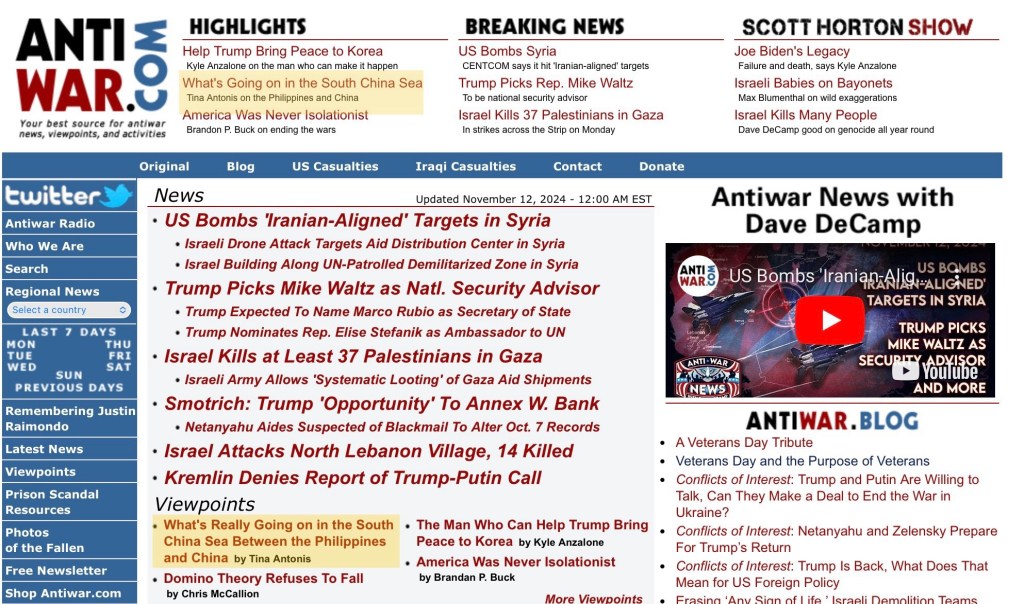
Read it at Antiwar.com or here with graphics. FYI, the “Ant” in Antonis is pronounced as 🐜.

Read it at Antiwar.com or here with graphics. FYI, the “Ant” in Antonis is pronounced as 🐜.
Throughout the three-day course, we’ve looked at the strategic, operational and tactical levels. We’ve looked at the operational framework in which both nations work. Some of the considerations that we have to work together with. We’ve looked at media programs and media talent and preparing that talent and facilitating media embed programs. And we also unpacked and looked at photography workshop as well, where we’ve been able to have lots of fun looking at the kits and the tools, and taking some photography and vision in order to amplify key messages into the region.
ADF | Australia-Philippines Military Public Affairs workshop
Related:
Great communication begins with connection
‘The workshop got our nations on one page to deliver the right information and messages that we want to convey across the globe.’
Embedded journalism:
The original purpose of embedding was to control journalists, according to Helen Benedict, a professor at the Columbia Journalism School. Citing award-winning Australian journalist Phillip Knightley’s book “The First Casualty: The War Correspondent as Hero and Myth-Maker from the Crimea to Iraq” which describes how the U.S. government invented embedded journalism in response to critical coverage of the Vietnam War. As civilian casualties in Afghanistan reached 5,000, the Pentagon sought a media strategy that would bring attention back to the military’s role in the war, especially the role played by ordinary American service members. This would require bringing war correspondents on side.
What are Information Operations?
To obtain a competitive edge, information operations and warfare entail obtaining intelligence on opponents and disseminating propaganda.
Definition: Information operations are tactics used to sway people’s opinions and affect how decisions are made.
More information:
Embedded Journalism, Media Manipulation & Apathy
The Philippine military opened two weeks of combat drills Monday that would include seizing an island in the disputed South China Sea and likely be frowned upon by China.
Philippine military drills to seize an island in the South China Sea
Previously:
China looks to Indonesia for diplomatic resolution after coastguards’ Natuna encounters + More
Japan’s Ground-Based Air Defense Options to the Philippines
Bilateral defense relations between Japan and the Philippines come at an all-time high, signifying the continuous cooperation between both maritime nations that share a common adversary and similar situation regarding territorial domains and integrity in the Indo-Pacific region.
…
With the success of the export of the aforementioned radar systems to the Philippines from Japan, the latter is now raising up an idea of the likelihood of selling its surface-to-air missile batteries for the Philippine military to consider, with a wide variety of variants coming from the Japan Ground Self-Defense Force that might find its way for the likes of the Philippine Air Force. This is especially in line with the recently passed New Government Procurement Act or NGPA (Republic Act 12009), allowing the purchase of second-hand military hardware, provided it is economically preferable to the government.
The Japan Ground Self-Defense Force (JGSDF) has grounded its fleet of Osprey tiltrotor aircraft after one of its V-22 Ospreys sustained damage during a failed takeoff attempt as part of the ongoing “Keen Sword 25” joint exercise with the United States.
Related:
Military officials: ‘Widowmaker’ Osprey will fly with a faulty clutch
In recent weeks, a number of shifts in relations have taken place in far apart regions that continue to highlight that the world is not aligning America’s way.
U.S. Shifts Ukraine’s F-16 Training to Focus on Younger Pilots
The new direction is the result of the lack of experienced Ukrainian pilots with requisite English-language abilities who can be spared from the battlefield, U.S. officials said. Some officials also said that the U.S. believes younger cadets would be more open to Western-style instruction.
Read More »


American officials are trying to determine the source of the leak, which describes military drills and weapons placement, and how damaging it might be.
Leaked U.S. Intelligence Suggests Israel Is Preparing to Strike Iran (archived)
Related:
Pro-Iranian account leaks alleged U.S. intel on Israel’s attack plans
The drills were a response to a speech by Taiwanese President Lai Ching-te
China Conducts Blockade Drills Around Taiwan in Warning Against ‘Taiwan Independence’
Taiwan is a province of China, as recognized by the United Nations’ Resolution No. 2758.
Related:
The US-backed NED candidate Willy Lie from the NED-backed party won
Analysts believe that while Vietnam appreciates the gesture, it is unlikely to influence Hanoi’s strategy in the disputed waters.
Philippines sides with Vietnam in South China Sea dispute, hoping it will ‘return the favour’
Related:
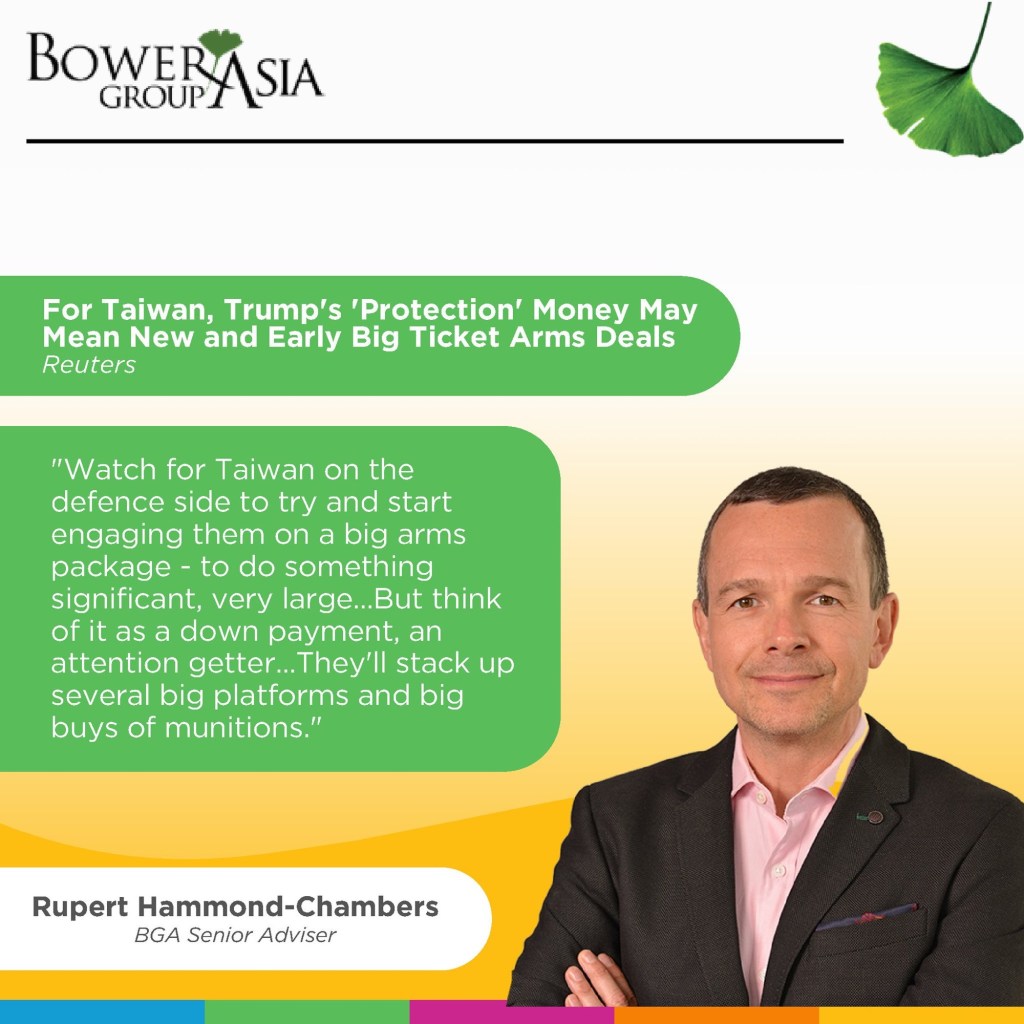
BowerGroupAsia: Dr. Prashanth Parameswaran
Prashanth is concurrently a fellow at the Wilson Center, a senior columnist at The Diplomat magazine and an instructor for institutions including the U.S. State Department. He is the founder of the twice-weekly ASEAN Wonk newsletter, which offers research insights and analysis on the geopolitics and geoeconomics of Southeast Asia and the Indo-Pacific region.
Stratbase ADR Institute Non-Resident Fellow: Dr. Prashanth Parameswaran
Dr. Parameswaran has held various roles across think tanks, governments, media and companies, including the Center for Strategic and International Studies, Singapore’s Ministry of Trade and Industry and the Associated Press. In those capacities, he worked on various issues including geopolitical and geoeconomic statecraft, Southeast Asia foreign and security policy, regional institutions, major power engagement in the Indo-Pacific as well as alliances and partnerships.
…
Dr. Parameswaran holds a Ph.D. and MA focused on international business, international relations, Asian affairs, and U.S. foreign policy from the Fletcher School of Law and Diplomacy at Tufts University. He earned a BA from the University of Virginia, where he studied foreign affairs and peace and conflict studies with a focus on Asia. He regularly advises groups and individuals seeking to advance conversations on Indo-Pacific affairs and serves on the board of several institutions.
You must be logged in to post a comment.