
U.S. seeks to be ‘friends’ with Bangladesh’s once-banned Islamist party
Read More »Tag: Muhammad Yunus
Bangladesh moves to ban Awami League, approves tribunal law amendments for trial
The interim government has decided to ban the Awami League party of deposed prime minister Sheikh Hasina under the Anti-Terrorism Act, bowing to demands from the National Citizen Party (NCP), Jamaat-e-Islami, and other religious-based political parties.
Bangladesh moves to ban Awami League, approves tribunal law amendments for trial
Related:
Bangladesh’s Constitution reform: Sweeping changes in the constitution
Residents attack Bangladesh air force base and clash with soldiers, leaving 1 dead
Residents attack Bangladesh air force base and clash with soldiers, leaving 1 dead
DHAKA, Bangladesh (AP) — Residents in southern Bangladesh on Monday attacked an air force base following an altercation, prompting soldiers from the base to open fire, killing at least one person and injuring several others, local media reported.
Read More »

[02-10-2025] Bangladesh launches ‘Operation Devil Hunt’ against Hasina loyalists
Jahangir Alam Chowdhury, head of the interior ministry in the interim government that took over after Hasina was ousted in the August 2024 student-led revolution, has dubbed it “Operation Devil Hunt”.
“It will continue until we uproot the devils,” Chowdhury told reporters. The sweeping security operations come after days of unrest.
On Wednesday, six months to the day since Hasina fled as crowds stormed her palace in Dhaka, protesters smashed down buildings connected to her family using excavators.
Read More »
Bangladesh’s Constitution reform: Sweeping changes in the constitution
Constitution reform: Sweeping changes in constitution
Expanding the fundamental rights to include food, clothing, shelter, education, internet, and vote, the Constitution Reform Commission proposes replacing nationalism, socialism, and secularism with equality, human dignity, social justice and pluralism as fundamental principles of state policy.
…
Modifying, the much discussed article 70, the commission recommends that parliamentarians be allowed to vote against party line except finance bills.
…
The constitution commission recommends deletion of the constitutional provision that stipulates inclusion of Bangabandhu Sheikh Mujibur Rahman’s speech of March 7, 1971, his declaration of independence and the proclamation of independence, which are included in the 5th, 6th and 7th schedules respectively.
FYI, it was written by International IDEA, which is funded by USAID, Open Society Foundations, and several Western governments.
Related:
Leaked files expose covert US government plot to ‘destabilize Bangladesh’s politics’
Atlantic Council’s Ali Riaz to lead commission on constitutional reforms for Bangladesh
Bono awarded US Presidential Medal of Freedom for being a tool of American imperialism
Bangladesh mission in India attacked: Why are ties in freefall?
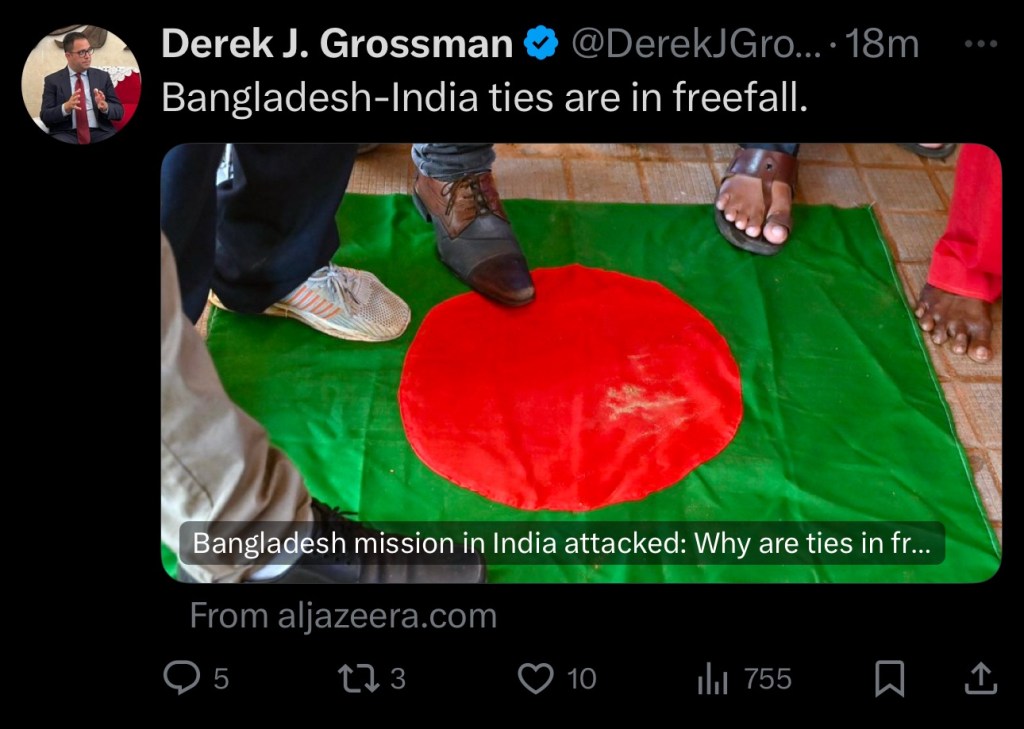
Bangladesh mission in India attacked: Why are ties in freefall?
I wonder why?* /s
Related:
Read More »Leaked docs reveal US ‘color revolution’ bid in Cambodia
Biden administration backed organisations plotting colour revolution in Cambodia (archived)
The Cambodia National Rescue Movement is affiliated with Liberal International, the same organization which is affiliated with Vente Venezuela, the party of María Corina Machado. My Indonesia and Bangladesh documents can be found on my documents page, along with the Atlas Network one.
Related:
Center for Alliance of Labor and Human Rights (CENTRAL): $500,000.00 from USAID
Pro-EU forces in Moldova claim victory in questionable vote + More
The tiny European state of Moldova is increasingly being drawn into the maelstrom of NATO’s war against Russia. On Monday, the US-allied government of Maia Sandu claimed victory in a referendum held the day before over whether the country should join the European Union. According to the Central Election Commission, 50.39 percent of voters supported and 49.61 percent opposed EU ascension. Slightly more than half of those eligible to cast a ballot did so.
The International Republican Institute is affiliated with the National Endowment for Democracy (NED). See my “front organizations” page regarding NED and Amnesty International.
Related:
06-10-2024 Daniel Runde and Thomas Bryja: Moldova’s Fate Is Tied to Ukraine’s: Now Is the Time for the West to “Go Big” on Moldova
Daniel F. Runde’s Support for Ukraine (CSIS):
Read More »[Updated] Moldova says ‘no’ in vote on joining EU: partial results
DW (Germany): Moldova says ‘no’ in vote on joining EU: partial results
They’ve been building up this election interference narrative for months.
Related:
B92 (Serbia): Moldova decided: Loud and clear – NO!
BBC: Moldova’s EU vote hangs in balance as president blames voter ‘fraud’

More information on just a few of the front organizations in Moldova:
Read More » Ms. Cat’s Chronicles
You must be logged in to post a comment.