VoA—U.S. engagement in Southeast Asia, especially Myanmar, can advance America’s national security, economic interests and broader strategic goals in countering China’s expanding influence, foreign policy analysts say.
The “Karen National Defense Organization” (KNDO) is among several ethnic armed groupspropped up by the US and British governments for decades as part of an ongoing effort to divide Myanmar territorially and undermine the nation’s central government and military since it gained independence from Britain in 1948.
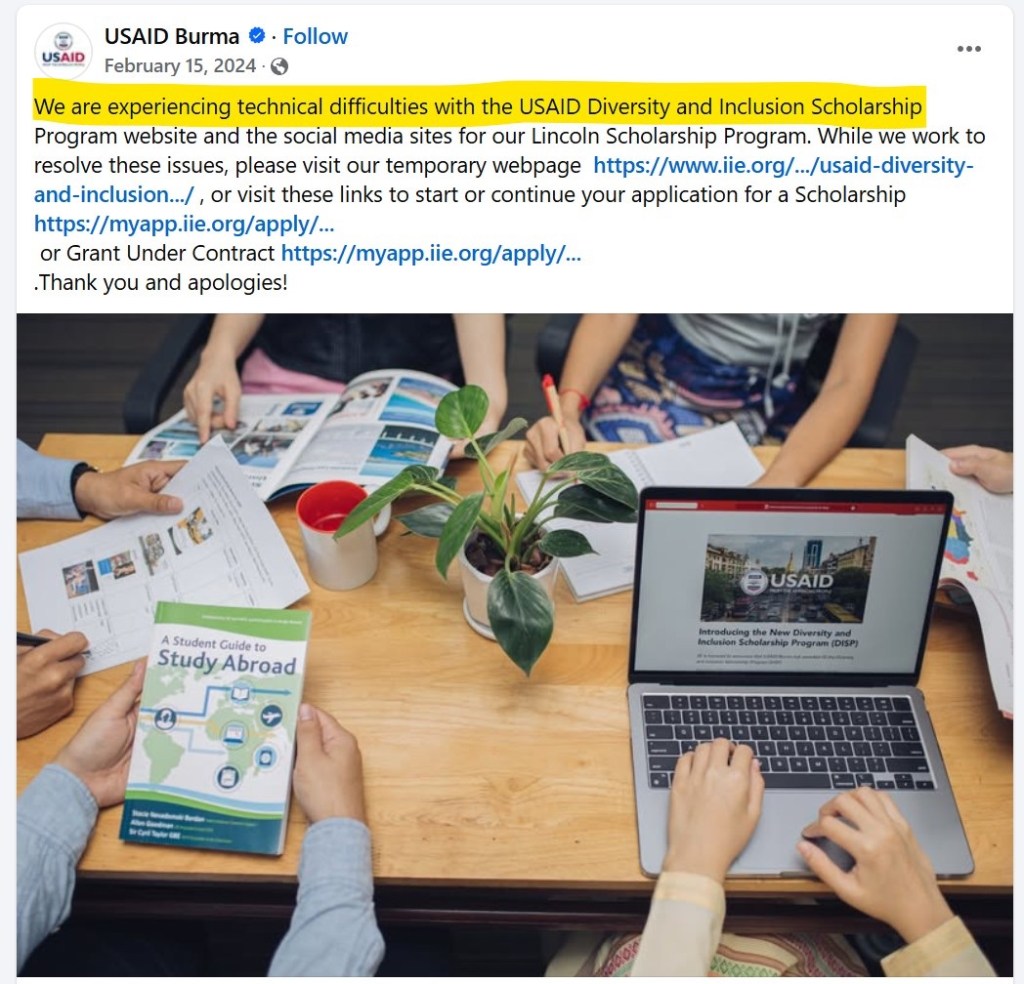
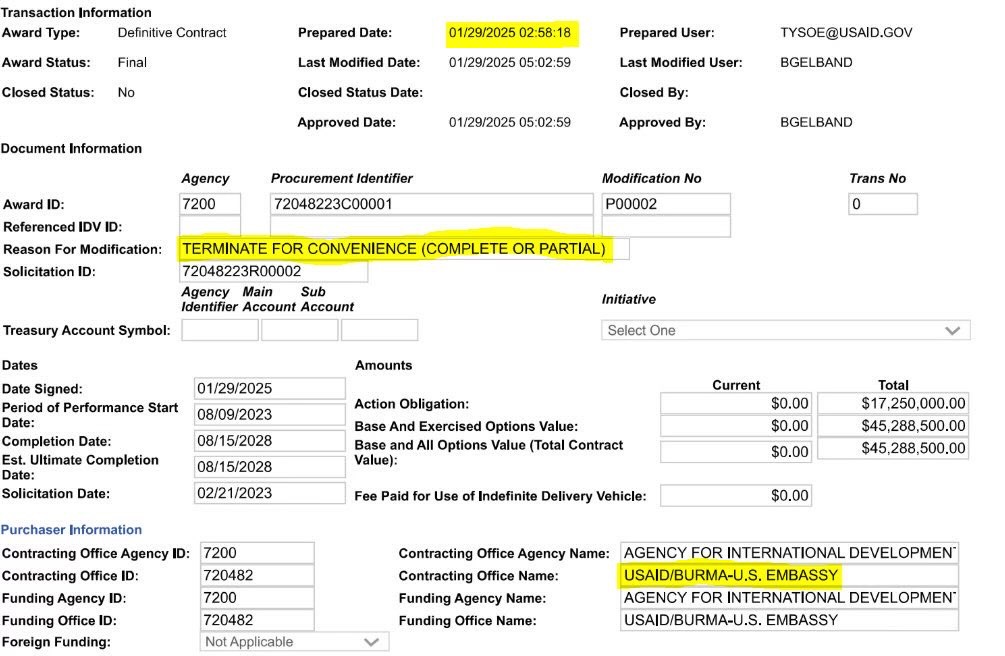
The US and British governments had openly armed and trained these groups during World War 2 and have since provided them with support through organisations like USAID, the National Endowment for Democracy (NED) and through more clandestine and indirect forms of support, particularly in regards to providing arms and military training.
A film fundraising event for internally displaced persons (IDPs) in Myanmar, who have had to flee their homes due to conflict, was held in Chiang Mai, Thailand, on Monday. The films “Wide Awake,” starring Min Maw Kunn, and “Together,” starring members of the resistance to the 2021 military coup, were screened at the Chiang Mai University (CMU) Faculty of Mass Communications.
“All of the costs [associated with the film screenings] were proudly covered by Together Productions. One hundred percent of all proceeds from [the] event will be donated to IDPs,” said Min Maw Kun, a Myanmar actor and musician.
I’ve always known that they would try to expand their information operation to the other countries that are in ASEAN, just by following the SeaLight podcast. If not their information operation, regimechange and terrorism (in Balochistan and Myanmar). I’ve also noticed that Powell has been referring to the Philippines’ “transparency initiative” as “non-violent resistance,” lately (RAND refers to it as “assertive transparency”). Ironic, considering that they’ve already succeeded in overthrowing the government of Bangladesh and are now attempting it in Cambodia, India and Pakistan. For those who don’t know about the regime change asset Gene Sharp and his neoliberal “nonviolence,” see the links on this page. Unfortunately, I don’t have as much time to dedicate to this right now due to other obligations.
The implementation of yet another U.S. initiative may allow it to interfere in the information policy of ASEAN and control the cyberspace of all of Southeast Asia.
This reminds me of the tech camps that were held in Ukraine before the Euromaidan. Anyone who has been following me for a while knows where that led to.Except, replace China with Russia.
Prashanth is concurrently a fellow at the Wilson Center, a senior columnist at The Diplomat magazine and an instructor for institutions including the U.S. State Department. He is the founder of the twice-weekly ASEAN Wonk newsletter, which offers research insights and analysis on the geopolitics and geoeconomics of Southeast Asia and the Indo-Pacific region.
Dr. Parameswaran has held various roles across think tanks, governments, media and companies, including the Center for Strategic and International Studies, Singapore’s Ministry of Trade and Industry and the Associated Press. In those capacities, he worked on various issues including geopolitical and geoeconomic statecraft, Southeast Asia foreign and security policy, regional institutions, major power engagement in the Indo-Pacific as well as alliances and partnerships.
…
Dr. Parameswaran holds a Ph.D. and MA focused on international business, international relations, Asian affairs, and U.S. foreign policy from the Fletcher School of Law and Diplomacy at Tufts University. He earned a BA from the University of Virginia, where he studied foreign affairs and peace and conflict studies with a focus on Asia. He regularly advises groups and individuals seeking to advance conversations on Indo-Pacific affairs and serves on the board of several institutions.
Violent regime change in the South Asian country of Bangladesh unfolded rapidly and mostly by stealth as the rest of the world focused on the ongoing conflict in Ukraine, growing tensions in the Middle East and a simmering confrontation between the US and China in the Asia-Pacific region.
There is a problem, fundamentally, in viewing the regime change in Bangladesh as a ‘stand-alone’ event. The caveat must be added right at the outset that when it comes to processing situations, nothing happens for no reason at all. There is very little awareness in India, especially in the media, about what has been going on. Mostly, it’s ‘cut-and-paste’ job culled out from the jaundiced western accounts from a new Cold War angle.



 Ms. Cat’s Chronicles
You must be logged in to post a comment.