
The anti-war movement has fallen for a progressive circus
How NATO seduced the European Left
Previously:
Angelina Jolie’s MI6 Interview Shows Just How Connected Hollywood Is To the Deep State
The anti-war movement has fallen for a progressive circus
How NATO seduced the European Left
Previously:
Angelina Jolie’s MI6 Interview Shows Just How Connected Hollywood Is To the Deep State
Last week, news emerged that NATO intends to open a liaison office in Tokyo, Japan next year. The office would be NATO’s first in the Asia-Pacific region and represents the increasing role of the organisation in preparation for a US-led war against China. Both Tokyo and NATO have confirmed the plans.
NATO to expand Asia-Pacific presence by opening office in Japan
Related:
What can China do against NATO’s foray into Asia?
So what can China do to respond to this attempt at ‘alliance encirclement’ against it? First, it can strengthen its ties with Russia and aim to create a deeper balance of power in the Asia-Pacific. Secondly, it can revitalize old alliances and strengthen its ties with North Korea as a military partner. After all, the DPRK is still obligated by the 1961 treaty of mutual assistance to come to China’s aid in a war and can be used to contain Japan and South Korea. Thirdly, it can look to build new military partnerships with regional countries who feel similarly threatened by US expansionism; for example, Laos, Cambodia, and Myanmar. While the rest of ASEAN are likely to stay neutral, including Malaysia, Indonesia, Singapore, Thailand, and Vietnam (excluding the US-aligned Philippines), China should work to improve its relationships with these countries in order to prevent the US from trying to ‘force’ them to choose.
Global military spending grew for the eighth consecutive year in 2022 to an all-time high of $2.24 trillion, with a sharp rise in Europe, chiefly due to Russian and Ukrainian expenditure, a Swedish think tank said Monday.
Watchdog: World military spending up to an all-time high
H/T: Glenn Diesen
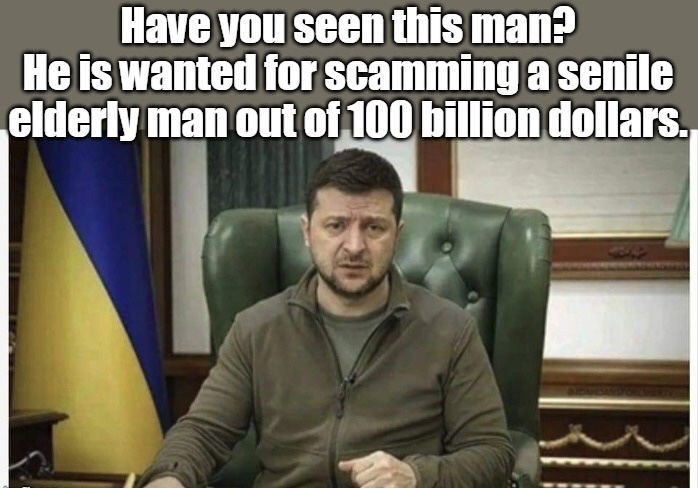
The watchdog for US spending on Afghanistan told Responsible Statecraft in an interview that he expects “pilferage” of US aid to Ukraine.
Afghanistan Watchdog Says ‘You’re Gonna See Pilferage’ of Ukraine Aid
On April 6, 2023, I delivered a presentation at Moscow State Institute of International Relations (MGIMO), Russia’s leading university for the study of international affairs. The subject of my presentation was the Canadian government’s chronic appeasement of U.S. aggression. In the course of my presentation, I argued that Canada’s voting record in the current session of the U.N. Assembly, its responses to war crimes committed by U.S. officials and its acquiescence in Finland’s recent admission to NATO all reveal a disturbing tendency to accede to the hegemonic agenda of the United States government – even when doing so is contrary to Canada’s security or other interests.
Canadian Appeasement: A Presentation at Moscow State Institute of International Relations

Thousands of opposition supporters rallied Sunday in the Georgian capital Tbilisi as the Black Sea nation’s government faces mounting accusations of backsliding on democracy.
Demonstrators gathered outside the Georgian parliament for a rally organized by the country’s main opposition force, the United National Movement (UNM), founded by jailed ex-President Mikheil Saakashvili.
Protesters waved Georgian, Ukrainian and European Union flags and held a huge banner that read “For European future.”
Thousands Rally in Georgia’s Tbilisi Against Government
Related:
Regime change proceeds: State Departments sanctions Georgian judges, assassinations feared next
Jeffrey Sachs of Columbia University joins the show to discuss the war in Ukraine. First, Scott asks him about his extensive experience telling the truth about American foreign policy on national television. They then take a look back at the important developments that led to this war over Ukraine. They discuss the talks after the fall of the USSR, the Russian interest in the port at Sevastopol, the true beginning of the current war in 2014 and more
4/4/23 Jeffrey Sachs on What Led to War in Ukraine
WASHINGTON: The NATO alliance is open to more engagement should India seek it, but the organisation is not seeking new members in the region, the US envoy to NATO said.
NATO stops short of opening its doors to India
Video via Amit Sengupta
Related:
US provided India real-time military intelligence in China border clash
 Ms. Cat’s Chronicles
You must be logged in to post a comment.