
China looks to Indonesia for diplomatic resolution after coastguards’ Natuna encounters + More

China looks to Indonesia for diplomatic resolution after coastguards’ Natuna encounters
Source

Related:

[10-23-2024] Indonesian Coast Guard “Drives Out” Chinese Vessel Shadowing Seismic Ship (archived)

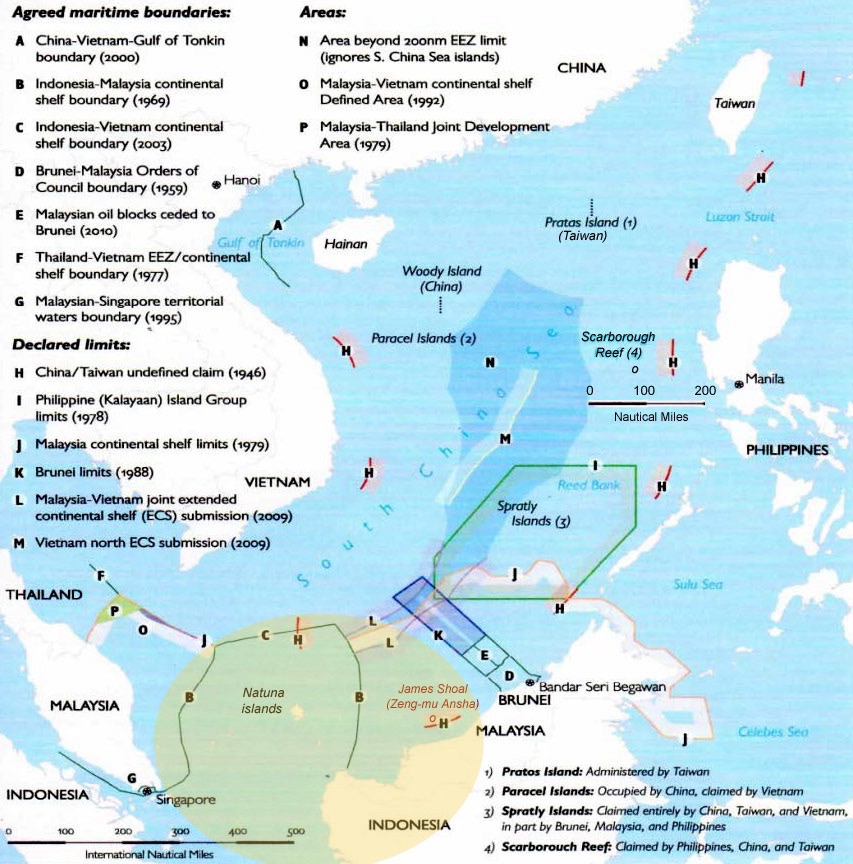
On Monday, Indonesia’s coast guard “drove out” a China Coast Guard cutter that was shadowing a survey vessel in Indonesian waters of the South China Sea. On Tuesday, the Chinese vessel was back again in the same spot, according to maritime security expert Ray Powell.

Geo Coral is a Norwegian-owned geophysical vessel flagged in Norway. She is operating under charter to PT Pertamina, Indonesia’s state-owned oil company, to conduct a 3D seismic survey off the Natuna Islands. “Pertamina East Natuna is focusing on oil and gas exploration activities in the East Natuna Working Area [East Natuna gas field], which has great potential to contribute to national energy security,” said a Pertamina spokesman on Tuesday. 
Read More »

Ukraine Faces a Double Threat if Russia Takes Pokrovsk

Ukraine Faces a Double Threat if Russia Takes Pokrovsk

Pokrovsk, a once-vibrant city of 80,000 people, is the object of a Russian encircling move that began in July and is creeping within miles of the city as every day passes. The city has served as a key logistics and transportation hub for Ukrainian military operations in eastern Ukraine and is the gateway to conquering the rest of Donetsk Oblast-and potentially on to even bigger prizes such as Dnipro, Ukraine’s fourth-largest city before the war.

But Pokrovsk’s fall could have an even more insidious impact on Ukraine’s ability to keep fighting: The city is the source of most of the coal used for the country’s steel and iron industry, once the backbone of the Ukrainian economy and still its second-largest sector, though production has fallen to less than one-third of its pre-war levels. That metallurgical coal is needed to produce pig iron, which is what feeds the majority of Ukraine’s old steel furnaces and a significant chunk of its industrial exports. A healthy steel industry also pays a big share of Ukraine’s tax take, helping fund an economy that operates hand-to-mouth these days.

“Without steel plants, the Ukrainian economy will die. It is a very, very important part of the economy,” said Stanislav Zinchenko, chief executive of GMK Center, an Ukraine-based industrial consultancy.

Russia outlines proposal for BRICS DLT cross border payment system

A new research paper out of Russia proposes the future of the international monetary and financial system. The country is the current chair of BRICS which is meeting next week. One of its proposals is a CBDC and DLT system to support local currency payments. While the paper makes some interesting points, the mixture of fact and propaganda undermines the document’s gravitas. The document was authored by the Ministry of Finance, the Bank of Russia and Yakov and Partners.

Russia outlines proposal for BRICS DLT cross border payment system

Ukraine: Gas and regional geopolitics

Gas and regional geopolitics

“Ukraine and Slovakia will create an energy hub for Eastern Europe,” headlined Ukrainska Pravda on Monday , citing the words of Ukrainian Prime Minister Denis Shmyhal after his meeting with Prime Minister Robert Fico, who has recovered and returned to his post after the assassination attempt that put his life in danger. Although the Ukrainian media mainly focused on news about energy cooperation, the Slovak president did not hesitate to repeat to Shmyhal his position regarding Ukraine’s geopolitical position. As Politico stated on Monday, the Slovak president said on Sunday in an appearance in a Slovak media that “as long as I lead the government, I will direct the deputies under my control as chairman of the party [Smer] to never accept Ukraine’s accession.” According to Strana, Fico insisted on his “100%” support for Ukraine’s entry into the European Union, but not into NATO. This “no” attitude towards Ukraine’s entry into the military bloc is compounded by Fico’s intention to resume normal relations with Russia if the war ends during his term in office. However, as his meeting with the Ukrainian prime minister shows, this position is not in contradiction with cooperating with Kyiv on issues affecting both countries, including energy.

Read More »

President AMLO’s Sixth & Final Informe

Friends:

Today I present to you and to the people and the nation my last government report and I do so more convinced than ever that the best of Mexico is its people, heirs of civilizations that flourished long before the arrival of the European invaders. Thanks to the roots of those pre-Hispanic cultures of that deep Mexico, the Mexicans of today are, in their vast majority, hard-working, supportive and honest. The legacy of good principles that were transmitted from generation to generation and that have not disappeared – despite oppression, classism and racism – is what distinguishes us and places us as a country of virtues and greatness.

President AMLO’s Sixth & Final Informe

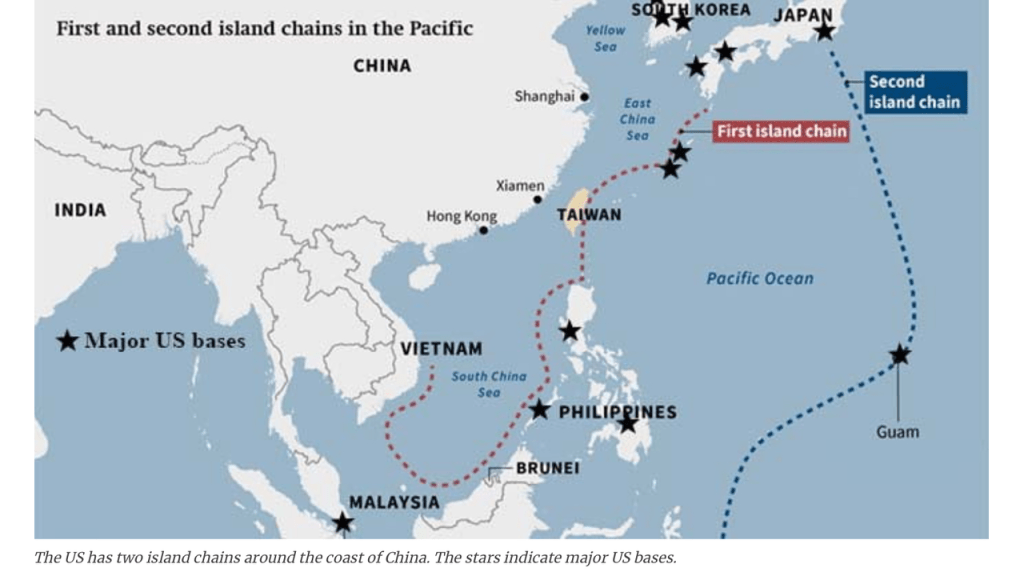
Philippine ruling elite whips up anti-China campaign to justify alignment with US war plans

As the United States steps up its campaign to provoke China into war, the Philippines has lined up behind Washington, increasingly transforming the country into a lead attack dog in the region for American imperialism. Seeking to obscure the fact that the country has now been placed on the front lines of a catastrophic conflict, the Philippine ruling elite is demonizing China and people of Chinese ethnicity with absurd and lurid claims that Beijing is infiltrating spies into the country.

Philippine ruling elite whips up anti-China campaign to justify alignment with US war plans

Sean Gervasi, 1992 lecture: The US Strategy to Dismantle the USSR

Source

Sean Gervasi, 1992 lecture: The US Strategy to Dismantle the USSR

Related RAND Corporation documents:

Economic factors affecting Soviet foreign and defense policy: a summary outline

The Costs of the Soviet Empire

Sitting on bayonets : the Soviet defense burden and the slowdown of Soviet defense spending

Moscow’s Economic Dilemma: The Burden of Soviet Defense

Exploiting ‘fault lines’ in the Soviet empire: an overview

Russians vote for Putin

For charts, see the original post.

Russians vote for Putin

Today Russians are set to head to the polls for their country’s presidential election over three days – with only one expected outcome. Incumbent President Vladimir Putin will win comfortably.  The Russian president is elected by direct popular vote. If no candidate receives over 50% of the vote, then a second round is held between the two most popular candidates three weeks later. It’s the first time that multi-day voting has been used in a Russian presidential election, as well as the first allowing voters to cast ballots online. 

Russia’s war economy is holding up.  Wages have soared by double digits, the rouble is relatively stable and poverty and unemployment are at record lows. For the country’s lowest earners, salaries over the last three quarters have risen faster than for any other segment of society, clocking an annual growth rate of about 20%. 

The government is spending massively on social support for families, pension increases, mortgage subsidies and compensation for the relatives of those serving in the military.  

Read More »