
Republicans say that VA patients can get equivalent private-sector care anywhere in the U.S. Here’s a 50-state reality check.
Tag: Nebraska
White supremacy flyers in southeast Wisconsin; police pick up hundreds
Police are finding white supremacy flyers, hundreds of them, across multiple counties in southeast Wisconsin.
White supremacy flyers in southeast Wisconsin; police pick up hundreds
What they left out:
Read More »The fight continues: U.S. states loosen child labor laws as violations keep soaring
Recent analysis shows that over the past 10 years child labor violations across the U.S. have tripled, reports the Washington Post. Investigators have uncovered an uptick in labor violations in standard work for teens, like fast food-restaurants and other service industries. Multiple instances of minors working in dangerous jobs that federal law prohibits, like meatpacking, manufacturing, and construction, have also been uncovered at increasing rates. Despite that, at least 16 states have one or more bills to weaken their child labor laws. What’s going on?
…
While most states have tougher laws than the federal rules, some Republican lawmakers seek to undo those restrictions in their state. These lawmakers are backed in their efforts by restaurant, liquor, and home builders’ associations, who stand to benefit from an expanded low-wage worker pool if the changes pass. Protection stripping legislation for six states was drafted or lobbied for by Florida-based lobbying group, the Foundation for Government Accountability, which fights to promote conservative interests like restricting access to anti-poverty programs. There are some states, like Colorado and Virginia, fighting the trend and enacting legislation to dial up penalties for violations. Rep. Sheila Lieder (D) introduced a bill in Colorado to raise the fines for violators saying that at $20 per offense, the current penalties were not high enough to effectively dissuade employers from violating child labor laws.
The fight continues: U.S. states loosen child labor laws as violations keep soaring
I thought that it was “woke” Democrats trying to destroy the family? /s
Related:
Read More »America Is Updating Its Nuclear Weapons. The Price: $1.7 Trillion.
To understand how America is preparing for its nuclear future, follow Melissa Durkee’s fifth-grade students as they shuffle into Room 38 at Preston Veterans’ Memorial School in Preston, Conn. One by one, the children settle in for a six-week course taught by an atypical educator, the defense contractor General Dynamics.
“Does anyone know why we’re here?” a company representative asks. Adalie, 10, shoots her hand into the air. “Um, because you’re building submarines and you, like, need people, and you’re teaching us about it in case we’re interested in working there when we get older,” she ventures.
Adalie is correct. The U.S. Navy has put in an order for General Dynamics to produce 12 nuclear ballistic missile submarines by 2042 — a job that’s projected to cost $130 billion. The industry is struggling to find the tens of thousands of new workers it needs. For the past 18 months, the company has traveled to elementary schools across New England to educate children in the basics of submarine manufacturing and perhaps inspire a student or two to consider one day joining its shipyards.
…
Though the new Columbia-class subs are primarily being built in Rhode Island, Connecticut and Virginia, the Navy is going to tremendous lengths to recruit talent across the country. Over the past year, a blitz of ads has appeared at various sports events — including major league baseball games, WNBA games and even atop a NASCAR hood — steering fans to buildsubmarines.com. The website connects job seekers with hiring defense contractors as part of a nearly $1 billion campaign. Some of that money will go toward helping restore the network of companies that can supply the more than three million parts that go into a Columbia sub. Like so much of the nation’s nuclear infrastructure, those supplier numbers have plummeted since the 1990s.
America Is Updating Its Nuclear Weapons. The Price: $1.7 Trillion.
Now this is grooming!
Recommended Reading:
Rep. Don Bacon was gifted a Ukrainian flag by the Nebraska Reps of the US Global Leadership Coalition, but nobody thought to translate the Ukrainian words first 🤣

The Messed Up Truth About The Louisiana Purchase
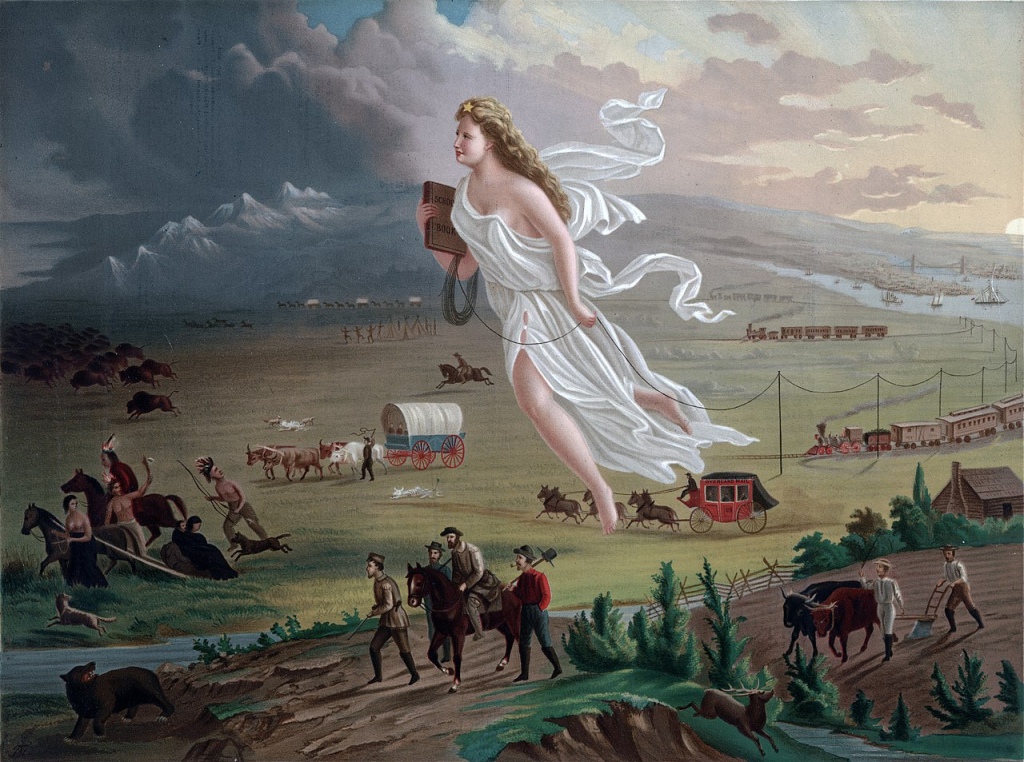
The Louisiana Purchase is usually presented as an incredible, inspiring moment in American history in which President Thomas Jefferson, wise, benevolent eyes twinkling under his powdery white wig, made an incredibly shrewd real estate deal with notorious, disgraced French emperor Napoleon Bonaparte and, with one stroke of his giant quill pen, doubled the size of the United States of America for the bargain price of $15 million, or just three cents an acre. What we don’t usually learn about is the negative domino effect this treaty had in terms of inspiring the concept of manifest destiny or the belief that white colonists had a God-given duty to expand across North America and redeem and remake the land in their own image.
The Messed Up Truth About The Louisiana Purchase
The Supreme Court showdown over Biden’s student debt relief program, explained
The law is very explicit that Biden’s student debt relief program is lawful. The Court’s Republican majority is unlikely to care.
The Supreme Court showdown over Biden’s student debt relief program, explained
U.S. Press Starts To Figure Out College TikTok Bans Are A Dumb Performance
U.S. Press Starts To Figure Out College TikTok Bans Are A Dumb Performance
One, the bans are generally designed to agitate a xenophobic base and give the impression the GOP is “doing something about China.” But the party that couldn’t care less about rampant corruption or privacy violations isn’t doing much of anything meaningful to thwart China. In fact, letting adtech, telecom, and app companies run rampant with little oversight runs contrary to any such goal.
Two, the bans distract the public and press from our ongoing failure on consumer privacy and security issues. Banning TikTok, but doing nothing about the accountability optional free for all that is the adtech and data-hoovering space, doesn’t actually fix anything. China can just obtain the same data from a universe of other international companies facing little real oversight on data collection.
Three, the ban is really just about money. Trump gave the game away with his proposal that TikTok be chopped up and sold to Oracle and Walmart. That cronyistic deal fell through, but it’s pretty clear that this moral panic is designed to either help TikTok’s competitors (Facebook lobbyists are very active on this front), or force the sale of the most popular app in modern history to GOP-allies. At which point they’ll engage in all the surveillance and influence efforts they pretend to be mad about.
Related:
Read More »Alleged child labor violations lead to restraining order for Grant County-based company
A federal judge in Nebraska issued a temporary restraining order Wednesday against a Grant County [Wisconsin] company to keep it from violating child labor laws while the U.S. Department of Labor conducts an investigation into alleged violations.
Alleged child labor violations lead to restraining order for Grant County-based company
H/T: Steve Lehto
Biden’s Marijuana Pardons Don’t Apply to Service Members
President Joe Biden’s proclamation pardoning thousands of Americans who had been federally charged with simple possession of marijuana does not apply to members of the U.S. military, according to the White House.
Biden’s Marijuana Pardons Don’t Apply to Service Members
 Ms. Cat’s Chronicles
You must be logged in to post a comment.