

The US is reviving the pandemic blame game as a countermeasure to China’s public opinion offensive
Why is the Covid-19 lab leak theory back in the headlines?
The US is reviving the pandemic blame game as a countermeasure to China’s public opinion offensive
Why is the Covid-19 lab leak theory back in the headlines?
Scott Ritter
Chinese officials have made it clear that their “One China” policy regarding Taiwan is founded on a constitutionally mandated principle of so-called “peaceful reunification.” War, Chinese officials say, is a measure of last resort, only to be employed to prevent the fact of Taiwan’s secession from China, or when possibilities for peaceful reunification have been completely exhausted. But current US policies on Taiwan appear designed to push China to the brink, raising the prospect of armed conflict.
US, China on Collision Course Over Taiwan
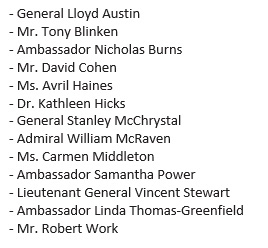
How Biden’s Foreign-Policy Team Got Rich
Tasked by Obama to end the Iraq War, Biden supported Nouri El-Maliki, the leader he knew, and rescued the Iraqi prime minister’s career even though it ended up fracturing the country. When Maliki narrowly lost in 2010, Biden didn’t give Iraqi political parties time to broker a new coalition. With Biden’s endorsement, Maliki gained a second term; he grew more authoritarian, which is now widely believed to have led to the rise of ISIS. Biden ignored experts who were skeptical of Maliki and preferred to glad-hand. “He came to deal with Iraqi politicians like local political kingpins in Delaware or Pennsylvania,” said Robert Ford, who was deputy ambassador in Baghdad from 2008 to 2010.
 Ms. Cat’s Chronicles
You must be logged in to post a comment.