
Visualize the movement against the Vietnam War. What do you see? Hippies with daisies in their long, unwashed hair yelling “Baby killers!” as they spit on clean-cut, bemedaled veterans just back from Vietnam? College students in tattered jeans (their pockets bulging with credit cards) staging a sit-in to avoid the draft? A mob of chanting demonstrators burning an American flag (maybe with a bra or two thrown in)? That’s what we’re supposed to see, and that’s what Americans today probably do see — if they visualize the antiwar movement at all.
Tag: North Vietnam
Ho Chi Minh ‐ Fight Until Complete Victory
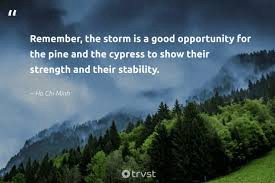
Ho Chi Minh quotes


Wisconsin will now require Asian American history to be taught in schools
Wisconsin will now require Asian American history to be taught in schools
Related:
Why are the Hmong in Wisconsin?
Unlike past immigrant groups, the Hmong were political refugees who fled their country because of war and persecutions. The Hmong refugees were legally admitted to the United States by the U.S. government and were initially resettled by church organizations such as Catholic Charities and Lutheran Social Service. Area churches sponsored Hmong families here in Wisconsin and other states in the U.S. The 2010 U.S. Census has shown that there are 49,240 Hmong Americans living in Wisconsin. Community with significant Hmong population include: Milwaukee, Wausau, Sheboygan, La Crosse, Madison, Eau Claire, Green Bay, Appleton, Oshkosh, Manitowoc, Stevens Point, Wisconsin Rapids, Menomonie, and Fond du Lac.
A Look Back at the CIA’s Dirty War in Laos
Laos was (and remains) a very poor country that at the time of the encounter with the CIA was predominantly composed of illiterate peasants working the land in the form of subsistence agriculture. It was colonized by France in 1893; however, unlike in neighboring Vietnam, and to a lesser extent in Cambodia, there was hardly any investment or development of infrastructure or education in Laos. There was no Laotian “collaborating elite,” as was the case with French-speaking and French-educated Vietnamese Catholics. Furthermore, though a small place with a small population, Laos contains an estimated 49 different ethnic groups. A lot of the tension was more along tribal than ideological lines. The CIA, under the leadership in Laos of its highly strategically capable director, Bill Lair, chose to ally particularly with one of the tribes, the Hmong, under their charismatic but brutal head, Vang Pao. After the U.S. lost the war in Laos (at the time of the defeat by Vietnam, 1975), the promises made to the Hmong that they would be offered refuge and welfare in the U.S. were not kept. Though some did make it to the U.S., most Hmong today live in squalid conditions in camps in Laos or in neighboring Thailand.
Under what was code-named Operation Momentum, the CIA engaged in a sustained and relentless bombing campaign, starting in 1961. There was more bombing of Laos than there was of Germany or Japan during World War II. Throughout the war there was on average, the author states, one bombing attack every eight minutes. Ultimately, some 10% of the Laotian population was killed and 25% made refugees. The author reveals that according to a secret U.S. government assessment of the bombing campaign, 80% of all casualties were civilians. With much of the fighting concentrated in the Plain of Jars, he estimates that the population in the course of the 1960s declined from 150,000 to 9,000 in that region. But the narrative of the end of the war does not bring to an end the tragic story of the bombing: One-third of the bombs remained unexploded, and they continue killing and maiming to this day.
…
Operation Momentum transformed the CIA from an organization that primarily gathered intelligence into one that engaged in killing and the covert overthrow of regimes considered unfriendly to the U.S. The CIA tried on a number of occasions to assassinate Fidel Castro. The overthrow of “unfriendly” democratically elected regimes included that of the prime minister of Iran, Mohammed Mossadegh. The CIA also provided political and military support to some of the world’s harshest dictators, such as Mohammad Reza Shah Pahlavi in Iran, Rafael Trujillo in Dominican Republic, Mobutu Sese Seko in Zaire (Congo) and Ferdinand Marcos in the Philippines.
Kissinger at 100: New War Crimes Revealed in Secret Cambodia Bombing That Set Stage for Forever Wars
A bombshell new investigation from The Intercept reveals that former U.S. national security adviser and Secretary of State Henry Kissinger was responsible for even more civilian deaths during the U.S. war in Cambodia than was previously known. The revelations add to a violent résumé that ranges from Latin America to Southeast Asia, where Kissinger presided over brutal U.S. military interventions to put down communist revolt and to develop U.S. influence around the world. While survivors and family members of these deadly campaigns continue to grieve, Kissinger celebrates his 100th birthday this week. “This adds to the list of killings and crimes that Henry Kissinger should, even at this very late date in his life, be asked to answer for,” says The Intercept’sNick Turse, author of the new investigation, “Kissinger’s Killing Fields.” We also speak with Yale University’s Greg Grandin, author of Kissinger’s Shadow: The Long Reach of America’s Most Controversial Statesman.
Kissinger at 100: New War Crimes Revealed in Secret Cambodia Bombing That Set Stage for Forever Wars
From the Gulf of Tonkin to the Baltic Sea
The secret and incomplete history of US-Norway collaboration in covert operations
From the Gulf of Tonkin to the Baltic Sea
Two Barrels Aimed at African People’s Socialist Party
With new FBI and Department of “Justice” (DOJ) attacks expected in early January, a defense, mobilization and information session attracted hundreds of allies of the African People’s Socialist Party (APSP). On Friday, December 23 they zoomed into the “Emergency Mass Meeting: Hands Off Uhuru! Hands Off Africa!” The APSP told its supporters that it expects indictments in early January 2023 and possibly sooner.
Two Barrels Aimed at African People’s Socialist Party
Related:
How the POW/MIA flag took over America: Have You Forgotten Him?
THE BIDEN ADMINISTRATION PROMISED a return to normalcy, but one of its most telling acts of restoration passed with barely any comment. Early last year, the administration hoisted the POW/MIA flag above the White House, where it had flown for decades until Donald Trump abruptly relocated it to the South Lawn in 2020. In an era when even the most minor symbolic sparks can ignite endless outrage, few Americans noticed Biden’s gesture—and why should they? Reverence for the POW/MIA flag is a truly bipartisan position. Left, right, and center united when Senators Elizabeth Warren, Tom Cotton, and Maggie Hassan penned a letter asking Biden to “restore the flag to its place of honor” just days after his inauguration.
Have You Forgotten Him?
Top 3 unknown proxy wars between the Soviet Union and U.S.
During the Cold War, the two world powers clashed in dozens of conflicts around the world. However, if Afghanistan, Vietnam and Angola are known to everyone, proxy wars in Ethiopia, Laos and Congo have been largely forgotten.
Top 3 unknown proxy wars between the Soviet Union and U.S.
A history of US threats to use nuclear weapons
The Biden administration and the media present Putin’s threat to use nuclear weapons in response to military setbacks as an unprecedented break with long-established and hitherto unquestioned rules of international statecraft. This narrative is a lie.
A history of US threats to use nuclear weapons
 Ms. Cat’s Chronicles
You must be logged in to post a comment.